Easter egg decorating ideas come down to one choice: will anyone eat the egg? These 10 designs are split into dyed eggs you can eat and blown shells you keep, with the dye recipes and the safety rules for each.
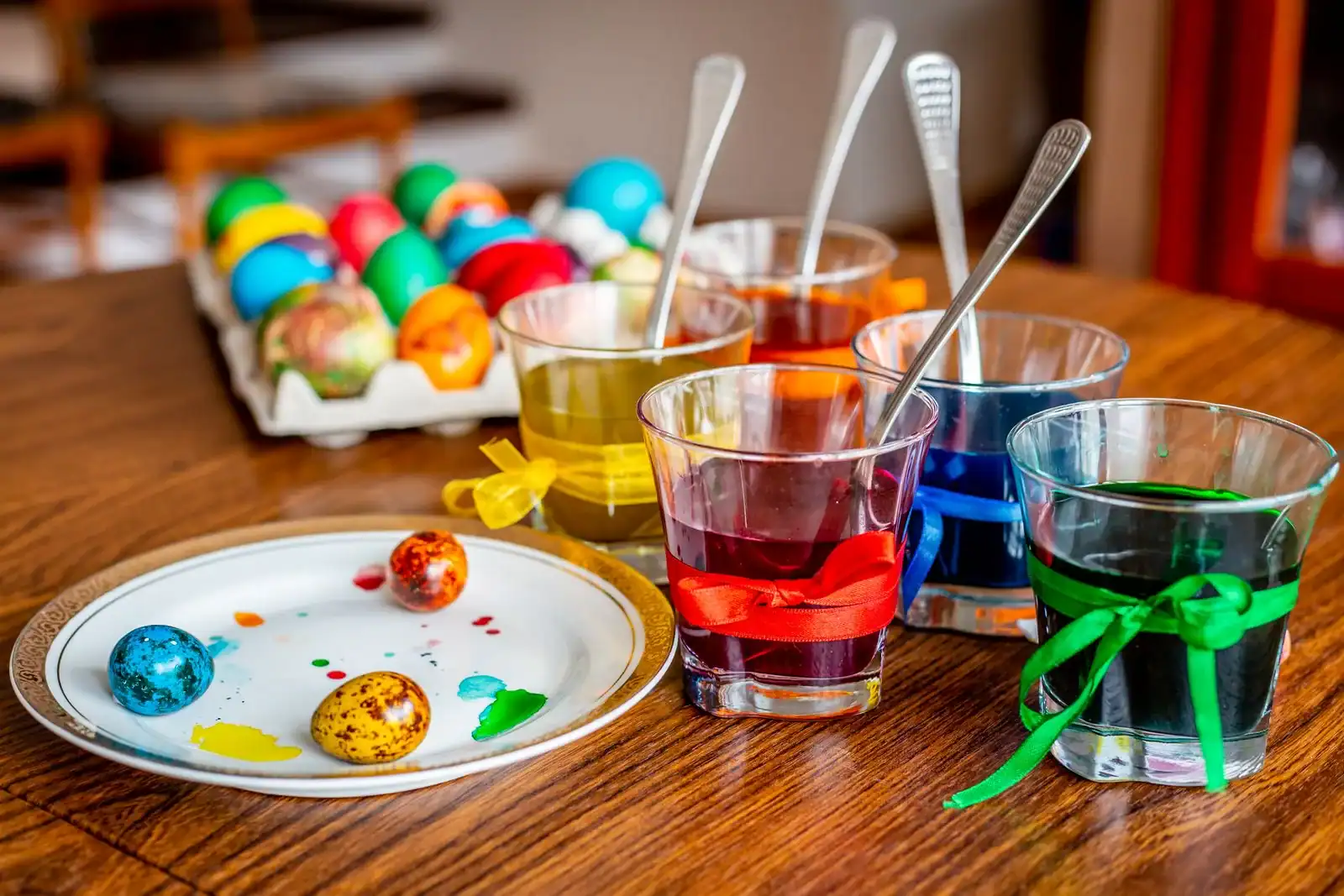
Which kind of egg are you decorating?
If you will eat it, dye a hard-boiled egg and keep it cold. If you want it for years, blow out the shell and paint it. Mixing the two is where most food-safety mistakes happen.
Jump to the method you like:
- Natural dyes: cabbage blue, onion orange and turmeric yellow.
- Drawn, wrapped and dipped: wax resist, thread and graded shades.
- Blown eggs: florals, gold leaf, speckles and hanging eggs.
- Safety: the two numbers to remember.
Natural dyes from the kitchen.
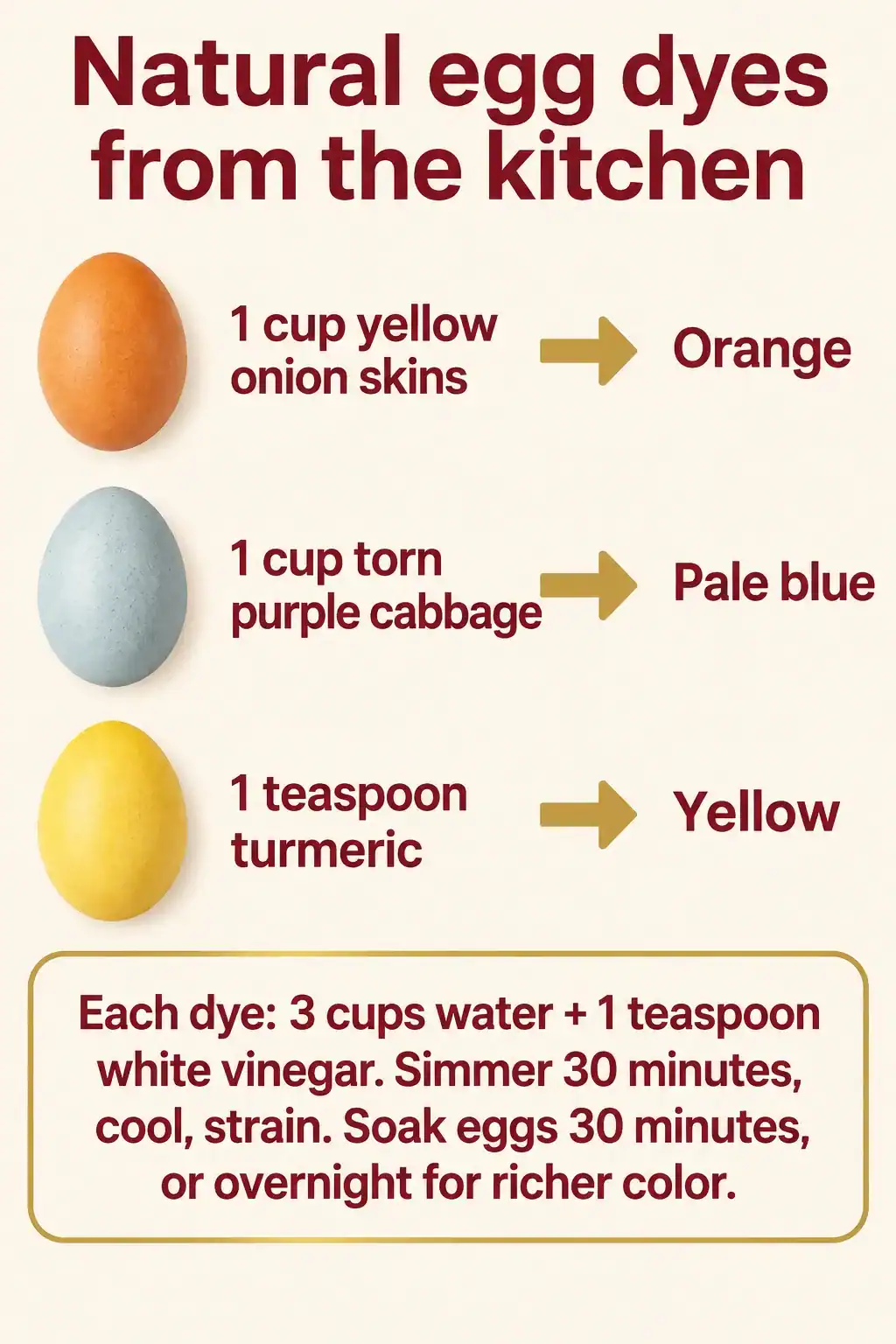
Three pantry ingredients color eggs without a kit: yellow onion skins make orange, purple cabbage makes pale blue and turmeric makes yellow. Each recipe uses 3 cups of water and 1 teaspoon of white vinegar, simmered for 30 minutes, as in the American Academy of Pediatrics' natural dye recipes.
The recipes are written for hard-cooked white eggs. Let the dye cool to room temperature and strain it before the eggs go in, since the pot is hot and the skins and leaves will leave marks. Little ones should stay clear of the stove.
Red cabbage blue.
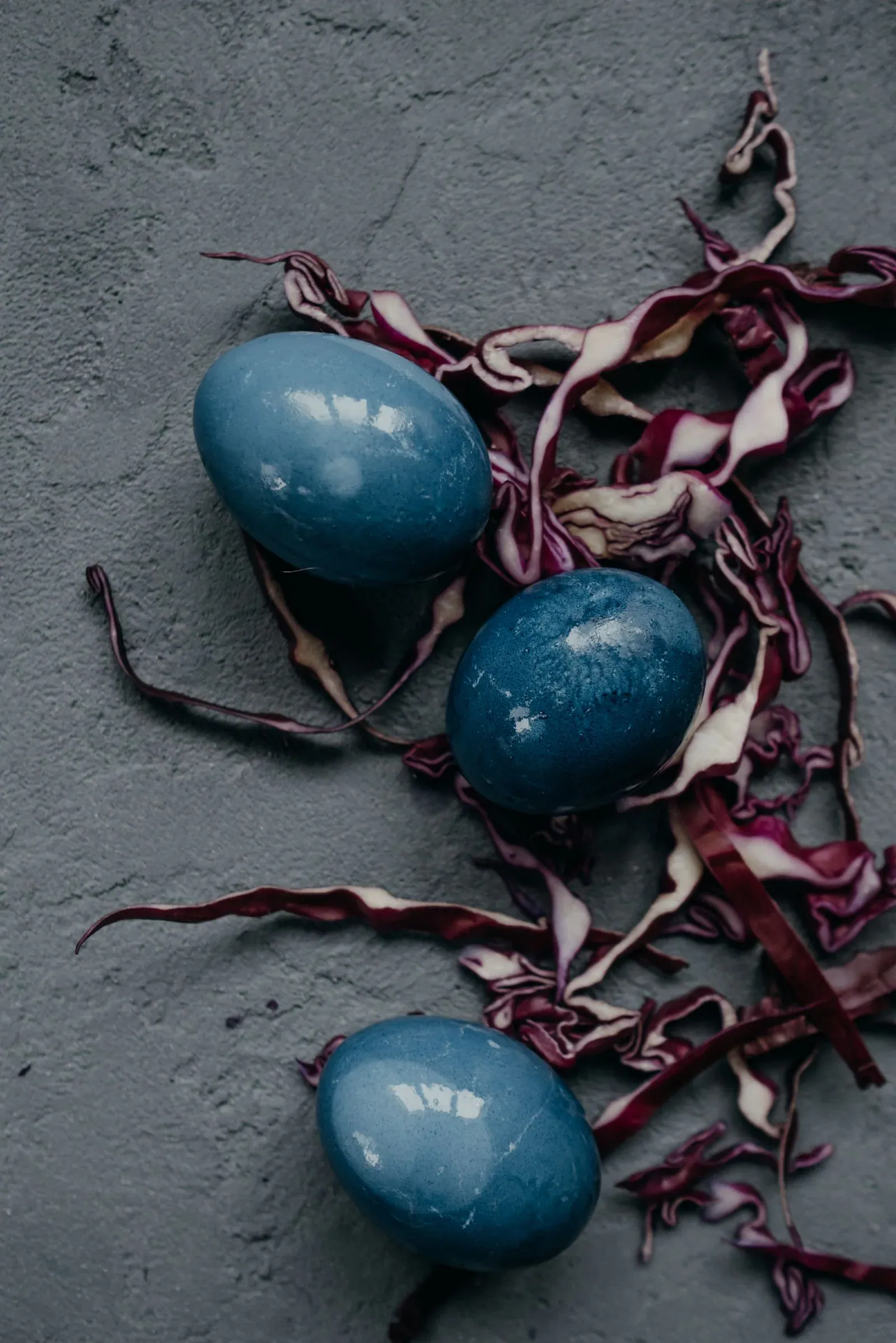
Use 1 cup of torn purple cabbage leaves. The dye looks purple in the pot but turns the eggs pale blue, so do not judge the color until the eggs come out.
Thirty minutes in the dye gives a soft shade. Leaving the eggs overnight gives a richer one.
Onion skin orange.
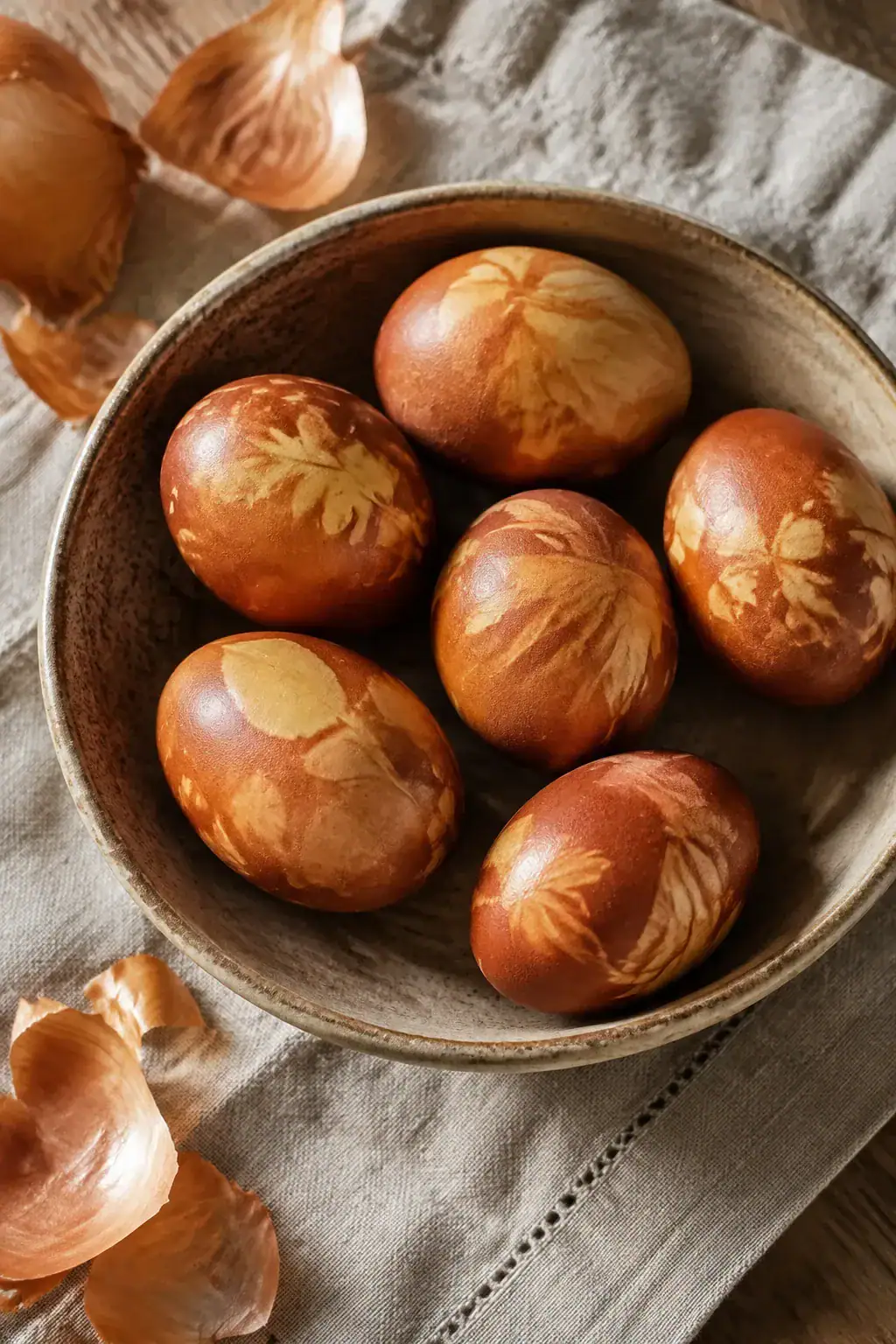
Save the papery skins from about 2 yellow onions, which makes the 1 cup the recipe calls for. Brown-shelled eggs will come out in a different, deeper tone than the white eggs the recipe expects.
Turmeric yellow.
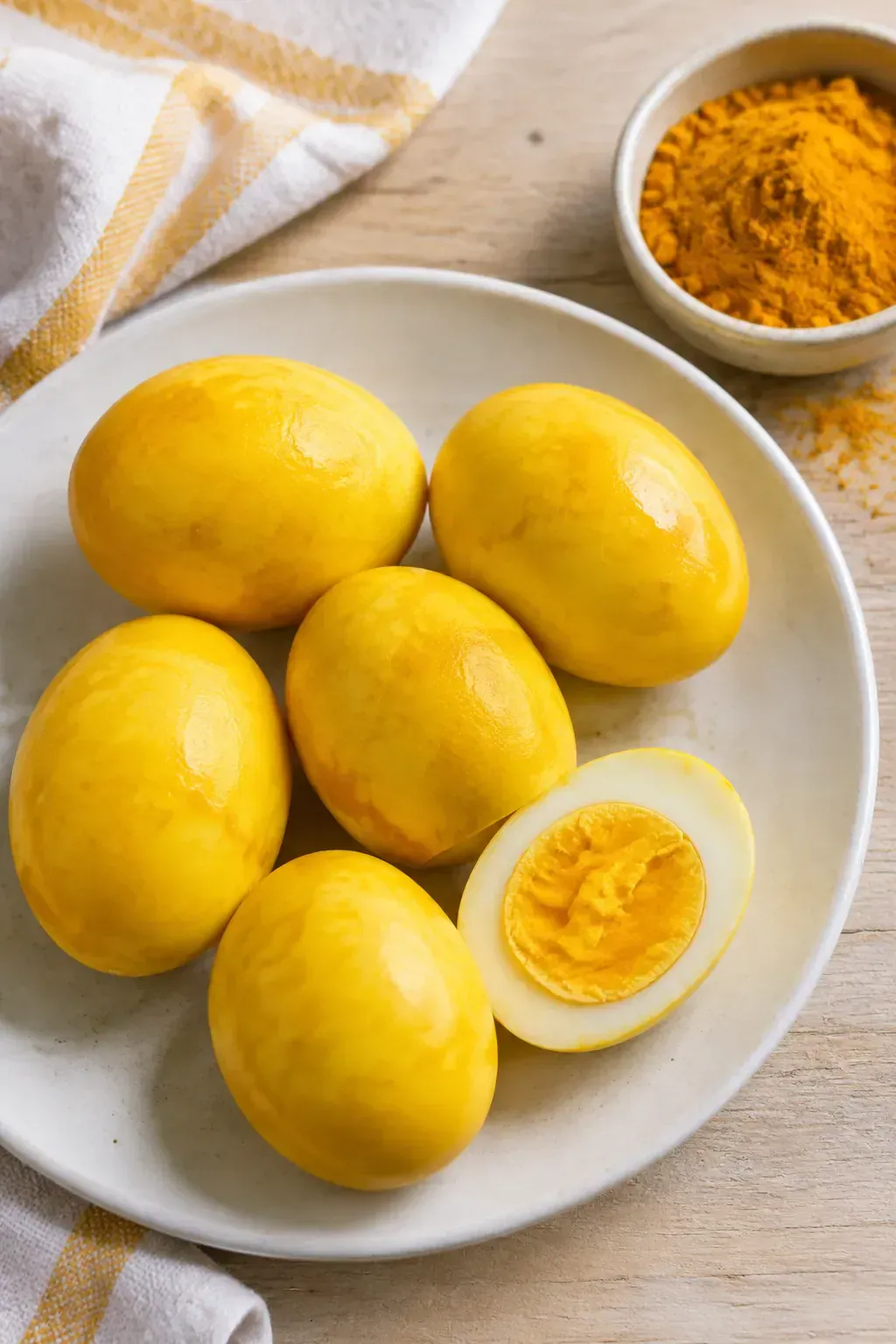
Turmeric needs just 1 teaspoon, so it is the cheapest of the three. It also stains counters and fingers easily, so lay down newspaper before you start.
For more projects to run alongside the dyeing, see our easy crafts for kids.
Designs you draw, wrap or dip.
Pattern comes from changing what touches the dye. Wax keeps color off, thread covers the shell, and dipping for different lengths of time makes graded shades.
Wax resist with a crayon.
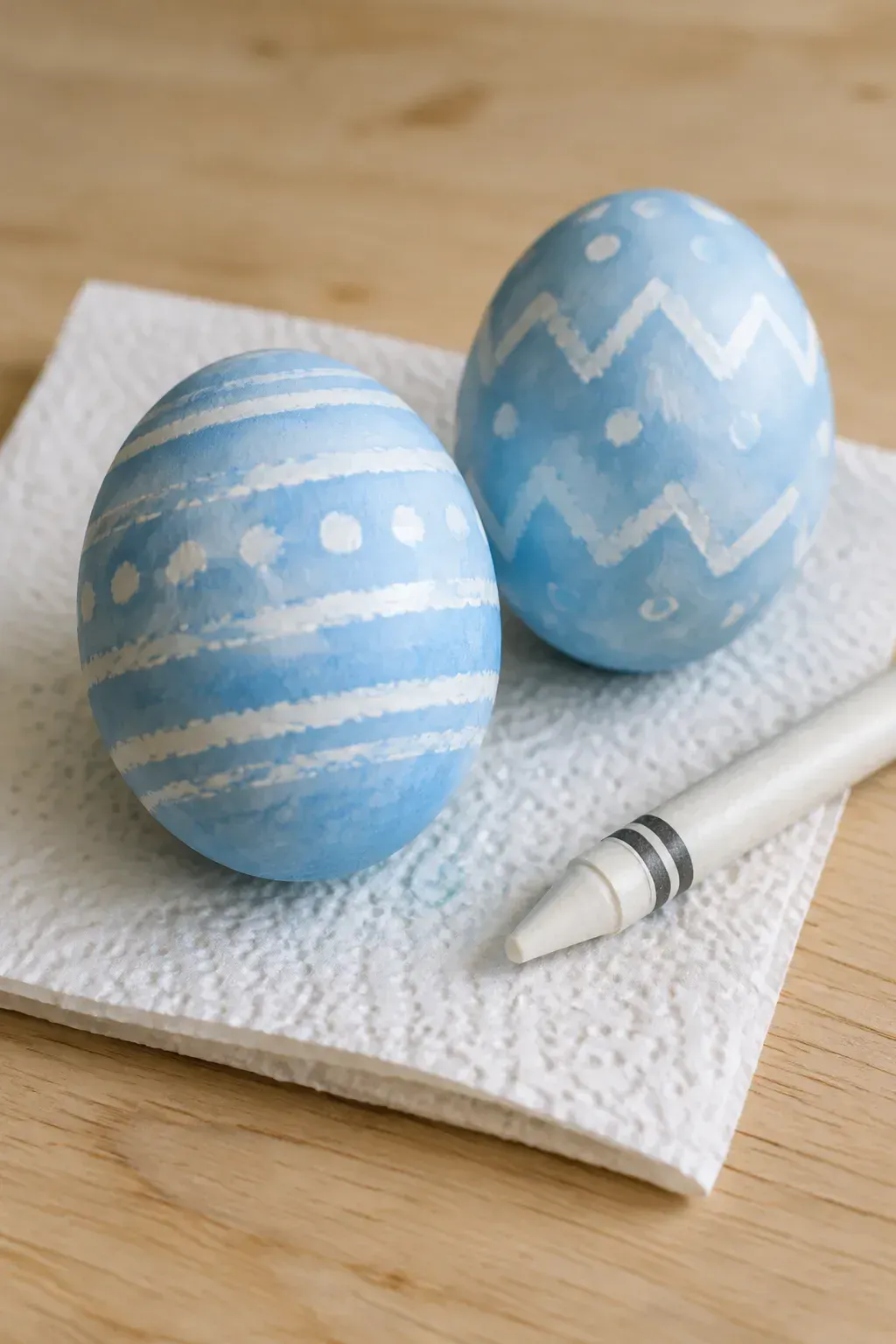
Press hard with a crayon to draw stripes, dots or zigzags on a room-temperature egg, then lower it into the dye with a spoon. Wax repels water, so the dye slides off the drawing and leaves it showing, as CuriOdyssey's wax-resist guide explains.
A white crayon is invisible until the egg comes out of the dye. Crayon wax is not food, so keep these eggs for display.
Thread-wrapped eggs.
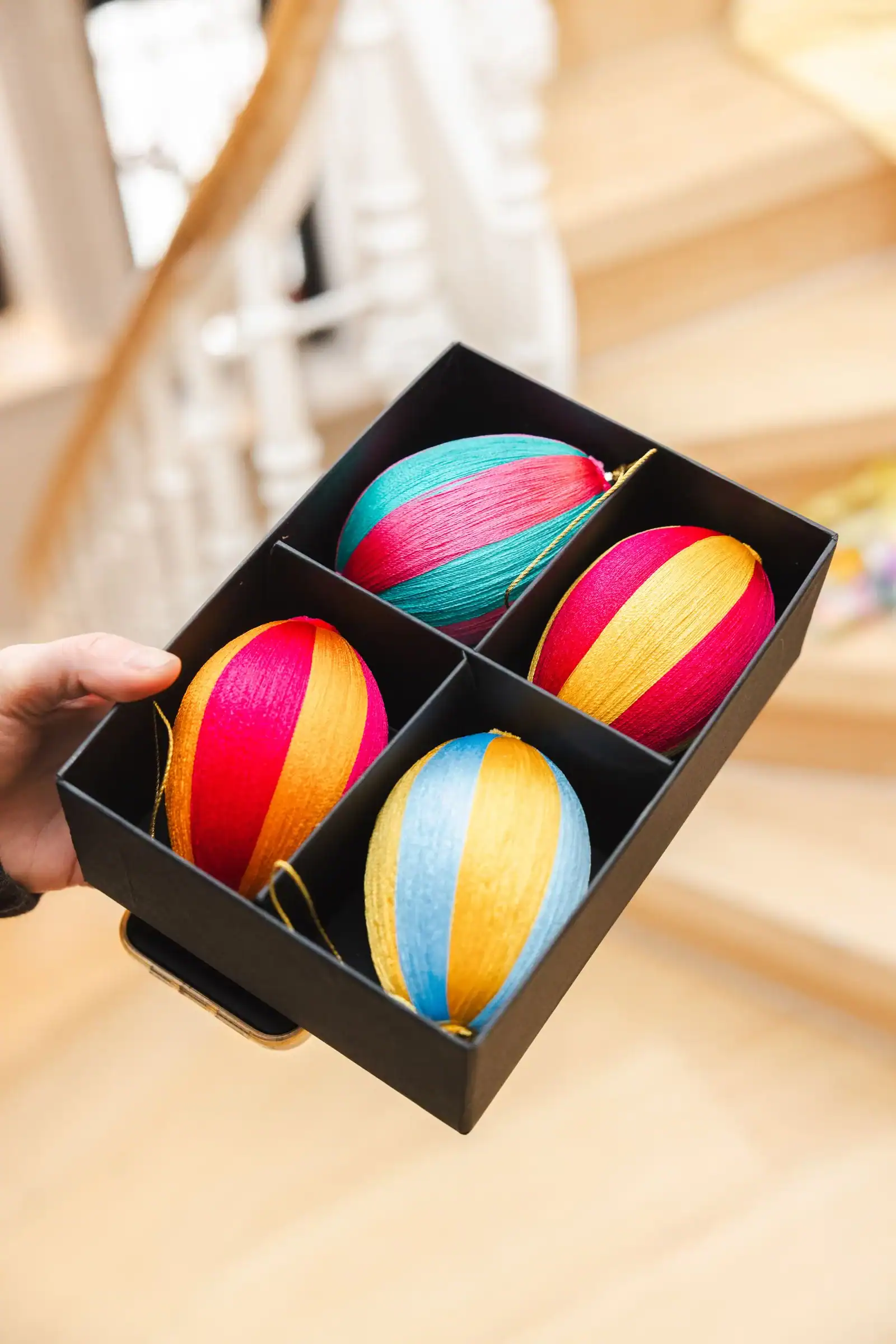
Brush thin craft glue over a blown shell and wind embroidery thread around it, pressing each turn against the last. Switch colors where you want a stripe, and trim the end flush with the glue.
Graded shades from one pot.
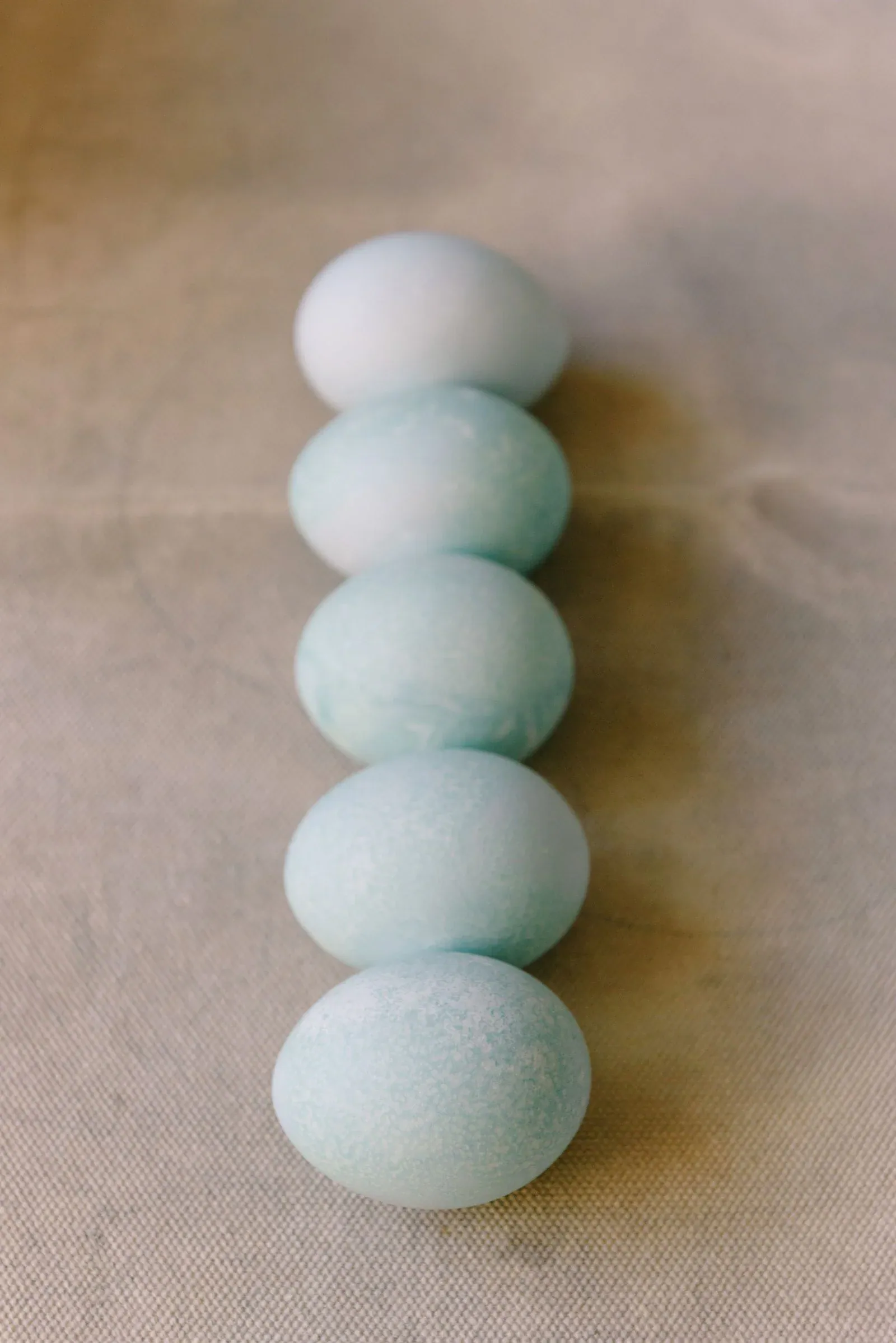
Dye gets deeper the longer the egg sits in it, which the recipes above treat as a choice: at least 30 minutes for a light shade, overnight for a rich one. Pull one egg every few hours and line them up from palest to deepest.
Blown eggs you keep.
A blown egg is an empty shell, so it can be painted and hung without the rules that apply to boiled eggs. The Egg Safety Center says blown shells can stay on display as long as you like, as its guide to blowing out eggs explains.
- Wash the eggs in warm water and let them dry.
- Tap a small hole in one end with a needle, then make a slightly bigger hole at the large end.
- Push the needle in to break the yolk.
- Shake the contents out through the large hole, or use a baster to push air in.
- Rinse the empty shell under cool running water and stand it large end down to dry.
Use the yolks and whites right away in thoroughly cooked dishes such as quiches or cakes. Hollow shells float, so push them under the dye, then drain them well because dye can seep in through the hole.
Hand-painted florals.
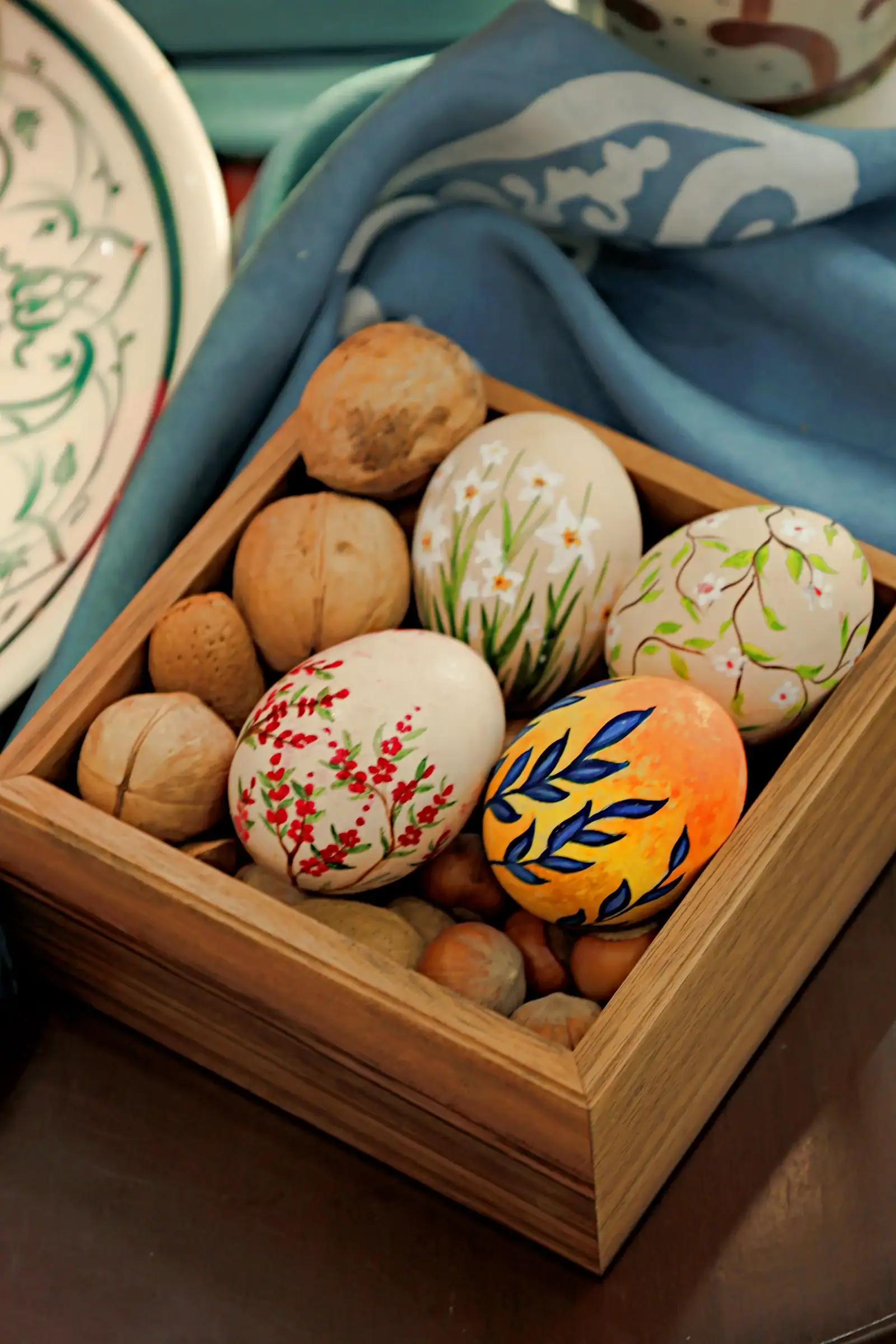
Sketch the design in pencil first, then paint with a small brush and let each color dry before the next. Stand the egg in an egg cup so you can turn it without touching wet paint.
Gold leaf accents.
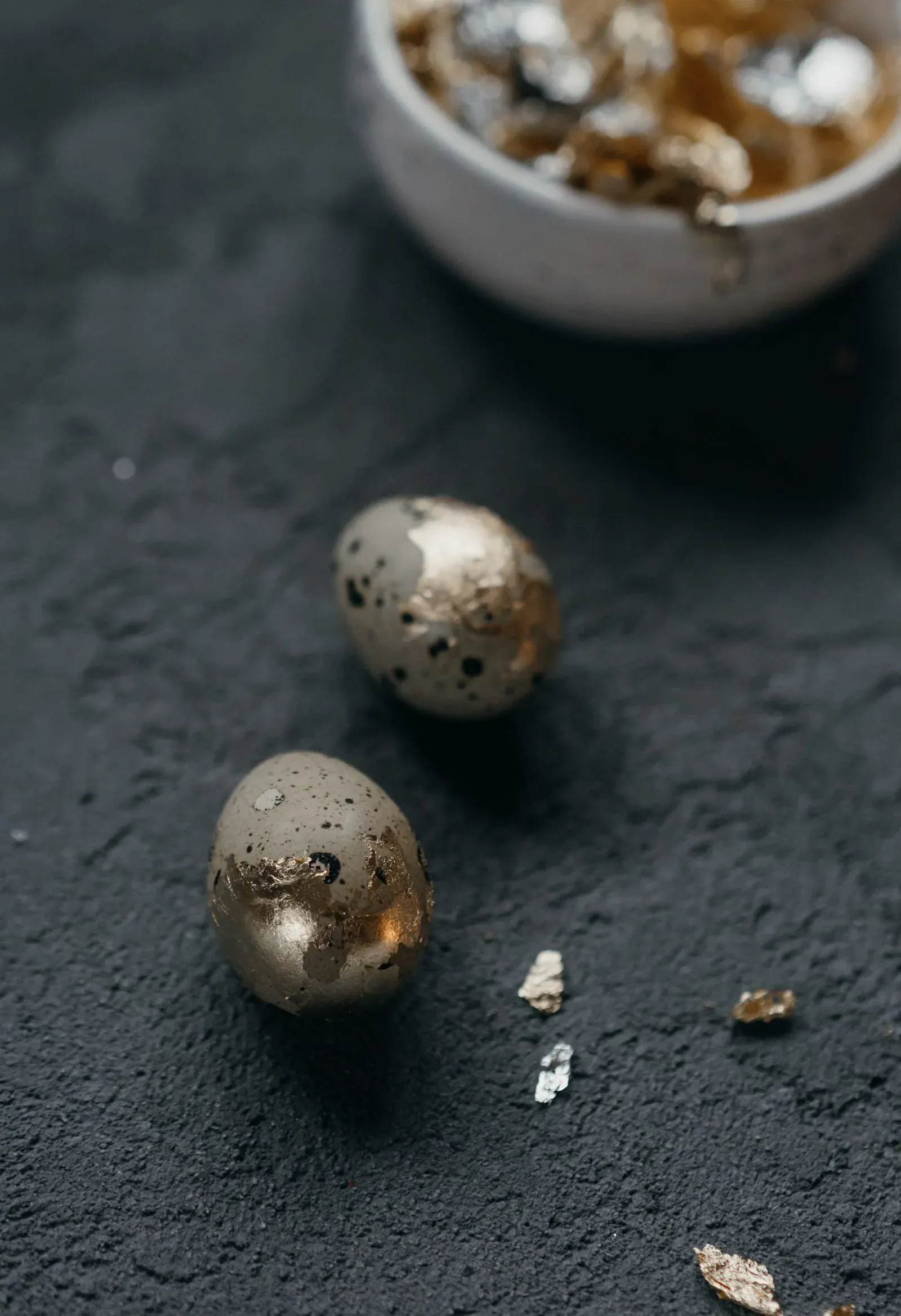
Brush a little glue where you want the gold and press a flake on with a dry brush. Treat these as decoration only unless the leaf is labeled edible.
Speckled eggs.
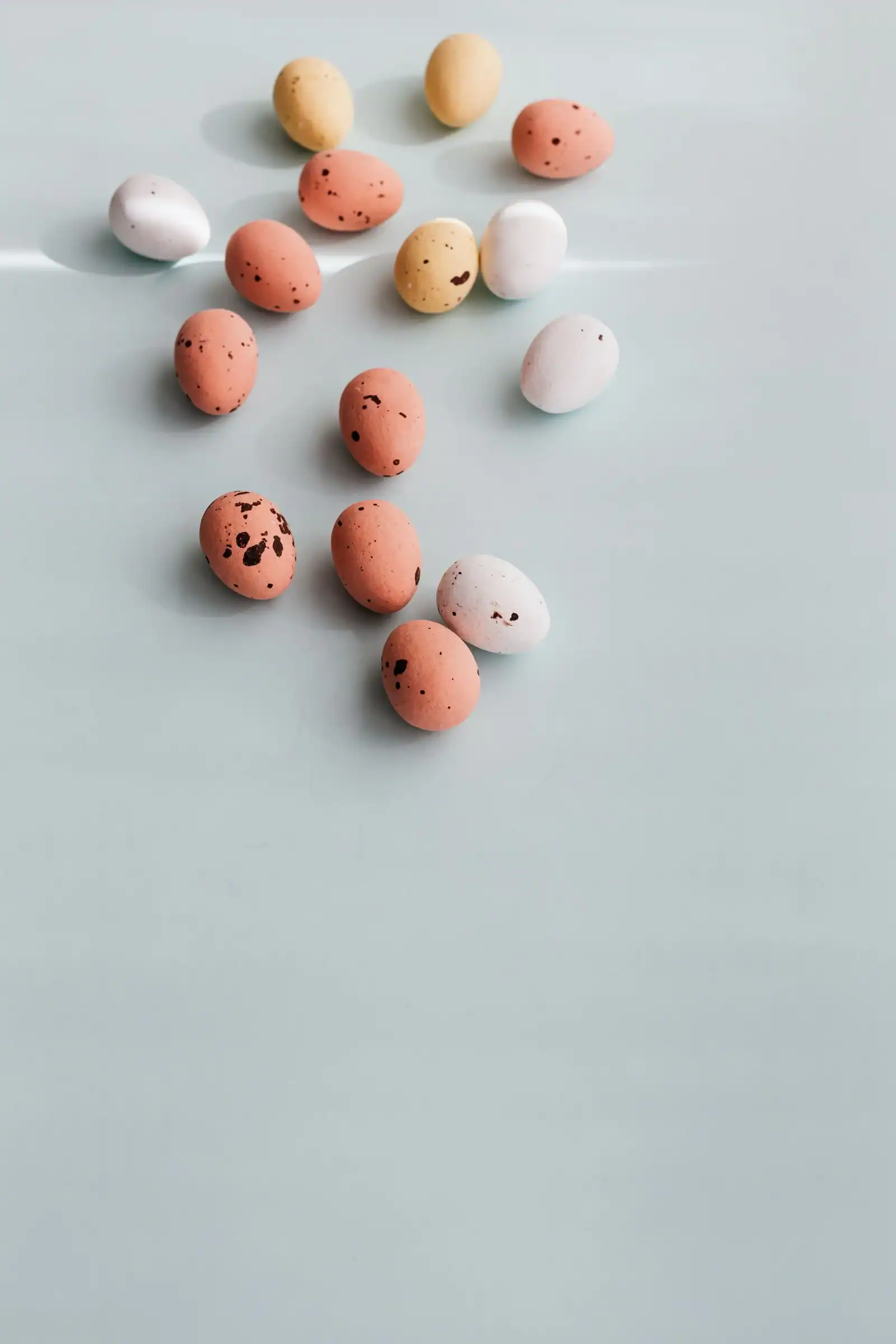
Paint the shell a pastel and let it dry. Then dab or flick tiny dots of brown paint with a stiff brush, and vary the spacing so the dots look uneven.
Eggs hanging on branches.
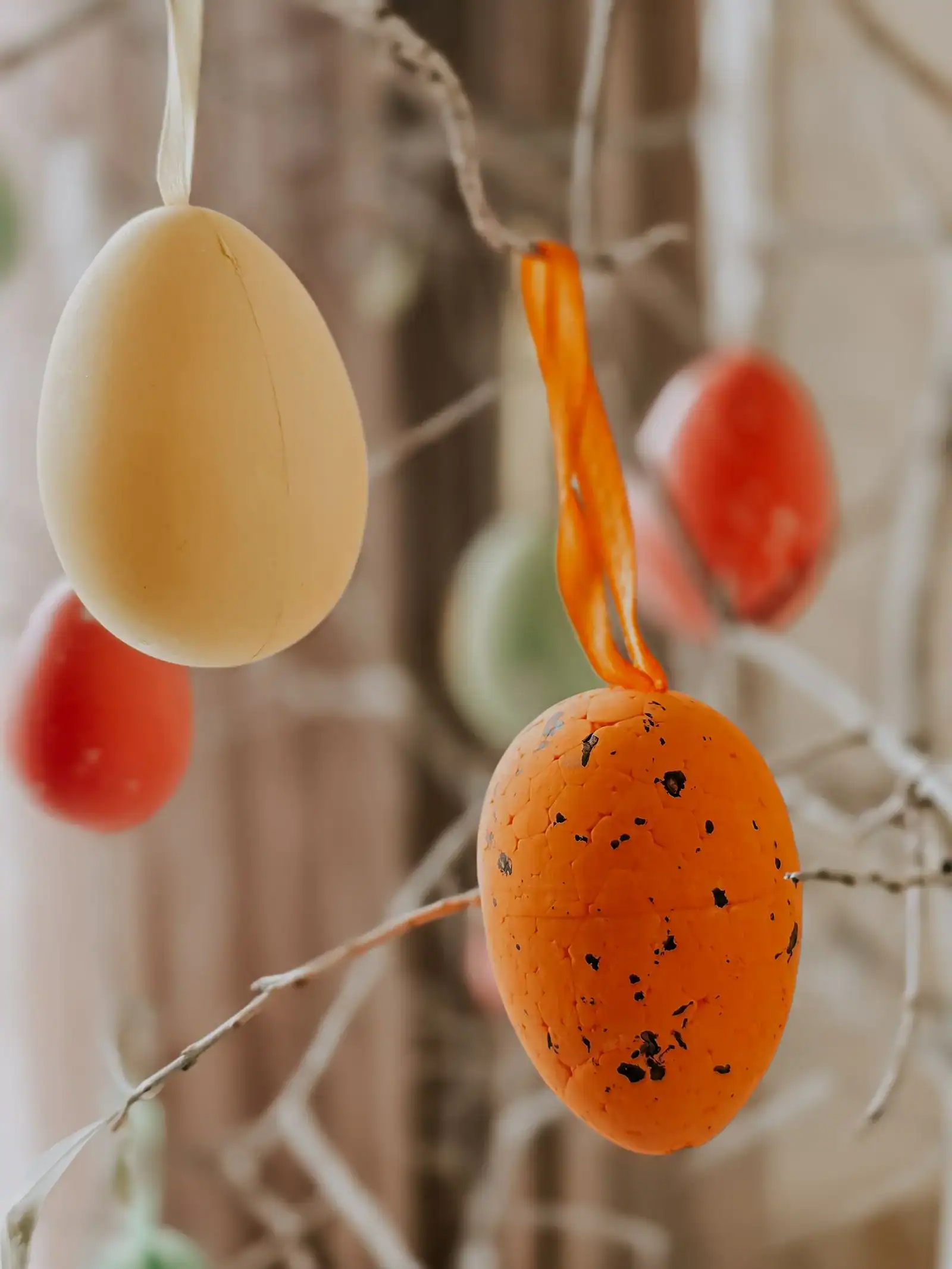
Tie a ribbon around a short piece of toothpick, slide it through the large hole and tug until it catches inside. Then hang the eggs on bare branches in a tall vase.
How I would split the weekend
I would dye a dozen eggs with onion skins in the morning, keep them cold and eat them within the week. Then I would paint blown eggs on a quieter day to keep. One is a kitchen project and the other is decor, and treating them separately makes both easier.
Do it safely, whichever egg you pick.
Boiled eggs spoil faster than raw ones because the protective coating is washed away. Refrigerate them within two hours of cooking and use them within one week, says the Egg Safety Center's handling tips.
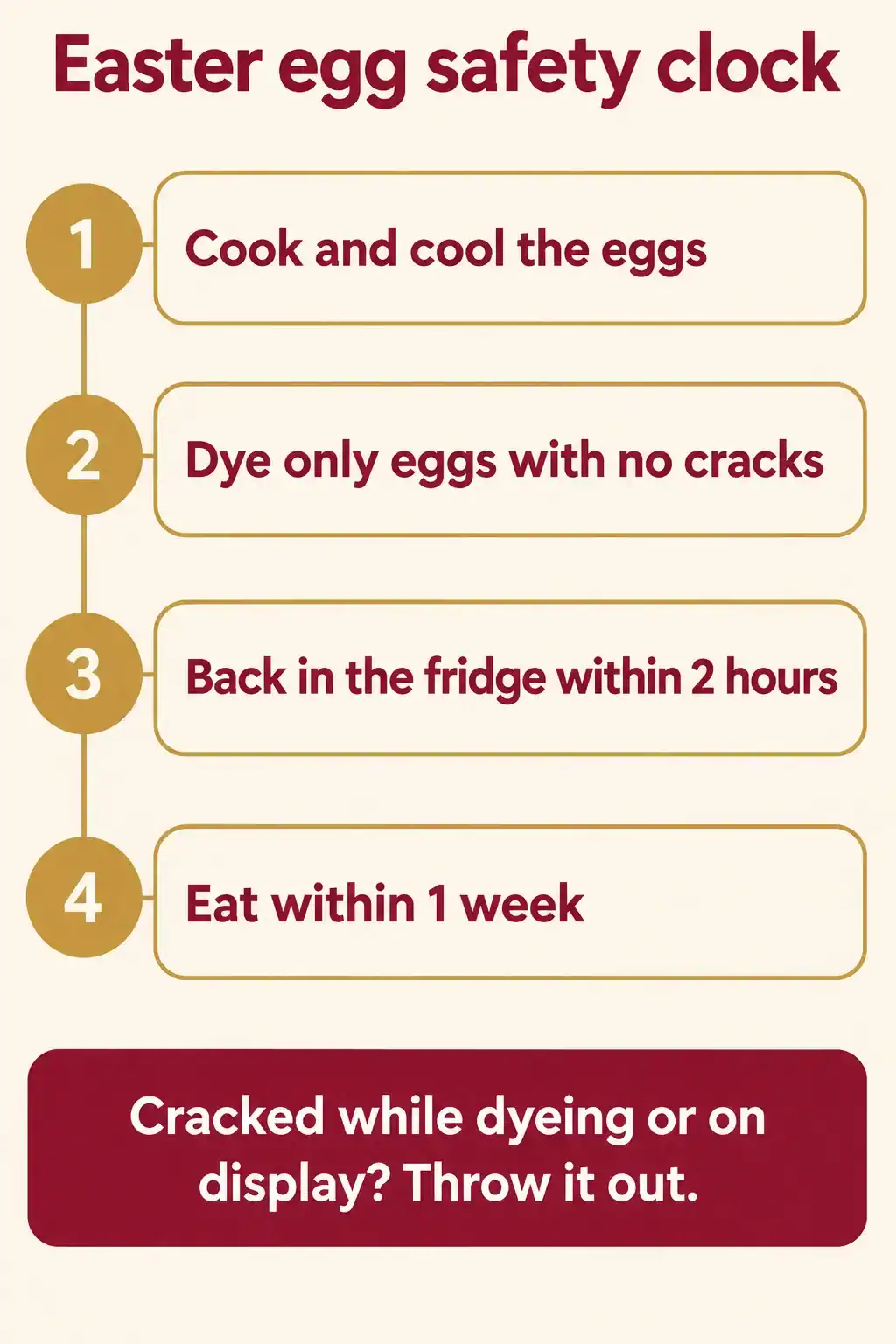
Dye only eggs with no cracks, and throw out any egg that cracks during dyeing or on display. For a hunt, hide eggs away from dirt, pets and wild animals, and discard eggs that were out for more than two hours.
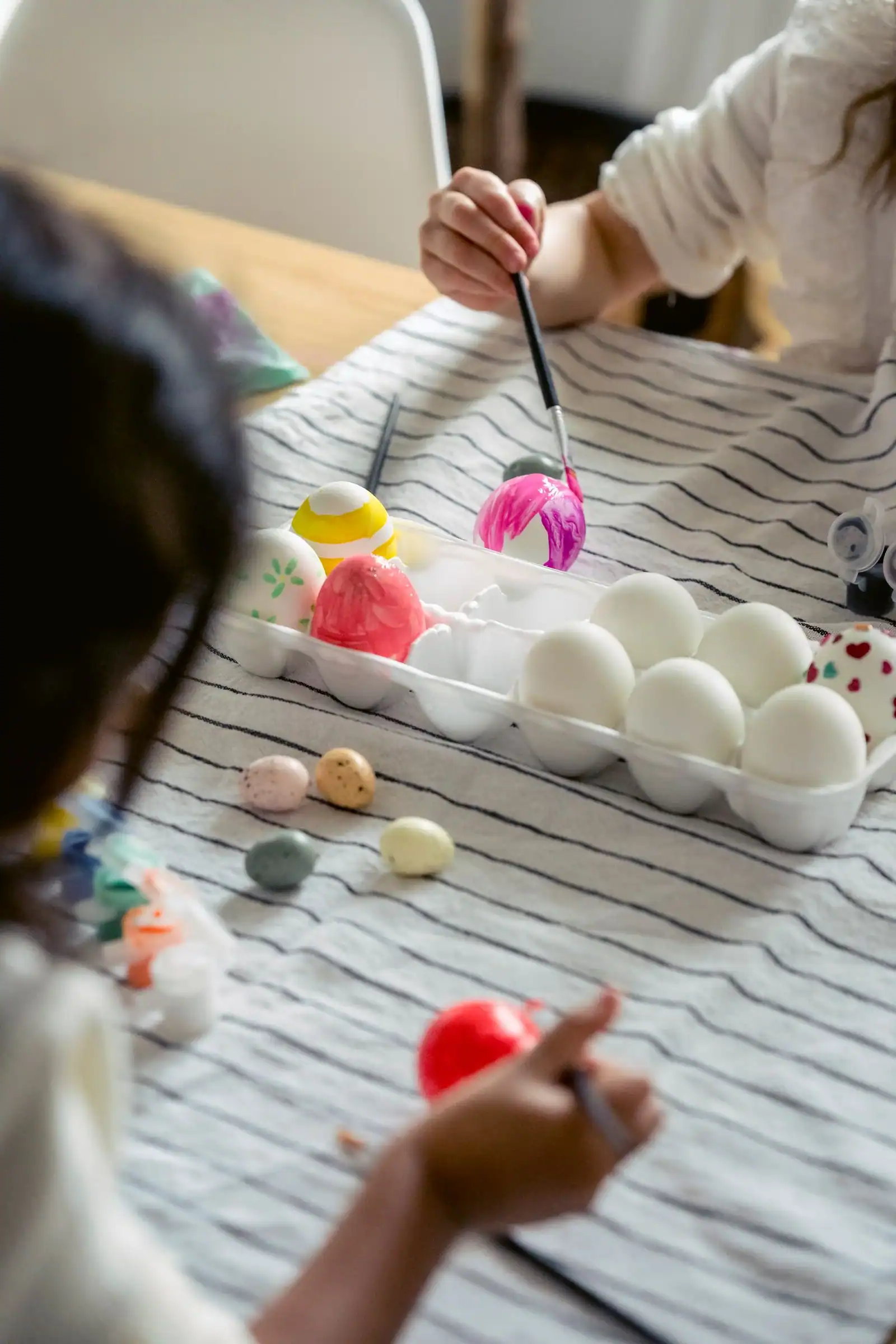
When children are painting, blown shells save you the clock. Wearing pastels to the hunt? Our easy spring outfits cover the dress code, and the eggs you kept cold can go straight onto the table with our Easter dinner ideas.
- Wash your hands and the work surface before you start.
- Check each egg for cracks and set the cracked ones aside.
- Use food-safe dye for any egg you plan to eat.
- Set a timer for two hours once the eggs come out of the fridge.
- Mark display-only eggs so nobody peels one at the table.
Easter egg decorating ideas, answered.
How long do dyed hard-boiled eggs last?
Put them in the refrigerator within two hours of cooking and use them within one week, according to the Egg Safety Center.
Can you eat Easter eggs that were hidden for a hunt?
Not if they sat out for more than two hours or touched dirt, pets or wild animals. Decorative plastic or blown eggs avoid the problem.
How long do blown eggs last on display?
As long as you like. The Egg Safety Center says empty shells can stay out indefinitely, and the two-hour limit applies to boiled eggs.