As an Amazon Associate we earn from qualifying purchases.
She stands at her own jewelry box with a silver hoop in one hand and a gold hoop in the other, and both look fine in the bedroom light. The silver vs gold jewelry choice gets easier at the shop counter, not harder, once she picks by three things she can check herself: her undertone, her closet colors and her budget.
The short verdict.
There is no winner for everyone. Cool undertones sit best with silver, warm undertones sit best with gold, and neutral and olive undertones can wear either metal well. When skin tone leaves the call open, your wardrobe colors and your budget break the tie.
A graphic does the first sort in seconds. Find your undertone row, read the metal beside it, then use the sections below to check that answer against your clothes, your stamps and your wallet.
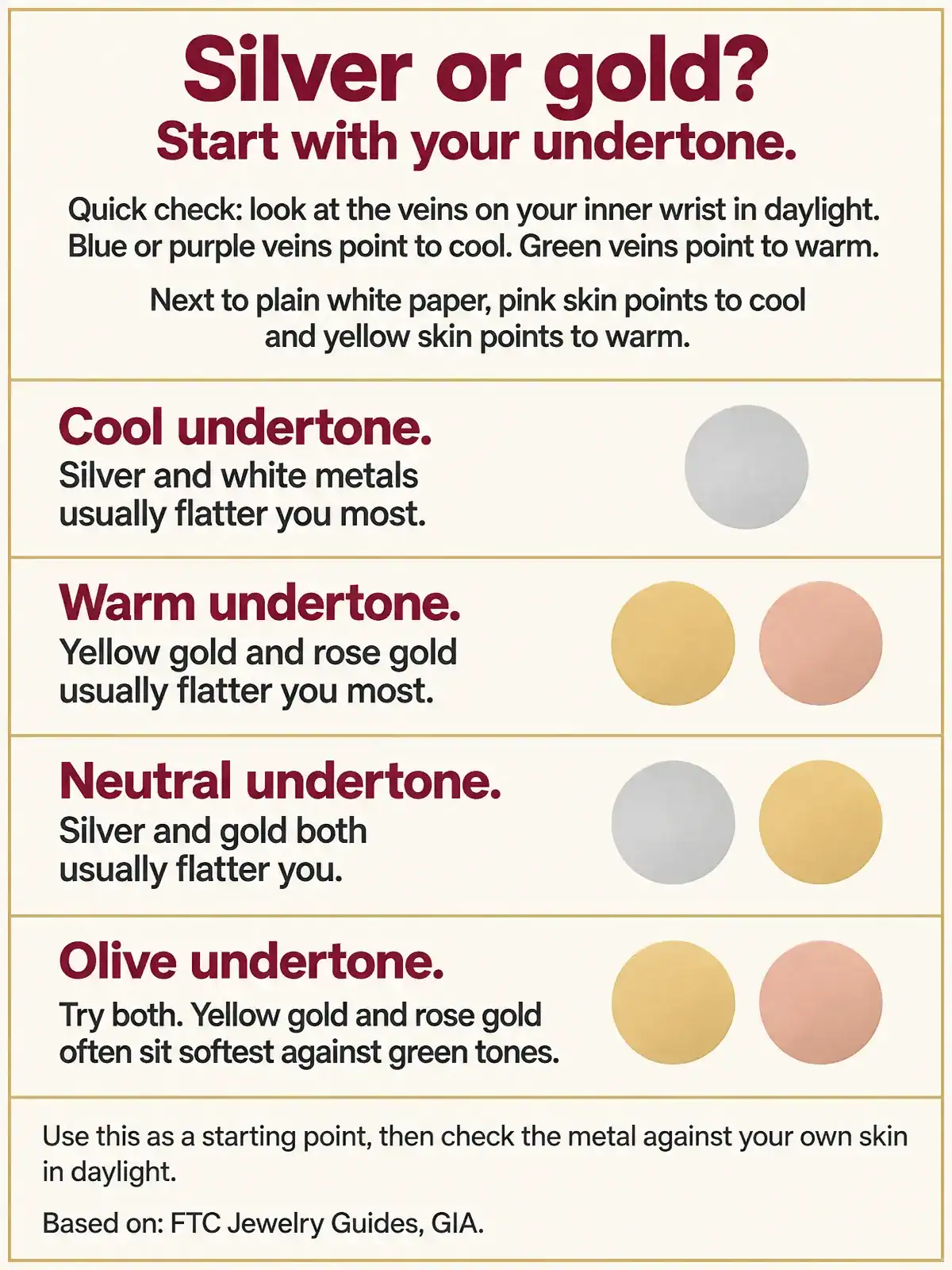
Your undertone points to your metal.
Undertone is the hue under the surface of your skin, and it stays put when the surface color changes with a tan. Cool undertones run pink, rosy or blue.
Warm undertones run golden, peachy or yellow. Neutral undertones sit between the two, and olive undertones carry a green or gray-green cast.
Run the tests in daylight, on bare skin, because indoor light bends color. The vein test is the quickest: look at the veins on your inner wrist. Blue or purple veins point to cool, green veins point to warm, and veins that read as both, or that you cannot call, point to neutral.
Hold plain white paper beside your bare face for the second test. Skin that reads pink or rosy next to the paper leans cool, skin that reads yellow or golden leans warm, and skin that reads as neither leans neutral. A greenish or gray cast next to the paper is the olive sign.
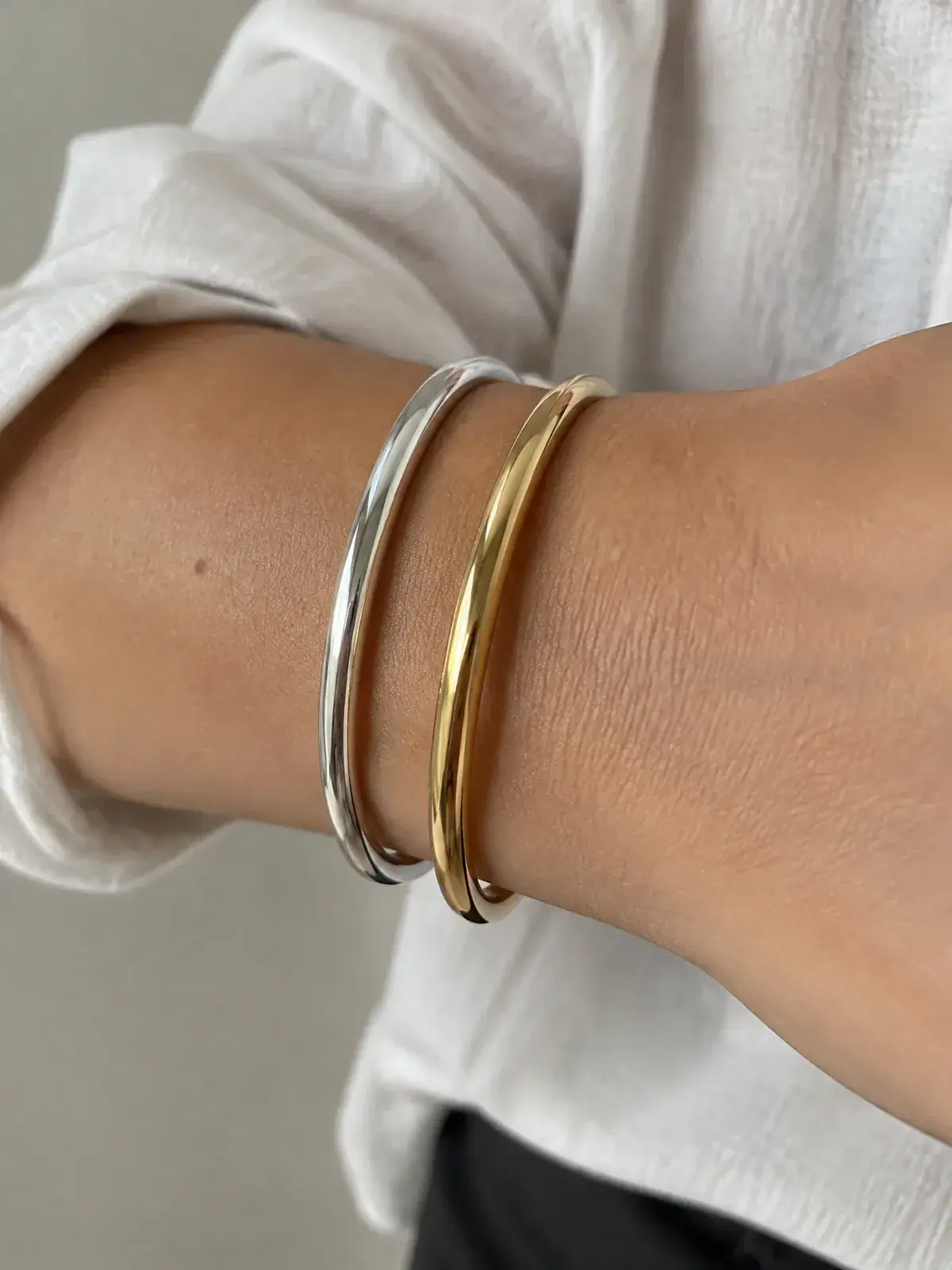
The third test uses jewelry you already own. Hold a gold piece against your skin, then a silver piece, in the same daylight, and watch your skin rather than the metal. The metal that makes your skin look clear and even is your lean.
Trust the read only when at least 2 of the 3 tests agree. Vein color is a clue, not proof: a 1996 study of why veins look blue found that skin, light and the vein itself all shape the color you see. One test on its own can send you the wrong way.
Olive skin gets its own answer because the tests often split on it. Yellow gold and rose gold tend to soften the green cast, and silver can work as a cool contrast. If your tests split between warm and neutral, start with gold and try silver against your skin before you rule it out.
Rose gold sits between the two camps. Copper in the alloy gives it the pink color, so it leans warm, yet the pink reads soft enough that many neutral undertones wear it well. It is a fair first buy when your tests will not settle.
Tone and reaction are two different questions. Tone is about which metal color suits your coloring, while an itch or a rash is about the alloy itself, and the hypoallergenic jewelry metals are the safer place to start when skin reacts.
Sterling silver is alloyed with copper, not nickel, but white gold is often alloyed with nickel, typically 10 to 20 percent of the alloy, with palladium white gold as the nickel-free kind. Europe caps nickel release at 0.2 micrograms per square centimeter per week for posts through a piercing and 0.5 for pieces in long skin contact. If a metal makes your skin react, check with a dermatologist rather than guessing from a label.
What the metals and the stamps actually mean.
Karat counts gold in parts out of 24, so 24K is pure gold and every lower number is gold mixed with other metals for strength. 14K is 58.3 percent gold, 18K is 75 percent gold, and 10K is 41.7 percent gold. More gold means a richer color and a softer piece, so 14K is the harder-wearing pick for a ring worn daily.
Sterling silver has its own fixed recipe. A piece marked sterling is at least 925 parts per thousand pure silver, which is 92.5 percent silver with 7.5 percent other metals, mostly copper. That copper is why sterling is hard enough to wear, and it is also why sterling tarnishes faster than pure silver.
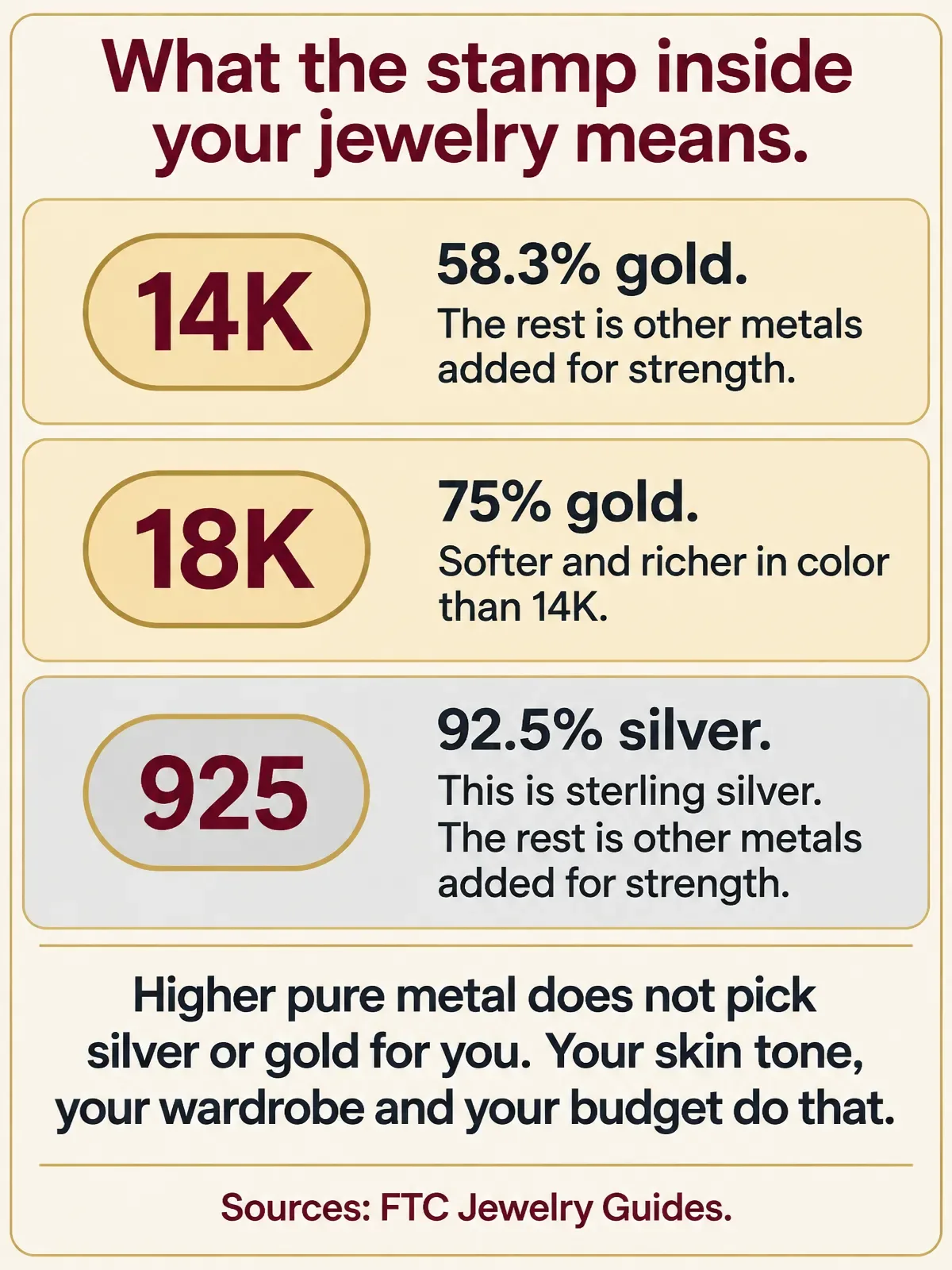
Stamps turn those recipes into a shopping check. Inside a band or on a clasp, 925 means sterling silver, 585 is the fineness stamp on 14K gold, and 750 is the stamp on 18K gold. The stamp 585 reads as the parts-per-thousand mark, while 58.3 percent is the same gold counted in prose, so the two numbers describe one alloy.
Letters after a karat number change the meaning. A stamp that pairs a karat mark with GP points to gold plated, and GF points to gold filled, so the number names the coating, not solid gold. A US stamp is the maker's claim, while a UK hallmark is tested by an assay office, which is worth knowing when you buy across borders.
Coating words have set meanings under US rules. Vermeil is sterling silver coated on all its main surfaces with gold of at least 10K, at least 2.5 microns thick counted as fine gold (FTC Jewelry Guides). Because the measure is fine gold, a lower-karat coating has to sit physically thicker to meet the same floor.
Gold filled is a gold layer bonded to a base metal, at least 10K, making up at least one twentieth of the whole metal weight. Gold plated, also called gold electroplate, starts far thinner, at a floor of 0.175 microns of fine gold, and heavy gold electroplate reaches 2.5 microns. PVD names a vacuum coating process, usually over stainless steel, and it names no gold content at all.
One word of care with vermeil abroad. The 2.5 micron floor is a US rule, and sellers in other countries can use the word more loosely. On any listing, the stamp, the base metal and the coating type tell you more than the headline word does.
Silver vs gold jewelry, side by side.
Every factor from the sections above and below sits in one screen here. Read down the rows for the factor you care about most, then read the detail sections for the ones that stay close.
| Point | Silver | Gold |
|---|---|---|
| Undertone match | Cool undertones first; a cool contrast on olive skin | Warm undertones first; yellow and rose gold soften olive skin |
| Wardrobe colors | Black, pure white, gray, navy, jewel tones, icy pastels | Cream, camel, rust, olive, brown, mustard, terracotta |
| What you are buying | Sterling is solid metal through, at 92.5 percent silver | Solid gold, or a coating: vermeil, gold filled or plated |
| Stamps to read | 925 for sterling silver | 585 for 14K, 750 for 18K; GP or GF after a number means a coating |
| Care | Tarnishes; polish now and then, store dry below 50 percent humidity | Pure gold does not tarnish like silver; low karats can dull slowly |
| Skin facts | Alloyed with copper, not nickel, in standard sterling | White gold can carry nickel; palladium white gold does not |
| Budget | Costs least per piece; bigger, heavier pieces stay in reach | Costs most per piece in solid form; coatings cut the price |
Silver in daily life.
Sterling silver reads cool and bright against skin, and it sharpens the cool half of a closet: black, pure white, gray, navy and jewel tones. It is also the metal that lets you buy size on a budget, because the same money covers a larger, heavier piece in sterling than in solid gold. For cool undertones, silver is the metal that does the most work per dollar.
Earrings are where most women feel the silver call first. A small sterling hoop or a plain stud sits clean next to pink or rosy skin, and it holds its own against black and navy tops. Drops in sterling give you swing and length without the solid gold price.
Shop silver earrings
Sterling silver earrings for the cool side of this choice
- EARRINGSFcebsty 3 pairs 925 sterling silver hoop earrings for women, smallShop on Amazon
- EARRINGS925 sterling silver stud earrings, round CZ solitaire, for womenShop on Amazon
- EARRINGSSterling silver filigree drop earrings for womenShop on Amazon
As an Amazon Associate we earn from qualifying purchases.
Necklaces carry the same cool note at the neckline. A sterling chain reads crisp against a white shirt and calm against navy, and a heart necklace in sterling keeps the shape simple enough for daily wear. Length matters more than extras here: a chain that lands at the collarbone works with most necklines you already own.
Shop silver necklaces
Sterling silver necklaces in the shapes this section names
- NECKLACESterling silver heart necklace, 18 inchesShop on Amazon
As an Amazon Associate we earn from qualifying purchases.
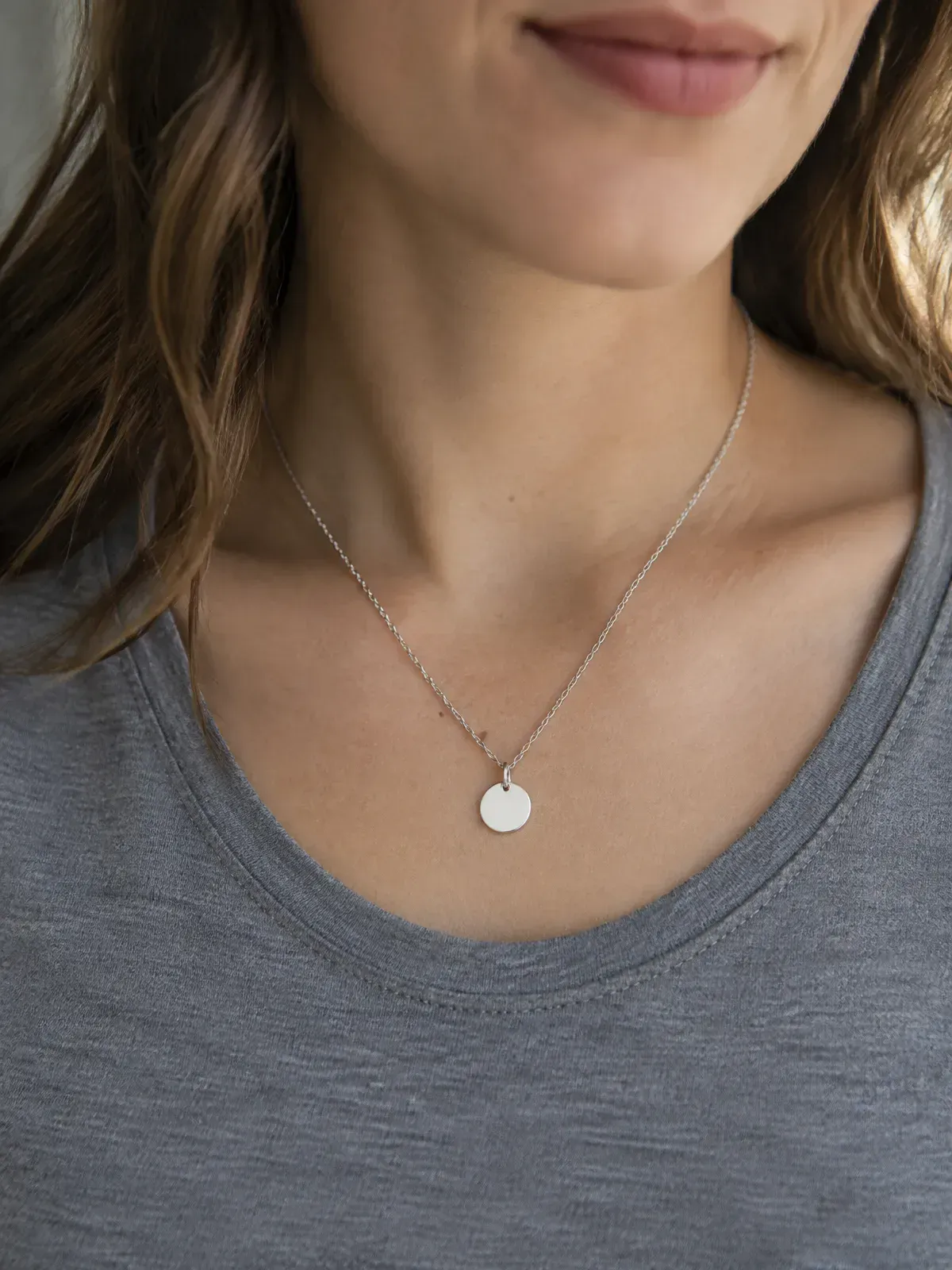
Tarnish is the honest cost of the silver side. Silver reacts with sulfur gases in the air and forms silver sulfide on the surface, and the copper in sterling speeds that up. Store sterling dry, below 50 percent humidity, in a sealed bag away from rubber and wool felt, and it stays bright far longer (Canadian Conservation Institute).
Polish with a light hand when the gray film shows. Every polish takes a little metal off the surface, so coated pieces, vermeil above all, get a soft cloth and no hard rubbing. Solid sterling can take a normal polish now and then without harm.
Gold in daily life.
Yellow gold reads warm against skin, and it warms the warm half of a closet: cream, camel, rust, olive and brown. For warm undertones it is the metal that makes skin look even and rested, and a small solid piece can carry a plain outfit on its own. Gold asks more money per piece, so most women build the gold side slowly.
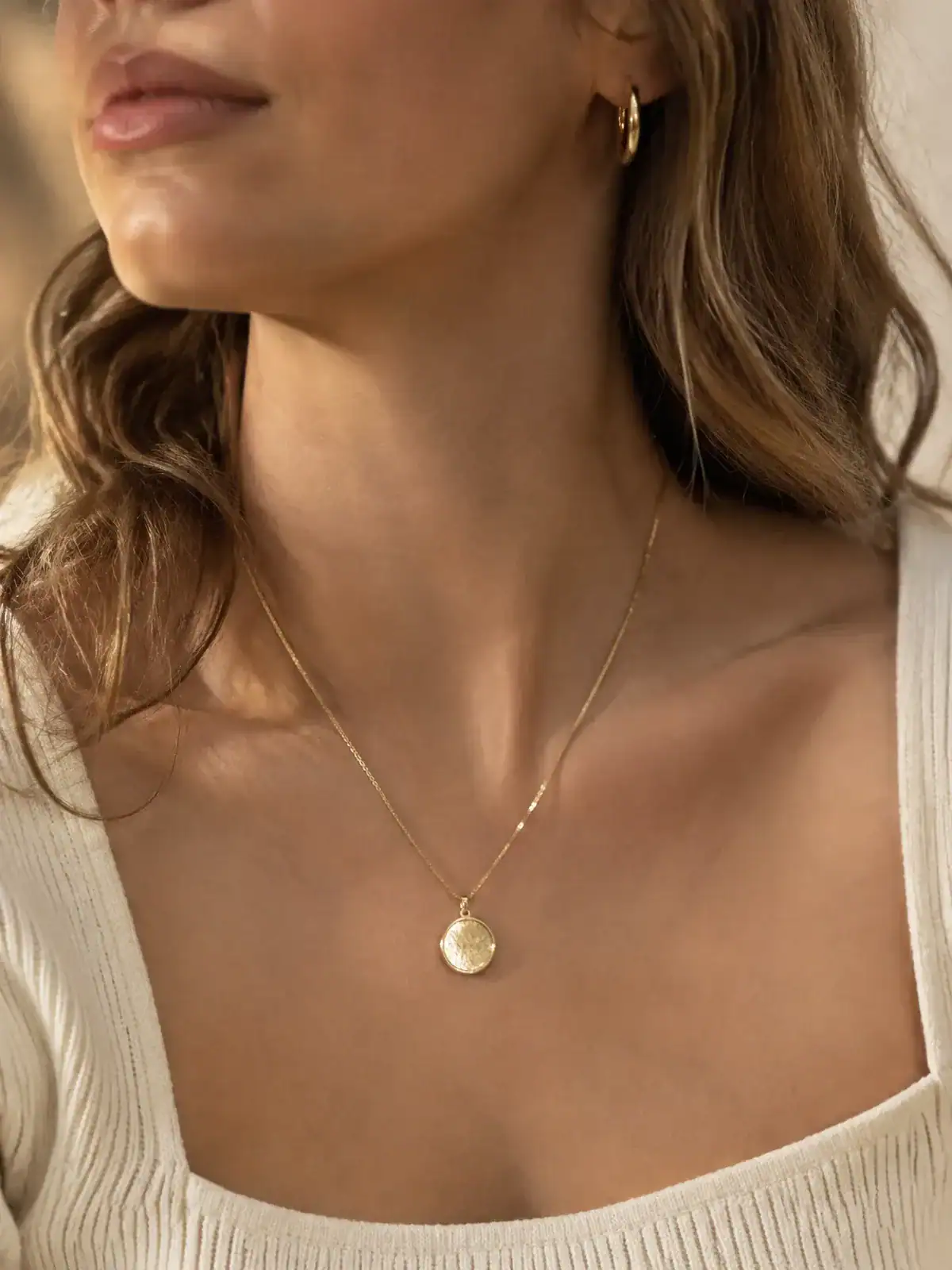
Gold earrings repay that slow build. Small 14K hoops hold their color through daily wear, studs in gold sit warm next to golden or peachy skin, and a dangle drop in gold warms a cream or terracotta top. Coated studs cost less and suit the pair you wear twice a month.
Shop gold earrings
Gold earrings for the warm side of this choice
- EARRINGS14K gold hoop earrings for womenShop on Amazon
- EARRINGS14K yellow gold plated cubic zirconia stud earrings, 6 pairsShop on Amazon
- EARRINGS14K gold dangle drop earrings for womenShop on Amazon
As an Amazon Associate we earn from qualifying purchases.
A gold necklace does similar work at the neck. A plated pendant gives the warm color at a coated price, and a paperclip chain in gold plating reads bold against a plain knit. Read the listing for the base metal and the coating before you pay, because the color alone tells you nothing about what sits under it.
Shop gold necklaces
Gold necklaces in the shapes this section names
- NECKLACEFoxgirl gold heart necklace for women, 14K gold plated pendant necklaceShop on Amazon
- NECKLACEPAVOI 14K gold plated paperclip chain necklace for womenShop on Amazon
As an Amazon Associate we earn from qualifying purchases.
Care on the gold side is lighter. Pure gold does not tarnish the way silver does, and solid gold has no coating to wear through at the edges. Lower karats carry more alloy metal, and that alloy share can dull very slowly over years, which a soft cloth and plain storage handle.
Wardrobe colors cast their own vote.
Count the colors you wear most before you count anything else. A closet built on cream, camel, rust, olive, brown and mustard pulls gold into almost every outfit, while a closet built on black, pure white, gray, navy and jewel tones gives silver the home field. Black, white and navy sit well with both metals, so they settle nothing on their own.
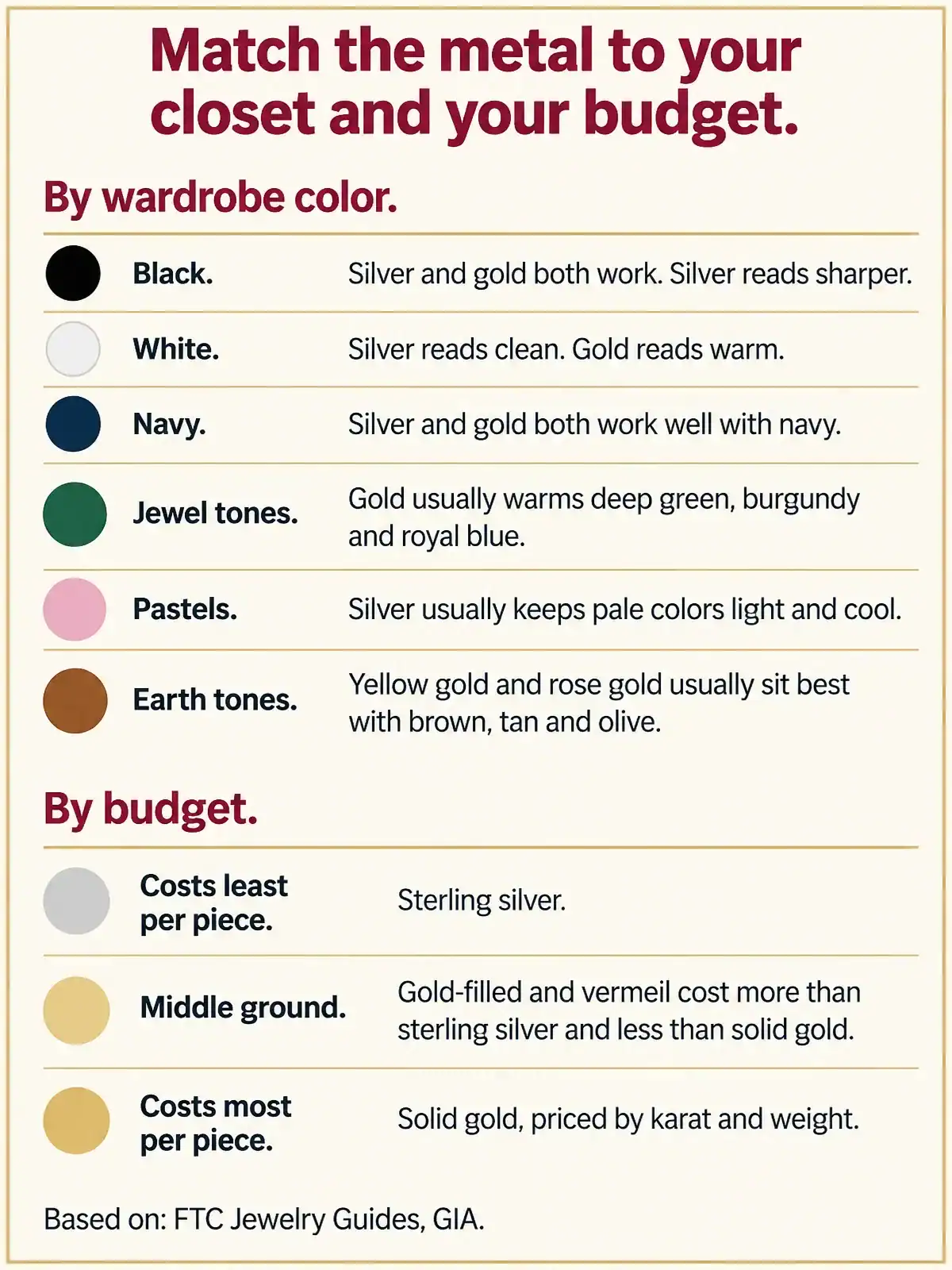
Silver reads sharp against black and clean against pure white. Gold reads warm against white and soft against cream. Jewel tones split the room: gold warms deep green, burgundy and royal blue, while silver keeps icy pastels light and cool.

Earth tones are the clearest gold ground in the closet. Brown, tan and olive clothing can make silver look stark by contrast, which is fine when stark is the look you want. On a mixed closet, the metal you already own in a watch, a wedding band or glasses frames often casts the deciding vote.
Budget and cost per wear settle close calls.
Solid gold costs far more per ounce than silver, so the same budget buys a small solid gold piece or a much larger sterling piece. That gap is the whole budget story in one line. Everything after it is about how you close the gap: a coating, a lower karat, or a longer life counted in wears.
A gold color at a silver-like price almost always means a coating, not solid gold. Vermeil, gold filled and plain plating sit at three very different thicknesses, and what gold-filled really means changes how long each one is likely to last on your skin. Pay for the thickest coating your budget reaches, and ask what sits under the gold, because a nickel layer under a coating must be disclosed by the seller.
Solid gold adds its own price step. 18K holds 75 percent gold, against 58.3 percent in 14K.
The same design costs more in 18K and feels softer. how karat affects gold content shows when 18K is worth paying for, and when 14K is the smarter daily buy.
Cost per wear turns sticker prices into a fair fight. Calculation, from one retailer's same-design prices checked in October 2026: a pearl ring set cost $560 in sterling silver, $580 in vermeil and $1,140 in solid 14K.
At 200 wears each, the cost per wear is $2.80 for silver, $2.90 for vermeil and $5.70 for solid gold, and the gold set worn 400 times drops to $2.85 per wear. Price divided by wears is the whole formula, so run it on any piece with your own honest wear count.
Ask four things before you pay for any piece in either metal. What does the stamp say, what is the base metal, which coating is it if it has one, and how thick is that coating in microns. A listing that answers all four is a listing you can judge, and one that answers none of them is a guess.
Mixing both metals on purpose.
Picking one metal is not the only good answer. Wear both when each piece earns its place. Let one metal lead across most of the outfit, and bring the second metal in as an accent.
Repeat each metal at least twice, so the mix reads as a plan. A two-tone piece, a watch or a ring that already carries both colors, ties the two sides together.
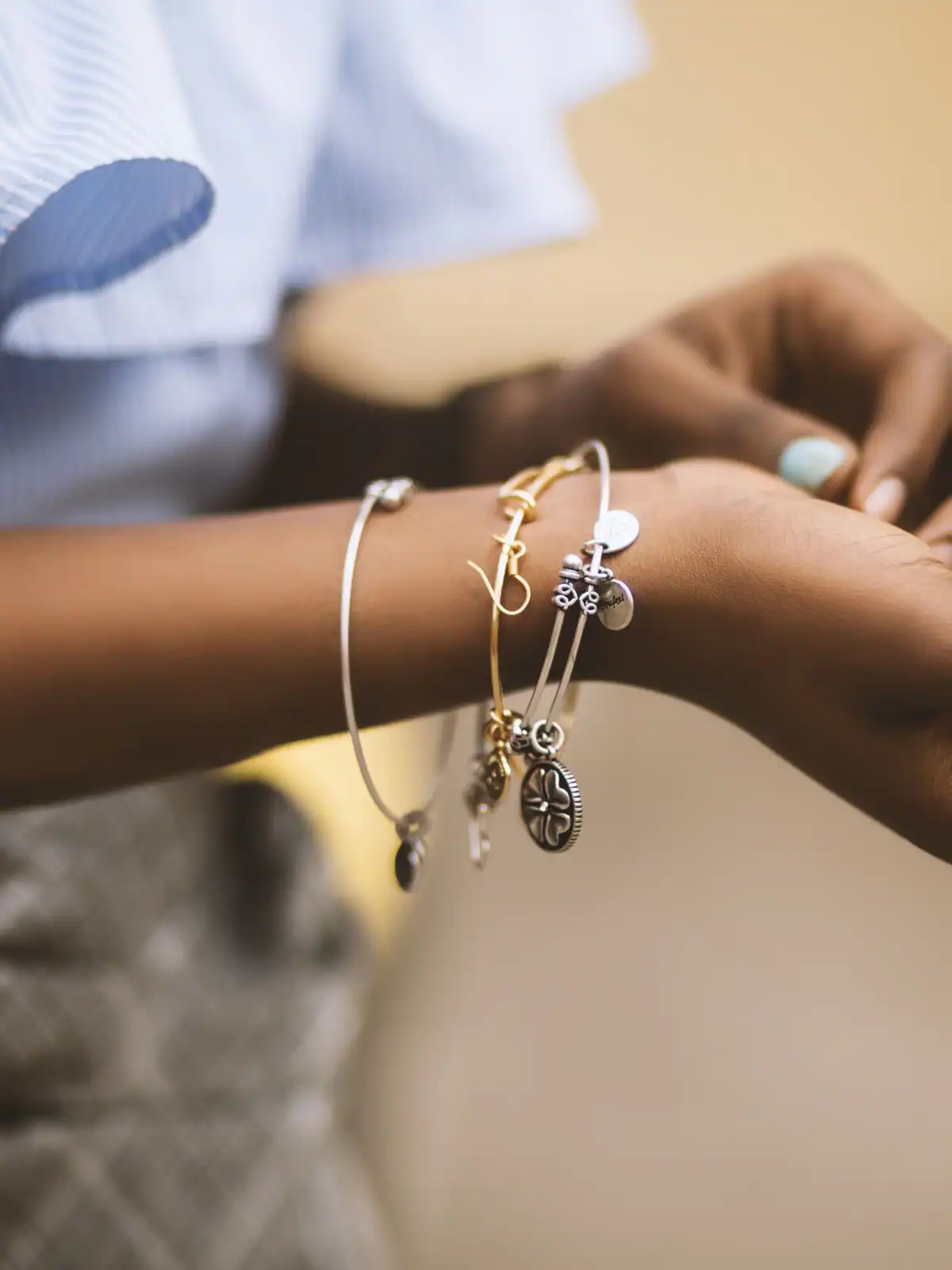
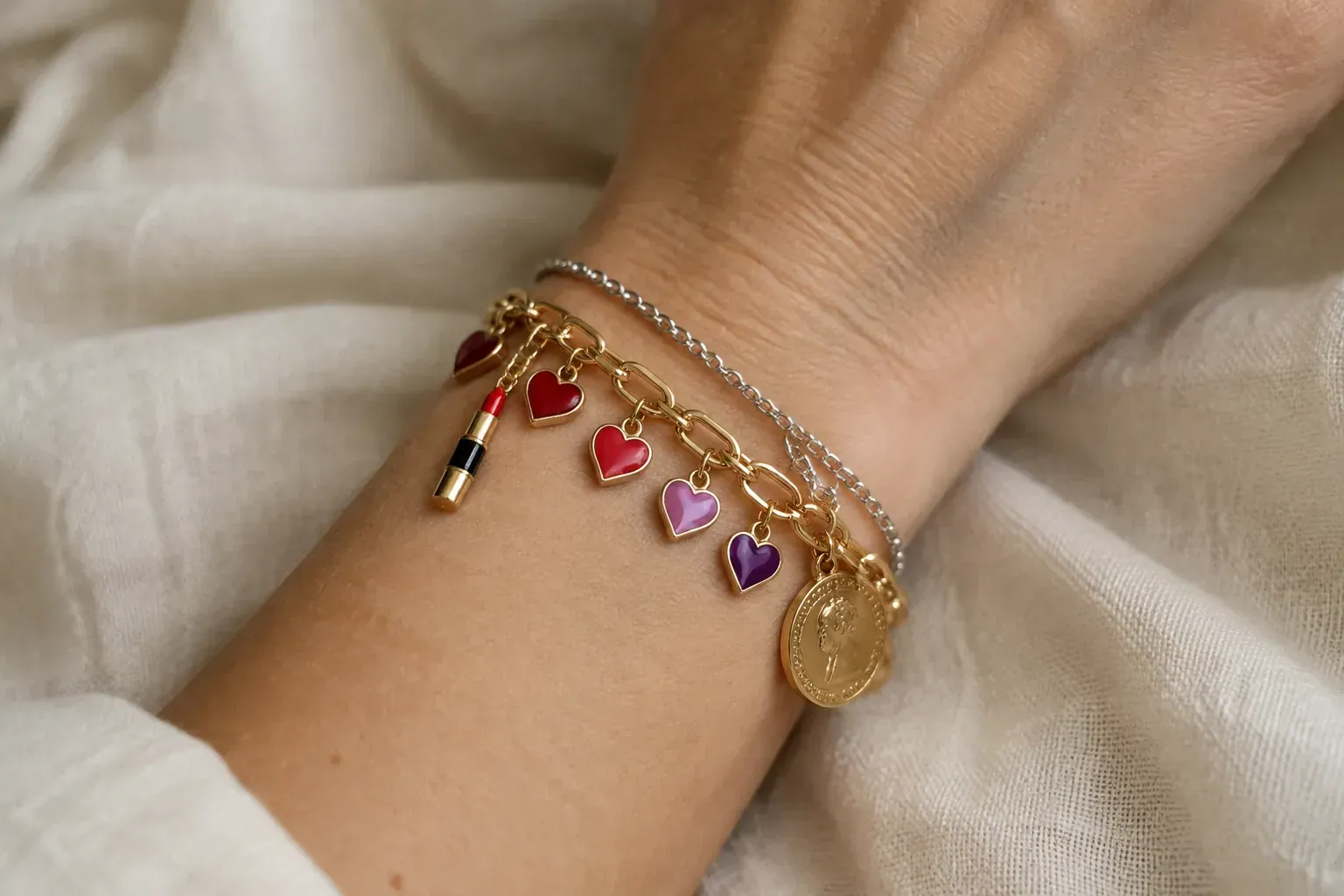
Bracelets are the easiest place to start a mix. A sterling bangle beside a gold paperclip chain on one wrist shows both metals at once without touching your earrings or your neckline. Keep the scale and finish alike across the stack, so the pieces read as one set worn on purpose.
Shop bracelets in both metals
Silver and gold bracelets to wear alone or in one stack
- BRACELETBUYITO sterling silver bangle bracelets for women, 925 silver cuff banglesShop on Amazon
- BRACELETAmberta women's 925 sterling silver link chain bracelet for charms, adjustableShop on Amazon
- BRACELETGold bangle bracelets for women, gold plated chunky cuff bangleShop on Amazon
- BRACELETGold bracelets set for women, 14K gold plated paperclip and Cuban link chain braceletsShop on Amazon
As an Amazon Associate we earn from qualifying purchases.
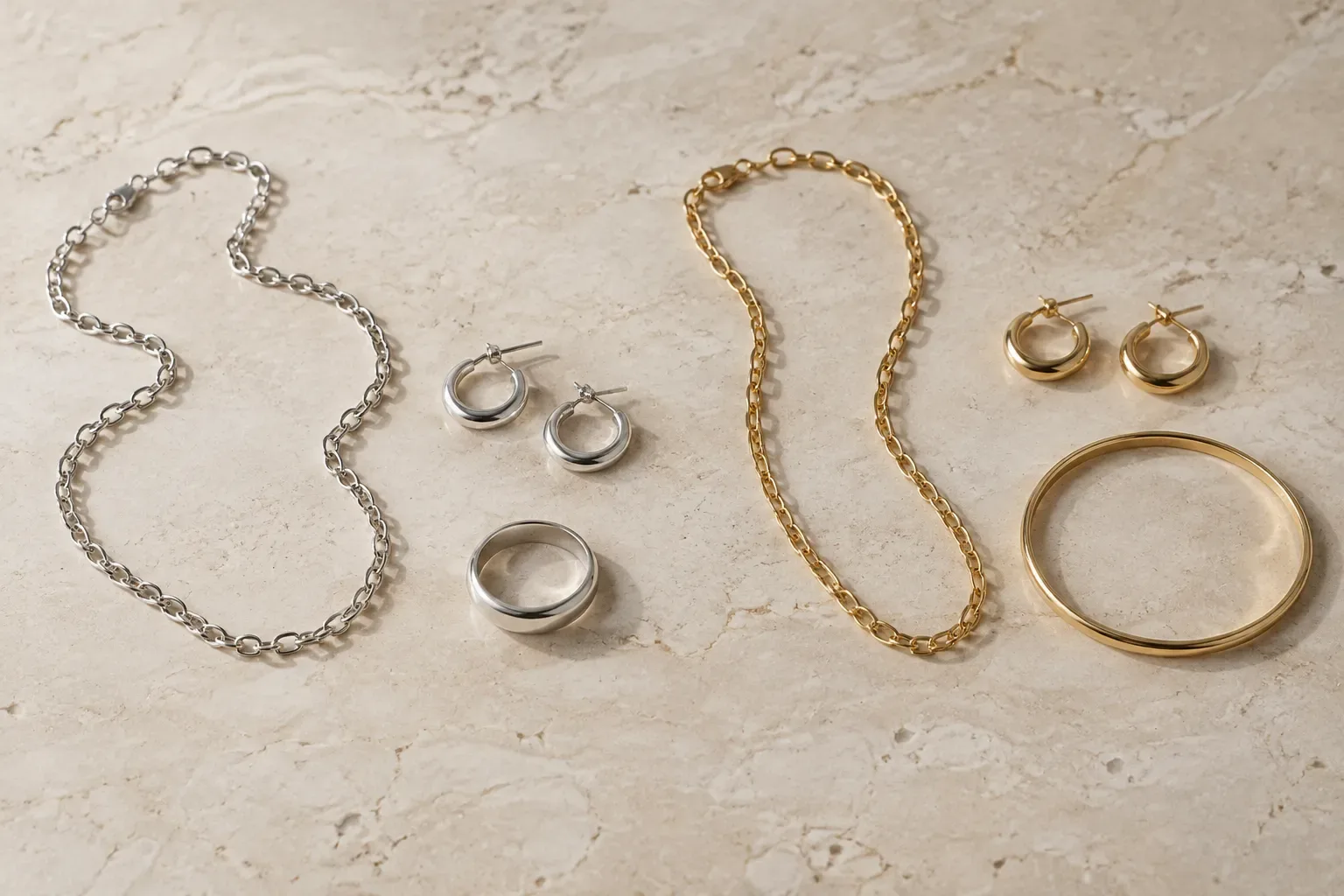
Mixing is also the easy answer if you love both metals and own good pieces in each. Gold hoops with a silver chain is a deliberate look, and this year's mixed-metal trend is one reason it reads as planned rather than mismatched. The verdict on your own wrist still rests on your skin, your closet and your budget, not on the season.
Let the ring you never take off lead
My call is to stop treating a mixed wrist as a mistake. Pick the metal of the one piece you never take off, a wedding band or a watch, and let that metal lead.
Buy the second metal in smaller pieces around it, and the whole set looks chosen. A jewelry box split down the middle, with no lead, is the only mix that reads as an accident.
One cost hides inside the silver pick, and it is upkeep rather than money. Sterling asks for dry storage and a polish now and then, so it helps to know how to keep sterling silver from tarnishing before the gray film puts you off a piece you love.
Pick silver if.
- Your tests agree on a cool undertone, blue or purple veins and a pink read next to white paper.
- Your closet runs on black, pure white, gray, navy, jewel tones or icy pastels.
- You want larger or heavier pieces, and your budget has to cover them.
- A short polish now and then sounds like a fair trade for the price.
- The pieces you already wear daily, a watch or a band, are silver in color.
Neither list has to win outright. Plenty of women land on silver for earrings and gold for one ring, or the other way round, and that split is a settled answer, not a failed test.
Pick gold if.
- Your tests agree on a warm undertone, green veins and a golden read next to white paper.
- Your closet runs on cream, camel, rust, olive, brown or mustard.
- You would rather own fewer pieces and wear each one for years.
- Tarnish and polishing sound like chores you will skip.
- The pieces you already wear daily, a watch or a band, are gold in color.
Three questions come up every time this choice is made in a shop. Each one is answered here in short form.
Questions the sections above leave open.
Can I wear silver and gold in the same outfit every day, or only for going out?
Every day is fine. A daily mix holds up when one metal leads, each metal shows at least twice, and the pieces share a scale and finish. Small daily pieces in both metals read calmer than one bold piece in each, so save the big mixed stack for going out if the everyday version feels loud.
My undertone tests disagree with each other. Now what?
A split result is an answer in itself: it points to neutral or olive undertones, where both metals can work. Let your closet colors decide, or start with the metal you already own most of. Rose gold is the other fair start, since its pink sits between the two camps.
I already own mostly one metal. Should I switch or build around it?
Build around it in most cases. A working set in one metal costs nothing more, and new buys in the same metal stretch every outfit you already have. Add the second metal in one or two accent pieces first, and only switch the lead if your tests and your closet both point the other way.