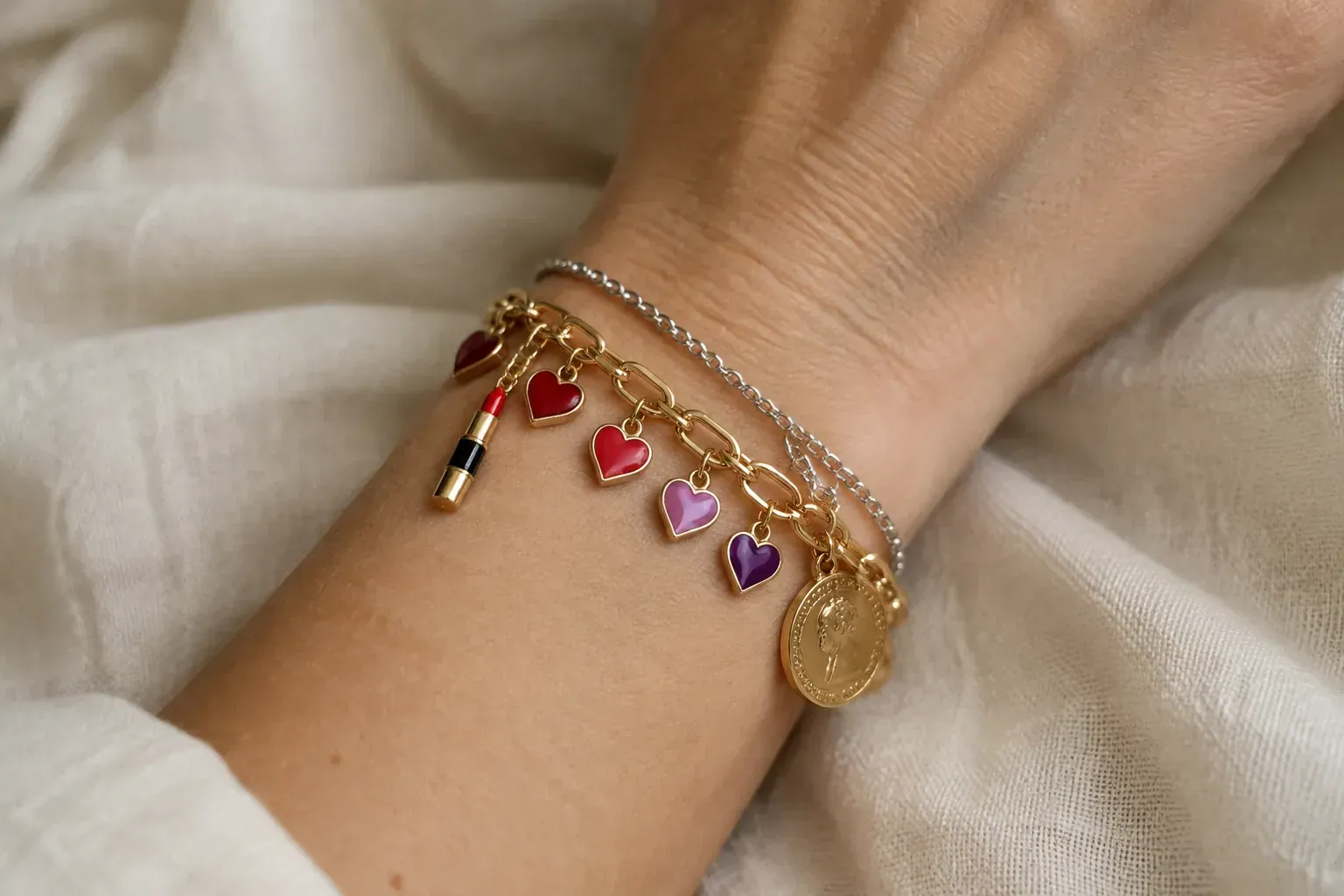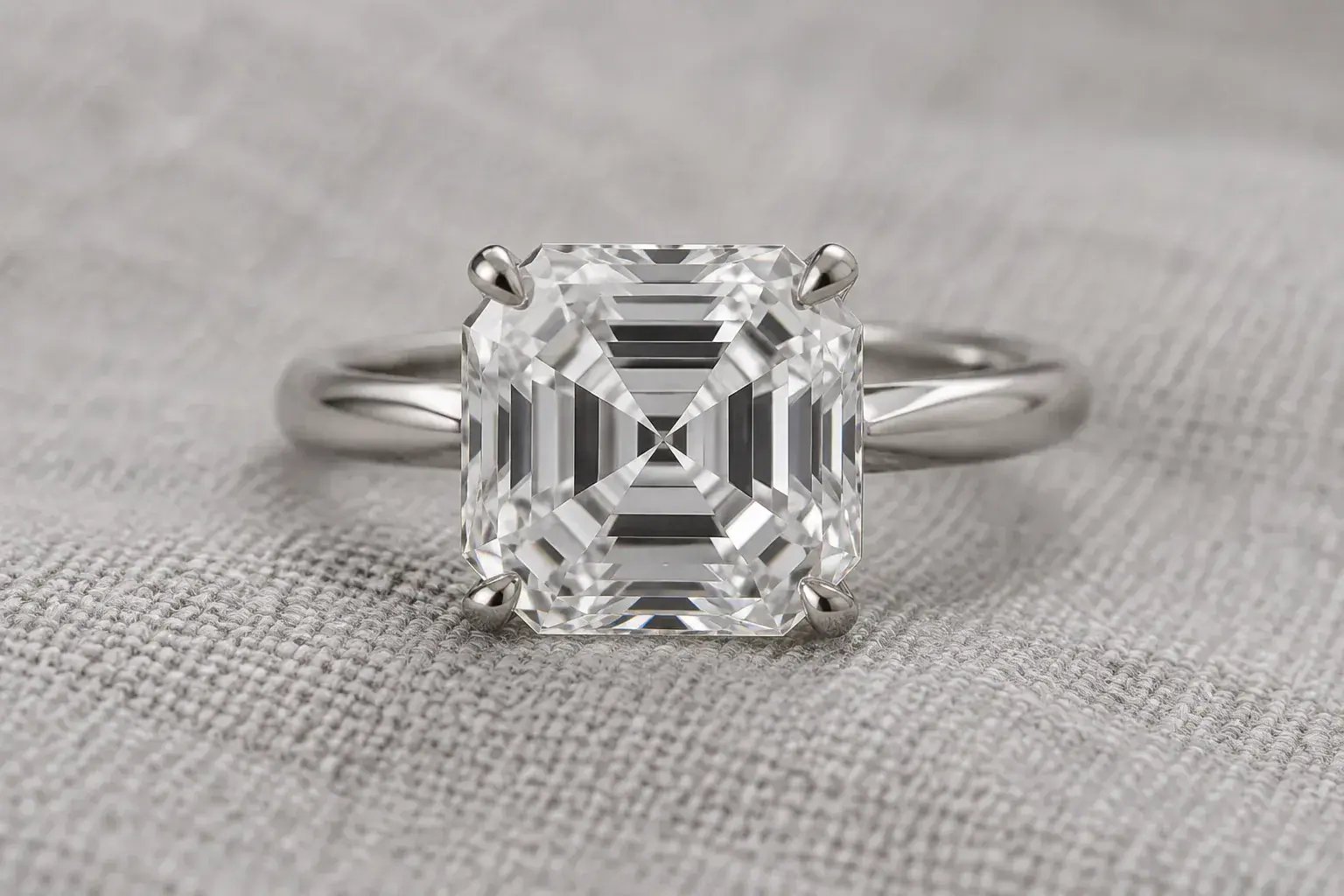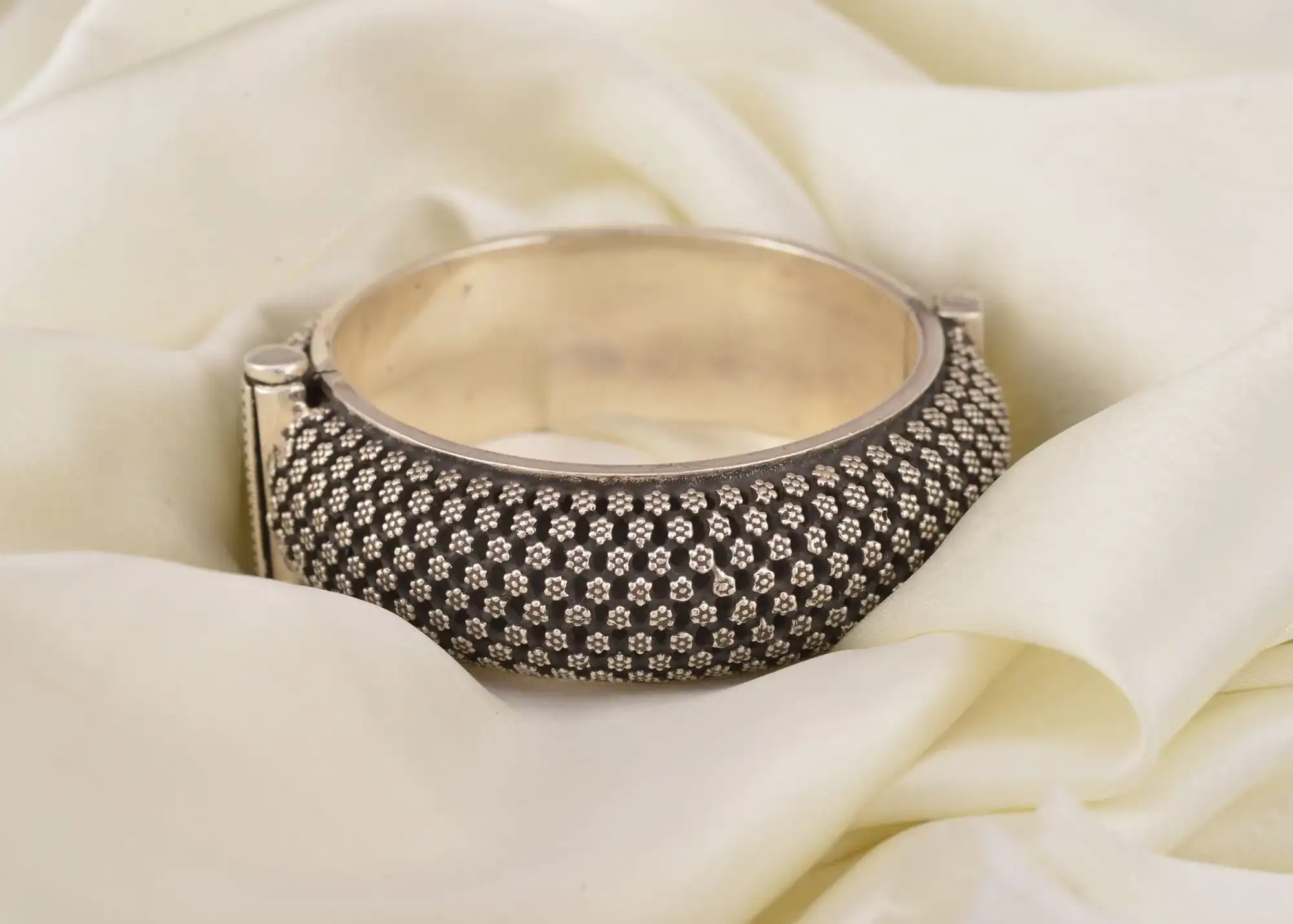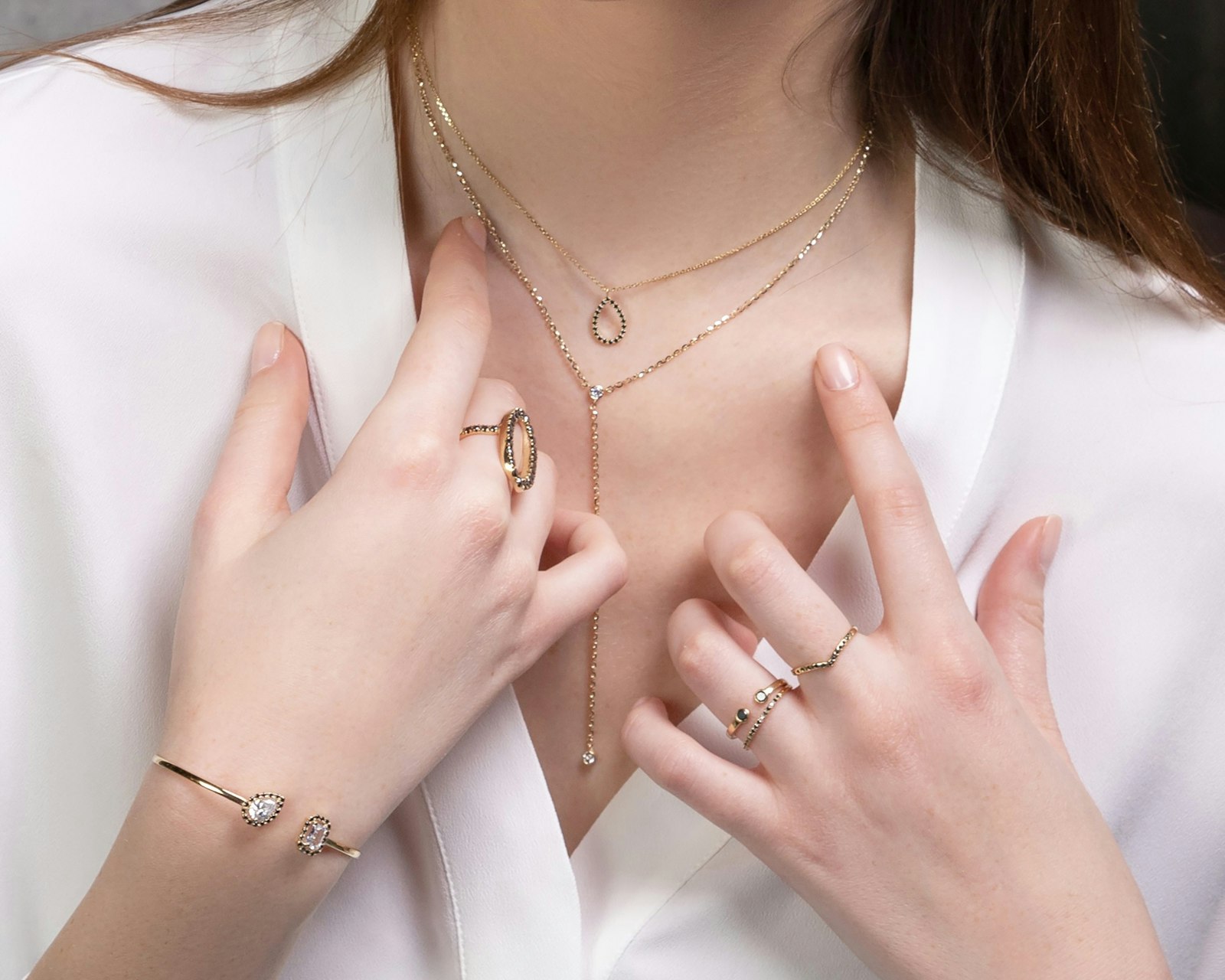
Two necklaces sit side by side. Both are golden, both look lovely, and one costs three times as much as the other. The difference is usually hiding in a single word on the label: plated, vermeil, filled, or lately, PVD.
Some of those words have legal definitions. Others are pure marketing. Together they tell you how much real gold you are getting, what sits underneath it and how long the shine is likely to last. Here is what each one means, how to read the small print and which one suits the way you wear jewelry.
The short answer.
Thinnest
Gold-plated
A very thin film of gold over brass or copper. Lovely for trends, but it can wear through quickly with daily wear.
The sweet spot
Gold vermeil
A thicker layer of real gold over sterling silver. Fine-jewelry feel at a friendlier price.
Longest lasting
Gold-filled
A thick layer of gold bonded to a brass core with heat and pressure. Built for years of daily wear.
Water-friendly
PVD steel
A very hard, thin coating over stainless steel. Not always real gold, so ask what the coating is.
And a fourth option you will see everywhere now: PVD-coated stainless steel, sold as "waterproof" gold jewelry. It is tough, but it plays by different rules. More on that below.
In this guide
First, a quick word on karats.
Karat tells you how much pure gold is in the gold alloy itself. 24 karat is pure gold, 18K is 75 percent gold, 14K is about 58 percent, 10K is about 42 percent and 9K, common in the UK, is 37.5 percent. In the US, a gold layer only counts for the terms below if it is at least 10 karat. So when you see "14K gold vermeil", the 14K describes the gold layer, not the whole piece. And do not mix it up with carat with a C, which is the unit of weight for gemstones: one carat is 0.2 grams.
0.175 µm
Minimum gold for "gold electroplate" in the US
2.5 µm
Minimum gold for vermeil, over sterling silver
1/20
Of the total weight must be gold for gold-filled
How thin is thin?
A micron is a thousandth of a millimeter, which makes these numbers hard to picture. Gold helps here, because it is the most malleable metal there is: a single gram can be beaten into a sheet of one square meter. With gold weighing 19.3 grams per cubic centimeter, that sheet is only about 0.05 microns thick.
Seen that way, the US minimum for gold electroplate, 0.175 microns, is only three to four times thicker than gold leaf. Vermeil and heavy gold electroplate need 2.5 microns, roughly 14 times the electroplate minimum. Gold-filled is measured by weight instead of thickness: at 1/20 of 14 karat gold, about 2.9 percent of the whole piece is pure gold, because a twentieth is 5 percent and 14K gold is 58.3 percent gold. Rolled gold plate at 1/40 of 14K works out at about 1.5 percent.
≈0.05 µm
Gold leaf made from one gram spread over one square meter
14×
Vermeil minimum compared with the gold electroplate minimum
≈2.9%
Pure gold by weight in a 1/20 14K gold-filled piece
01 / The thinnest layer
Gold-plated.
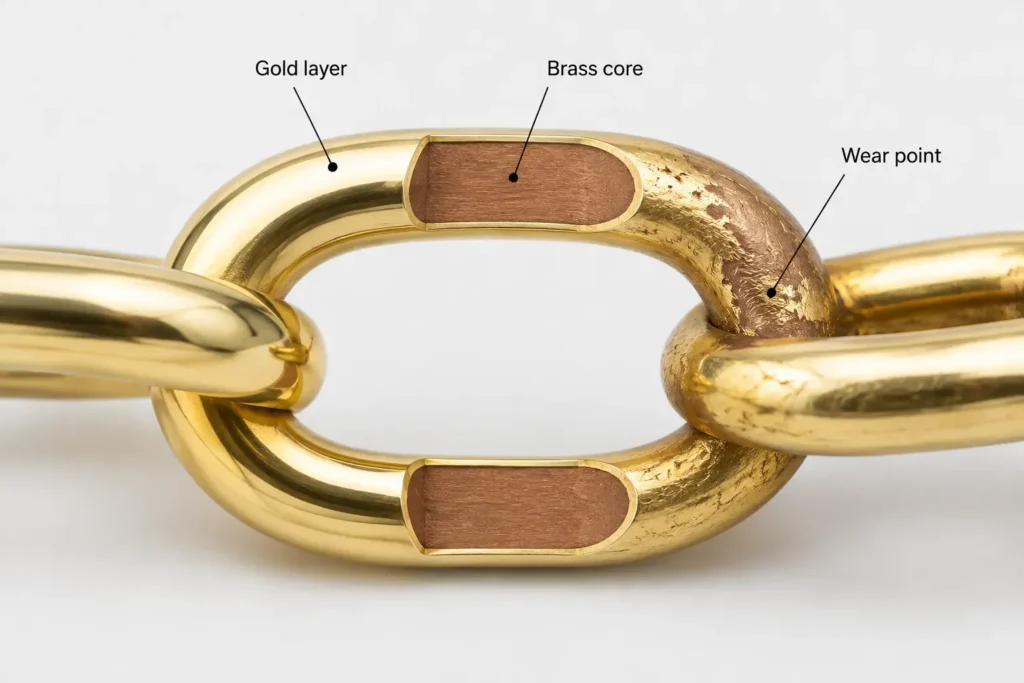
Plating means a thin film of gold is applied to a base metal, usually by electroplating. The base is typically brass, copper or a zinc alloy. Under the FTC's jewelry guides on gold plating, a piece can be called "gold plate" or "gold electroplate" with a gold layer of just 0.175 microns. That thin layer wears fastest on pieces that rub all day, such as charms, which is why our charm jewelry styling guide says to check the metal first. A micron is a thousandth of a millimeter, so that is extremely thin. Many fashion pieces sit around 0.5 to 1 micron.
The upside is price: you can follow trends without a big investment. The downside is wear. Friction points such as the underside of a bracelet or the band of a ring rub through first, and the warmer, coppery color of the base metal starts to show. One step up is heavy gold electroplate, often marked HGE, with at least 2.5 microns of gold over a base metal.
Good to know
A thin top layer of gold can also hide a base-metal layer such as nickel underneath. The FTC guides say that if a gold coating is covered with base metal and then only a thin gold wash, the seller has to disclose it.
02 / The sweet spot
Gold vermeil.
Vermeil, said "ver-may", is the material many modern demi-fine brands build their collections around. In the US, the FTC's rules for the word vermeil allow it only when three things are true:
- the base is sterling silver, which is 92.5 percent pure silver,
- the gold is at least 10 karat,
- the gold layer is at least 2.5 microns thick throughout, on all significant surfaces.
That makes the gold several times thicker than typical fashion plating, and because the core is a precious metal, the piece keeps some value and ages more gracefully. When vermeil eventually wears at a friction point, it reveals pale silver rather than coppery brass.
Shopping from the UK?
Vermeil is not a separately defined legal term there. The British Hallmarking Council's guidance on gold-plated silver says it must be described as silver, with the word gold directly followed by "plated", for example "18ct gold plated silver ring". Brands may add the word vermeil on top, so look for the micron thickness they quote.
Our take
Placeholder for the owner's answer: where do you personally wear vermeil, and where would you spend more on gold-filled or solid gold?
03 / Built to last
Gold-filled.
Despite the name, gold-filled jewelry is not filled with gold. It is a base metal core, usually brass, with a thick layer of gold alloy bonded to the outside using heat and pressure rather than a chemical bath. Under the FTC guides, the gold must be at least 10 karat and make up at least one twentieth of the total weight. That is where the familiar stamp "1/20 14K GF" comes from, and it means about 2.9 percent of the piece is pure gold.
Because the gold layer is so much thicker, gold-filled is the hardest wearing of the three classic options. Suppliers often quote 50 to 100 microns, but that does not add up for fine chains. By our own calculation from the densities of 14K gold and brass, 5 percent gold by weight on a 1 mm wire is roughly 8 microns thick, and on 0.5 mm wire about 4 microns. That is still more than the 2.5 microns vermeil requires. With reasonable care it can be worn daily for many years. You will also see rolled gold plate, marked RGP, and gold overlay: the same idea with a thinner layer of at least one fortieth of the weight.
The word on the label tells you two things: how much gold is on the surface, and what is waiting underneath when it wears.
04 / The new contender
PVD-coated stainless steel.
PVD stands for physical vapor deposition, a vacuum process that deposits a very thin, very hard coating onto metal. In jewelry it is usually applied to stainless steel, often grade 316L, and it is why so many brands now sell "waterproof" or "shower-proof" golden pieces. The same family of coatings is used on watches and phones because it resists scratches and everyday wear well.
Two things to know. First, the coating is not always gold. A popular gold-colored PVD coating is titanium nitride, a ceramic that simply looks golden. Some brands add a gold top layer, others do not, and the label rarely tells you which. Second, a worn PVD coating cannot easily be replated at your local jeweler, so when it is gone, it is gone.
The toughness is real. Titanium nitride has a Vickers hardness of roughly 1,800 to 2,100, while pure gold measures only about 20 on the same scale, so the ceramic is around a hundred times harder. Coatings like this are usually less than 5 microns thick, so it is the hardness, not the thickness, that makes them last.
Good to know
Under the FTC guides, the word "gold" on its own should only describe something made of 24 karat gold throughout. If a PVD piece is simply called "gold", ask what the coating actually is.
Our take
Placeholder for the owner's answer: do you wear PVD steel yourself, and for what (gym, beach, everyday)?
Side by side.
| Gold-plated | Gold vermeil | Gold-filled | PVD stainless | |
|---|---|---|---|---|
| Base metal | Brass, copper or alloy | Sterling silver | Usually brass | Stainless steel |
| Surface | Gold, at least 10K | Gold, at least 10K | Gold, at least 10K | Gold or gold-colored ceramic |
| US minimum | 0.175 microns | 2.5 microns | 1/20 of the weight | No gold standard |
| How it is applied | Electroplating | Electroplating | Heat and pressure | Vacuum coating |
| Water and sweat | Avoid | Avoid | Copes well | Copes very well |
| Can be replated | Yes | Yes | Rarely needed | Not easily |
| Price | $ | $$ | $$ | $ to $$ |
Words with no legal meaning.
Some of the most common words on golden jewelry are not defined anywhere in the FTC jewelry guides. They are not necessarily lies, but they promise nothing specific:
- Gold bonded Usually marketing for some kind of plating. Ask how thick and what karat.
- Gold flashed · gold washed Until 2018, the FTC guides said these words could be used for electroplating thinner than 0.175 microns. The FTC's 2018 revision of the jewelry guides dropped that advice, so today they promise nothing, and historically they meant less gold than gold electroplate.
- Gold tone · gold color The color of gold, with no promise of any gold content.
- Waterproof gold Usually PVD on stainless steel. Ask whether the coating contains gold.
Which one should you buy?
- A trend you will wear a handful of times. Gold-plated is perfectly fine. Enjoy it, store it well and do not expect it to last for years.
- Everyday rings, huggies and pendants. Vermeil or gold-filled. Rings take the most friction, so gold-filled or solid gold holds up best.
- Layering chains you never take off. Gold-filled is hard to beat for the price.
- Gym, beach and shower days. PVD stainless steel is the practical choice, as long as you know what the coating is.
- A forever piece. For a wedding band or an heirloom, save up for solid gold. Nothing coated will match it over decades.
Our take
Placeholder for the owner's answer: in one sentence, which type would you buy for which purpose?
Sensitive skin? Read the small print.
Itchy, red skin under jewelry is very often a reaction to nickel, one of the most common causes of contact dermatitis. The gold layer itself is rarely the problem. The trouble starts when a thin coating wears away and the base metal touches your skin.
It is more common than most people think. In the EDEN study, which patch tested a random sample of 3,119 adults aged 18 to 74 in five European countries, 14.5 percent were allergic to nickel. Among women the figure was 22 percent, compared with 5.3 percent of men, and piercings made a clear difference: 20.8 percent of people who had piercings in the past but wore none at the time reacted to nickel, against 6.4 percent of people who had never been pierced.
14.5%
Of European adults allergic to nickel in the EDEN study
22%
Of women, compared with 5.3% of men
0.5 µg
EU limit for nickel released per cm² per week
According to DermNet's guide to nickel allergy, solid gold of 12 karat or more, silver and hypoallergenic stainless steel are generally safe for people with a nickel allergy, while 9 karat gold and white gold can contain nickel. Stainless steel does not usually cause dermatitis unless it has been nickel-plated.
The EU rule
Under the REACH regulation, products in long contact with skin may release at most 0.5 micrograms of nickel per square centimeter per week, and 0.2 for posts that go through pierced ears. That helps, but it is not the same as nickel-free.
If you react easily, look for pieces explicitly sold as nickel-free, choose vermeil, where the core is sterling silver, gold-filled from a supplier who states the core alloy, or PVD on stainless steel, and keep plated pieces for short wear. A nickel spot test kit from a pharmacy can settle the question for pieces you already own, and our guide to jewelry for sensitive skin covers every metal in detail.
Five questions to ask before you buy.
- What is the base metal? Brass, sterling silver or stainless steel changes everything about how it ages.
- What karat is the gold? 14K and 18K are the usual answers. No answer is an answer too.
- How thick is the gold? Microns for plating and vermeil, a fraction like 1/20 for gold-filled.
- Is it nickel-free? Especially for earrings and anything you wear every day.
- Can it be replated, and is there a warranty? Good brands are happy to tell you.
How to make each one last.
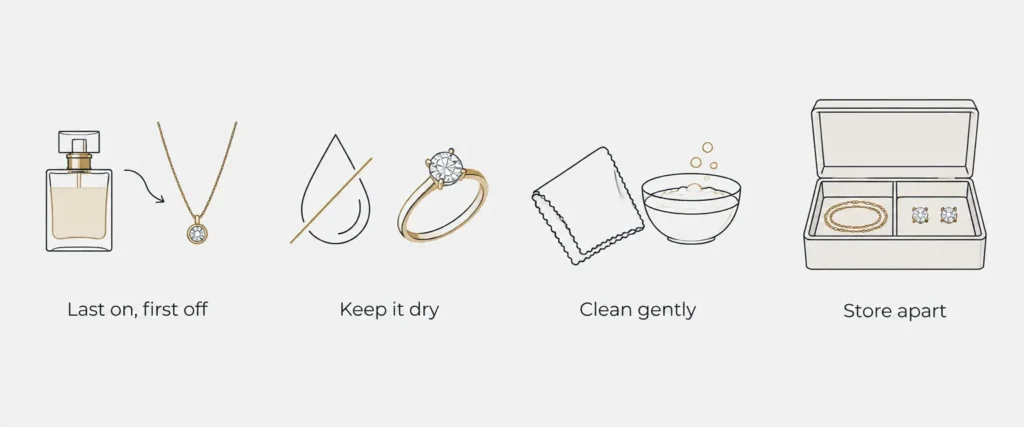
- Last on, first off. Put jewelry on after perfume, hairspray, sunscreen and lotion, and take it off before the gym, swimming or cleaning.
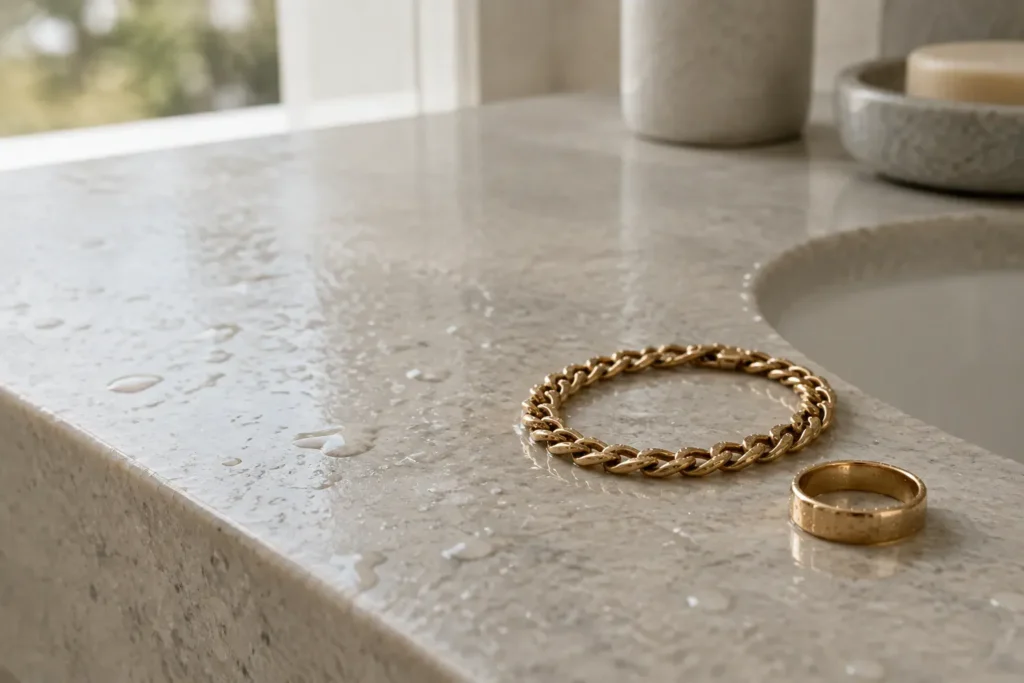
- Keep plated and vermeil pieces dry. Chlorine, salt water and sweat speed up wear. Gold-filled and PVD cope better with water, but drying them still helps.
- Clean gently. Warm water, a drop of mild soap and a soft cloth. Skip silver polishing cloths and chemical dips on plated and vermeil pieces, they can strip the gold. For solid sterling, here is how to clean tarnished silver safely.
- Store pieces separately. A soft pouch or a lined box with compartments stops chains scratching each other and slows tarnish.
- Ask about replating. Many jewelers can replate worn vermeil or plated pieces, which is worth it for something you love.
How to read the label.
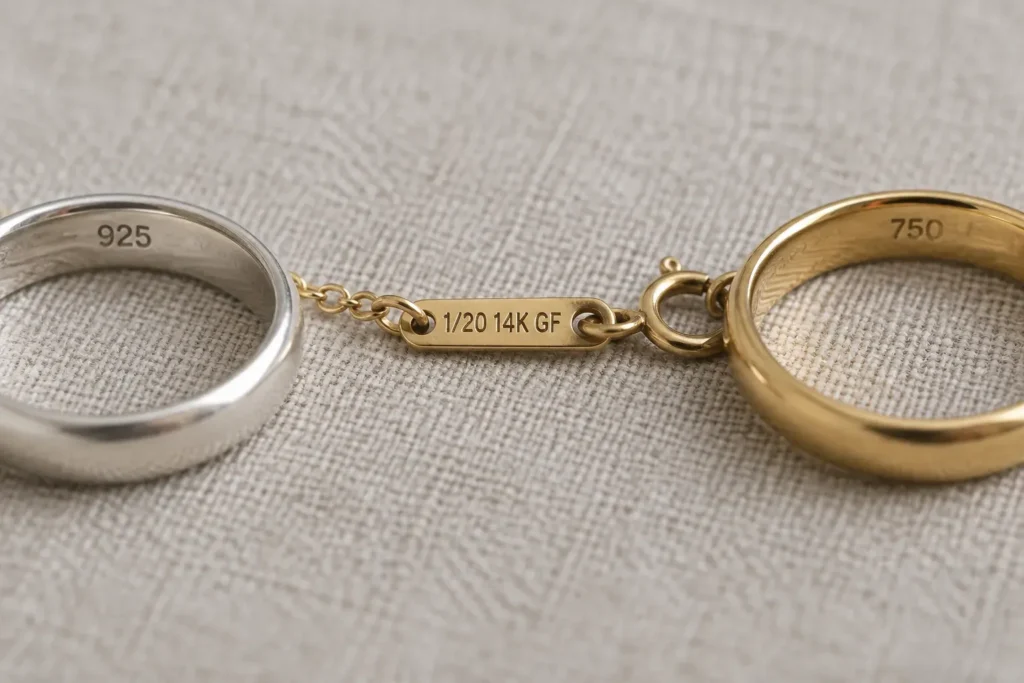
- 925 + vermeil Gold over sterling silver.
- 1/20 14K GF Gold-filled: 14 karat gold is at least a twentieth of the weight.
- 1/40 12K RGP Rolled gold plate: the same method as gold-filled with a thinner layer.
- GP · GEP · HGE Gold plate, gold electroplate and heavy gold electroplate.
- 375 · 585 · 750 Solid 9K, 14K or 18K gold.
- 316L · PVD Stainless steel, often with a vacuum coating.
Hallmarks in the UK
Anything sold as gold in the UK must carry an independent hallmark from an assay office once it weighs more than 1 gram. For silver the threshold is 7.78 grams. A gold hallmark only appears on solid gold, so gold-plated silver carries a silver hallmark instead, which is one more reason to read the description carefully.
Questions, answered.
Can I shower with gold vermeil?
You can, but it will shorten its life. Soap, hot water and shower products slowly wear the gold layer. Taking it off takes ten seconds and keeps it looking new for much longer.
Is gold-filled real gold?
The outer layer is real gold alloy of at least 10 karat, just not the core. That is why it behaves so much like solid gold in daily wear, at a fraction of the price.
Is PVD gold jewelry real gold?
Sometimes. PVD is a coating method, not a material. Some coatings include a gold layer, others are a gold-colored ceramic such as titanium nitride. Ask the brand what the coating is.
Does vermeil tarnish?
The gold layer does not tarnish, but sterling silver underneath can darken where the gold has worn through. Gentle cleaning and dry storage keep this to a minimum.
What does gold bonded mean?
It has no definition in the FTC jewelry guides. It usually describes some form of plating, so ask for the karat and thickness before you pay a premium for it.
How thick should gold plating be?
In the US, plating must be at least 0.175 microns of gold to be called gold electroplate and 2.5 microns to be called heavy gold electroplate. Vermeil also needs 2.5 microns. Many brands never state a thickness; if a brand quotes 2.5 microns or more, that is a good sign.
Is 18K vermeil better than 14K vermeil?
18K gold is 75 percent gold and 14K is about 58 percent, so 18K looks a little richer and more yellow, while 14K is slightly harder. Both qualify as vermeil, which only asks for at least 10 karat. For how long the piece lasts, the thickness of the layer matters more than its karat.
Is more expensive always better?
Not always. A well-made gold-filled chain can outlast a poorly made vermeil one. Ask what the base metal is, how thick the gold is and whether the brand will tell you both.
The takeaway
Flip the tag before you fall in love. Plated is for fun, vermeil is for everyday, gold-filled is for always, PVD is for the shower, and solid gold is forever.