As an Amazon Associate we earn from qualifying purchases.
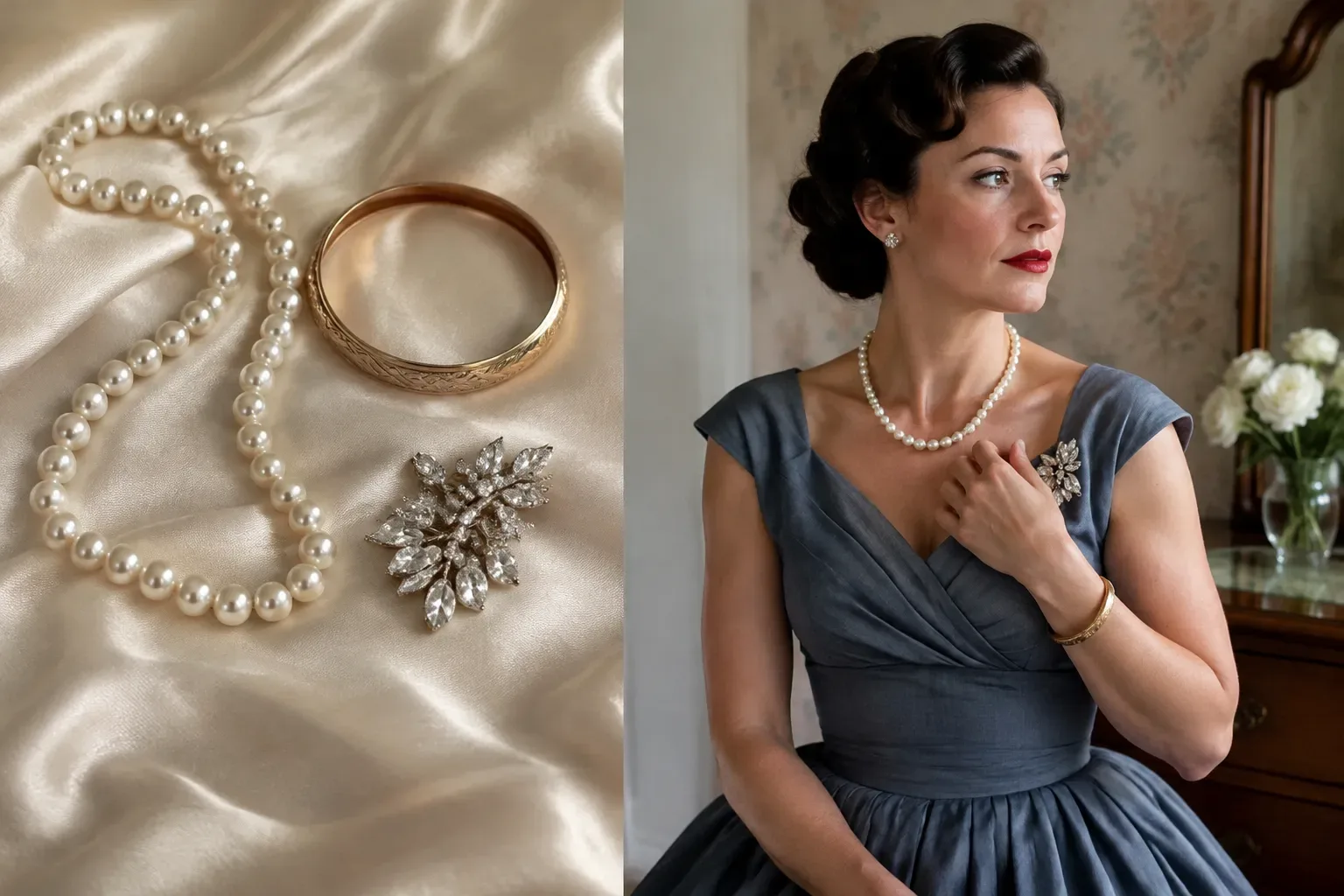
The invitation says retro, and the dress is already picked, so now the jewelry has to do the work. These 12 1950s jewelry style ideas run from a plain pearl strand to diamonds after dark, and each one tells you how to wear it tonight without looking like a costume. Dior's New Look, first shown in 1947, set the hourglass shape the decade dressed around, and the jewelry followed it.
1. A single strand of pearls with matching studs.
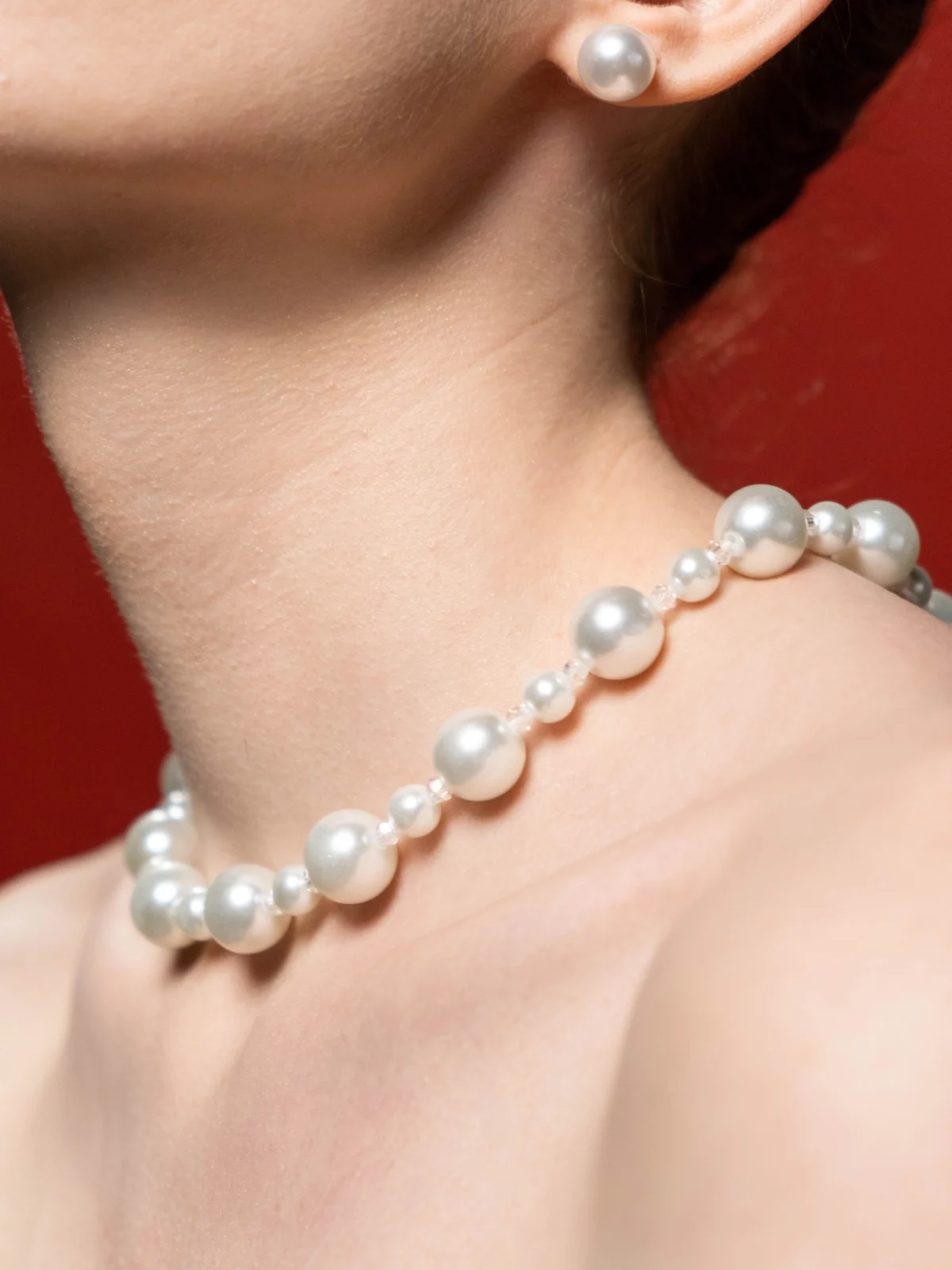
A single strand of white cultured pearls sits at the base of the neck, just below the throat, with a matching pearl stud in each ear. Women wore it with suits, shirtwaist dresses and sweater sets in the 1950s, and it still reads as the most polished choice for a party. Cultured pearls are pearls grown with human help inside a farmed mollusk, and a uniform strand with a soft glow is the sign of a good one.
Wear it tonight with a plain neckline, a crewneck, a boat neck or a simple V. A choker-length strand suits a high neckline, while a longer strand suits an open one. Keep the rest of the jewelry quiet, one small bracelet at most, so the pearls hold the eye.
Put pearls on last, after perfume and hairspray, and take them off first. Wipe them with a soft cloth after each wear. Pearls never left the shops, and they sit among the biggest jewelry trends of 2026, so a real strand reads current, not costumed.
Shop this idea
Products that fit this idea
- PEARL NECKLACEFreshwater pearl necklaceShop on Amazon
- PEARL STUD EARRINGSPearl stud earringsShop on Amazon
As an Amazon Associate we earn from qualifying purchases.
2. Aurora borealis rhinestones that catch the light.
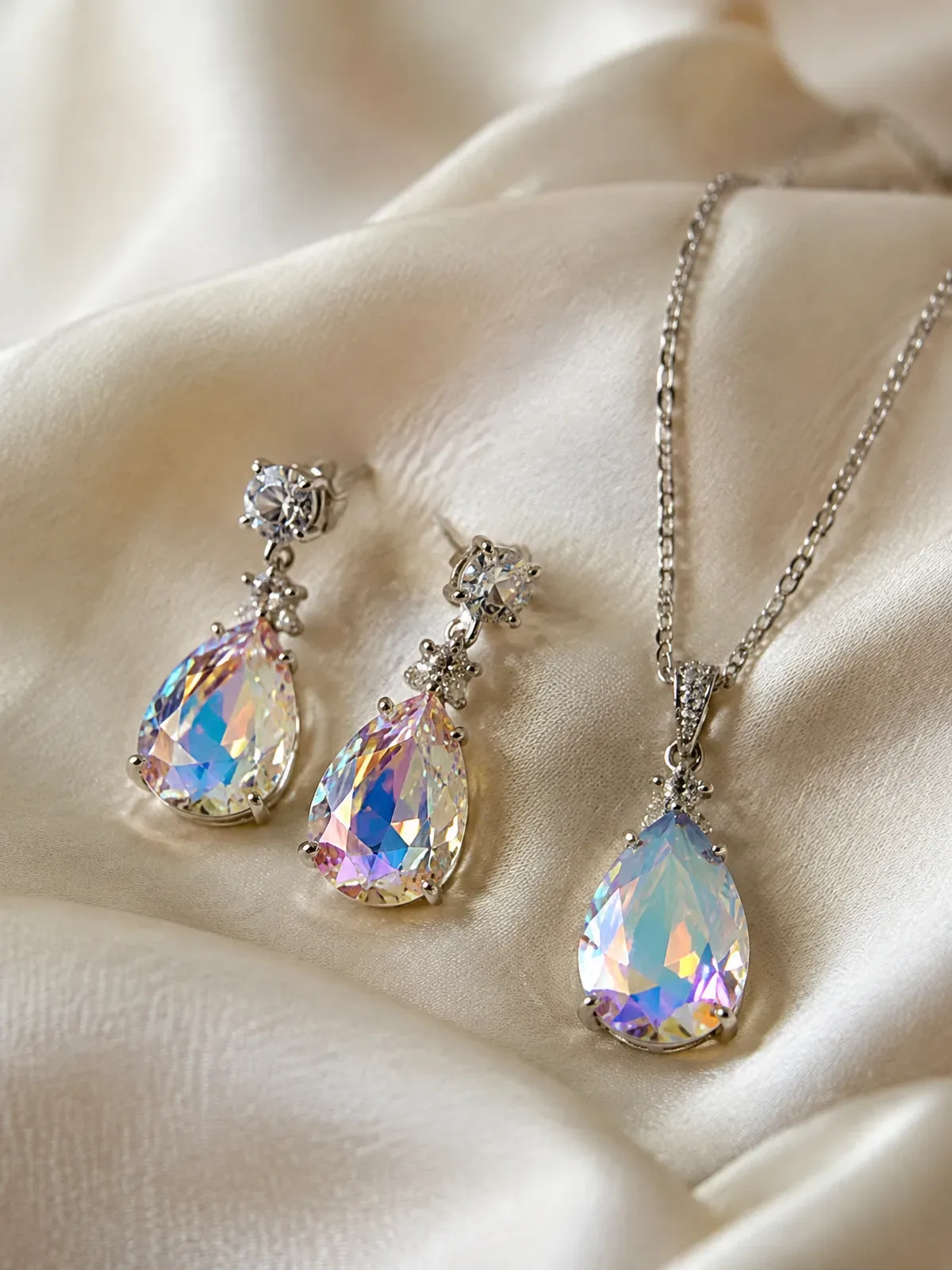
Aurora borealis rhinestones are glass stones with an iridescent coating that throws rainbow color in the light. The coating went over a foil back, and the stones turned up in necklaces, earrings, brooches and bracelets all through the 1950s. Real ones show the rainbow flash and a foil backing when you turn them over.
A pair of drop earrings is enough for a party, and a necklace and earrings together can fight each other. Pair them with a cocktail dress, a little black dress or cigarette pants, and let one piece carry the sparkle. Never soak foiled stones, and never put them in an ultrasonic cleaner.
Two things people get wrong about 1950s rhinestones
Aurora borealis rhinestones are just ordinary rhinestones.
They carry an iridescent coating over a foil back, and that coating is what makes the rainbow flash.
If a shop calls a piece estate, it must be vintage.
Estate only means the piece was owned before. Vintage means it is 50 to 100 years old.
If you buy a piece at a vintage fair, check the backs first. The foil tells you more than the sparkle does, and a seller who lets you look is worth coming back to.
Shop this idea
Products that fit this idea
- AB RHINESTONE EARRINGSAurora borealis teardrop earringsShop on Amazon
- AB RHINESTONE BRACELETAurora borealis rhinestone braceletShop on Amazon
As an Amazon Associate we earn from qualifying purchases.
3. A demi-parure, the matched set in its box.
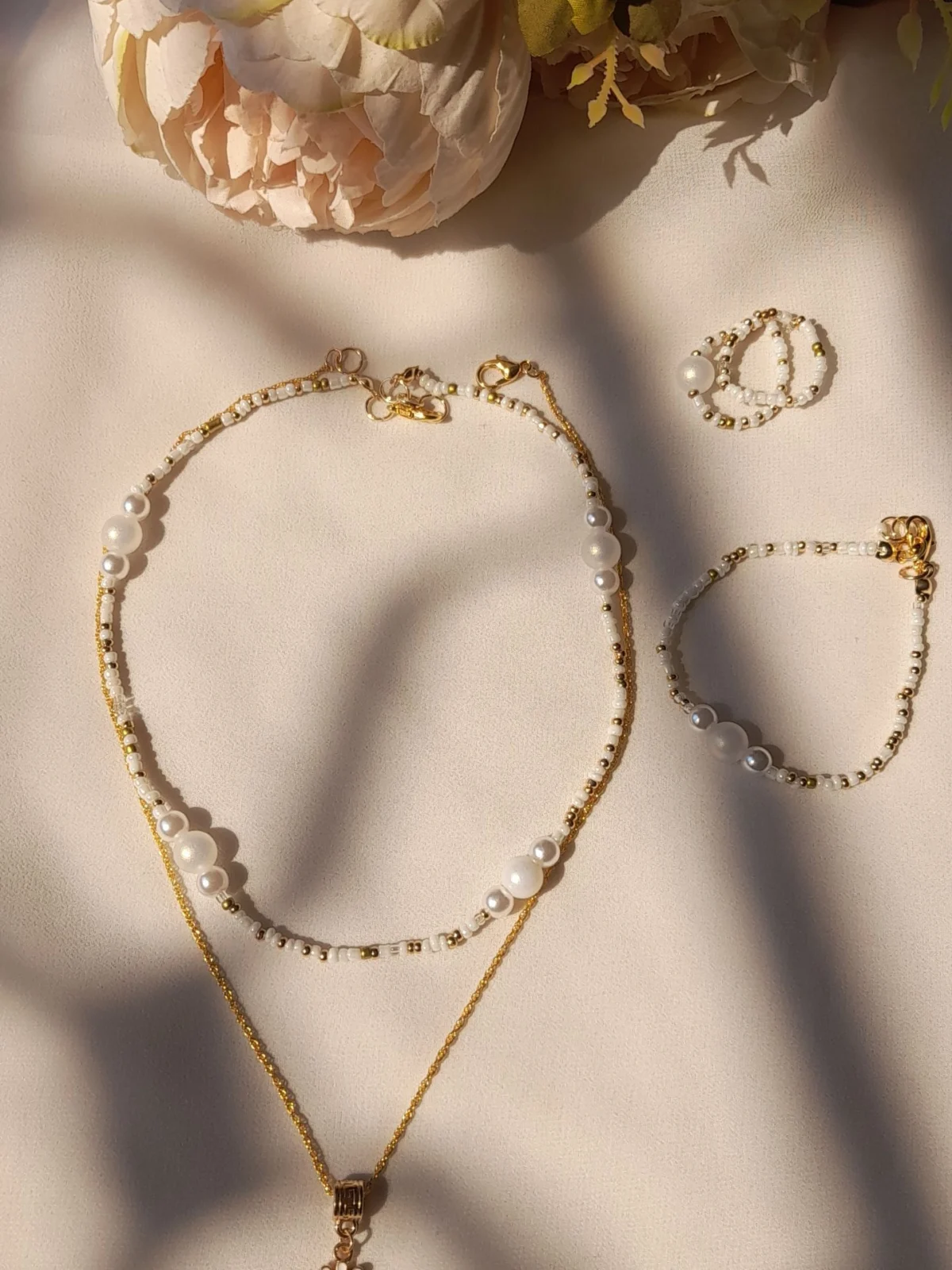
Matching sets came in one box in the 1950s, usually a necklace, a bracelet and clip-on earrings, sometimes with a brooch as well. A demi-parure is that matching set, sold and worn as one look. Women bought the set and wore it together for evenings out, and the box itself adds value when you buy one now, so keep it if it comes with the set.
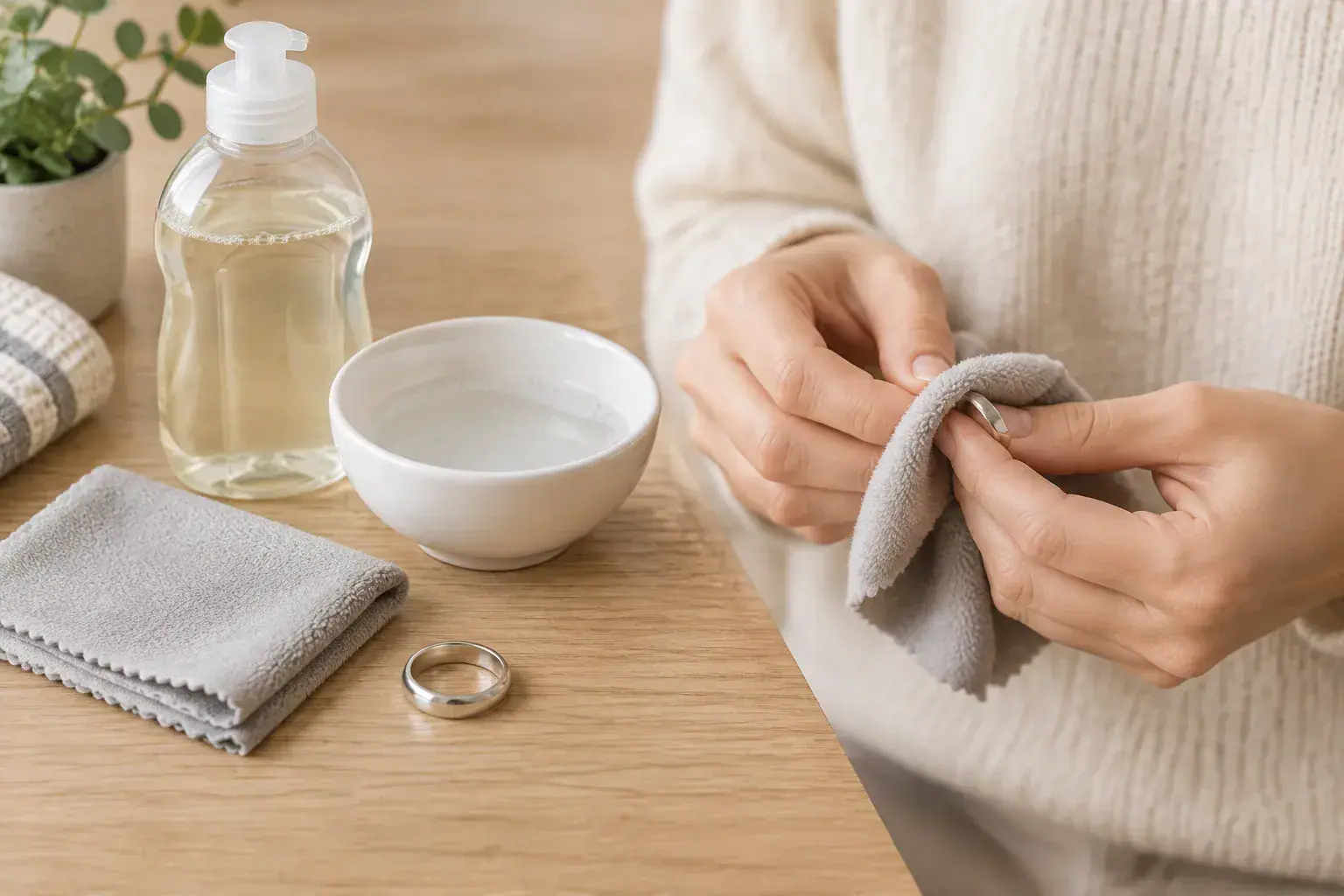
One favorite piece from the set suits a normal evening, and the full set is for the party. A full set with a plain dress looks dressed up, not busy, because every piece matches. Keep the set in its box and wipe each piece after wear, the same gentle habits as how to clean silver jewelry at home keep the metal bright.
Look for sets where every piece shares the same stones and the same metal tone. A set with one odd piece was likely put together later, and it will not wear as one look.
4. Clip-on earclips that need no pierced ears.
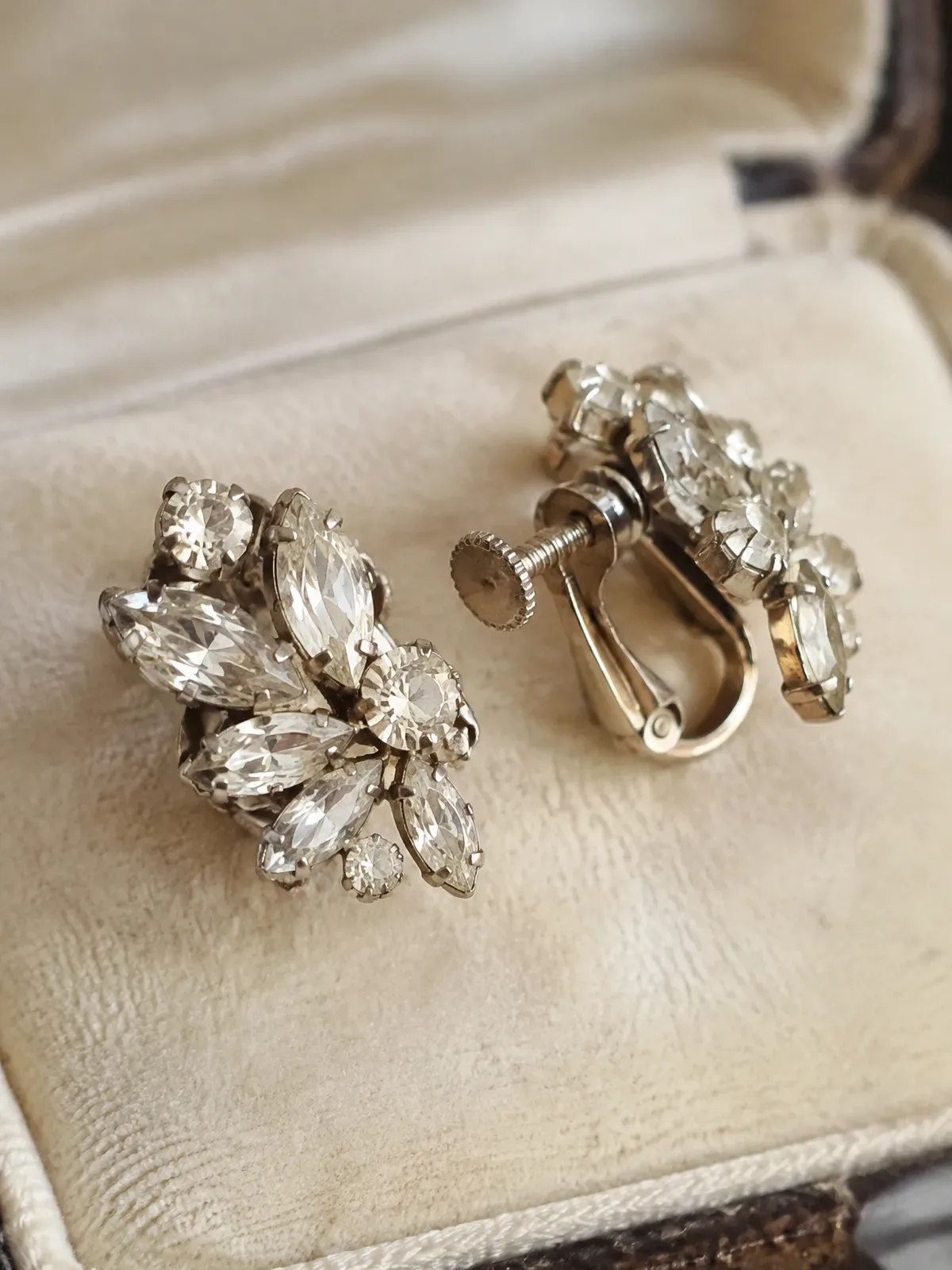
Most women in the 1950s did not have pierced ears, so earrings were clip-on or screw-back, and the trade called them earclips. Clip-on earclips grip with spring tension, while screw-back earclips tighten with a small screw, and both came with paddle or comfort pads. Heavy clusters of stones, beads or aurora borealis rhinestones were the popular shapes.
Add silicone pads to any vintage pair you plan to wear all evening, and pair heavy earclips with hair worn up or swept back. If your ears redden easily, jewelry for sensitive skin explains which metals are actually safe, and a gold-tone clip is usually the gentler choice.
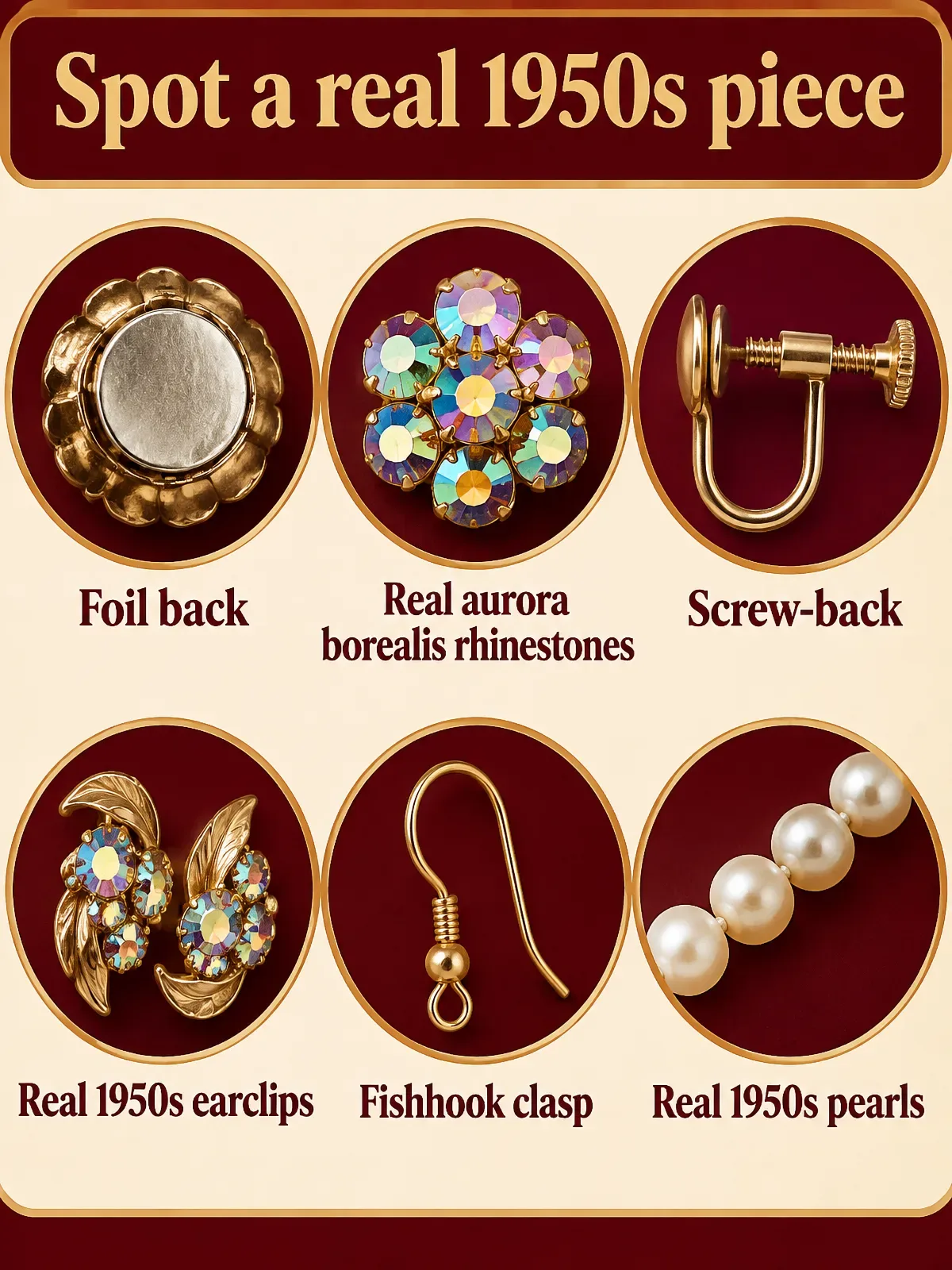
Check the clip before you leave the house. A loose spring is how a vintage earring gets lost on a dance floor, and a quick squeeze at home is all it takes to test it.
Shop this idea
Products that fit this idea
- CLIP-ON EARRINGSRhinestone clip-on earringsShop on Amazon
- CLIP-ON PEARL EARRINGSPearl clip-on earrings setShop on Amazon
As an Amazon Associate we earn from qualifying purchases.
5. A cocktail ring worn on its own.
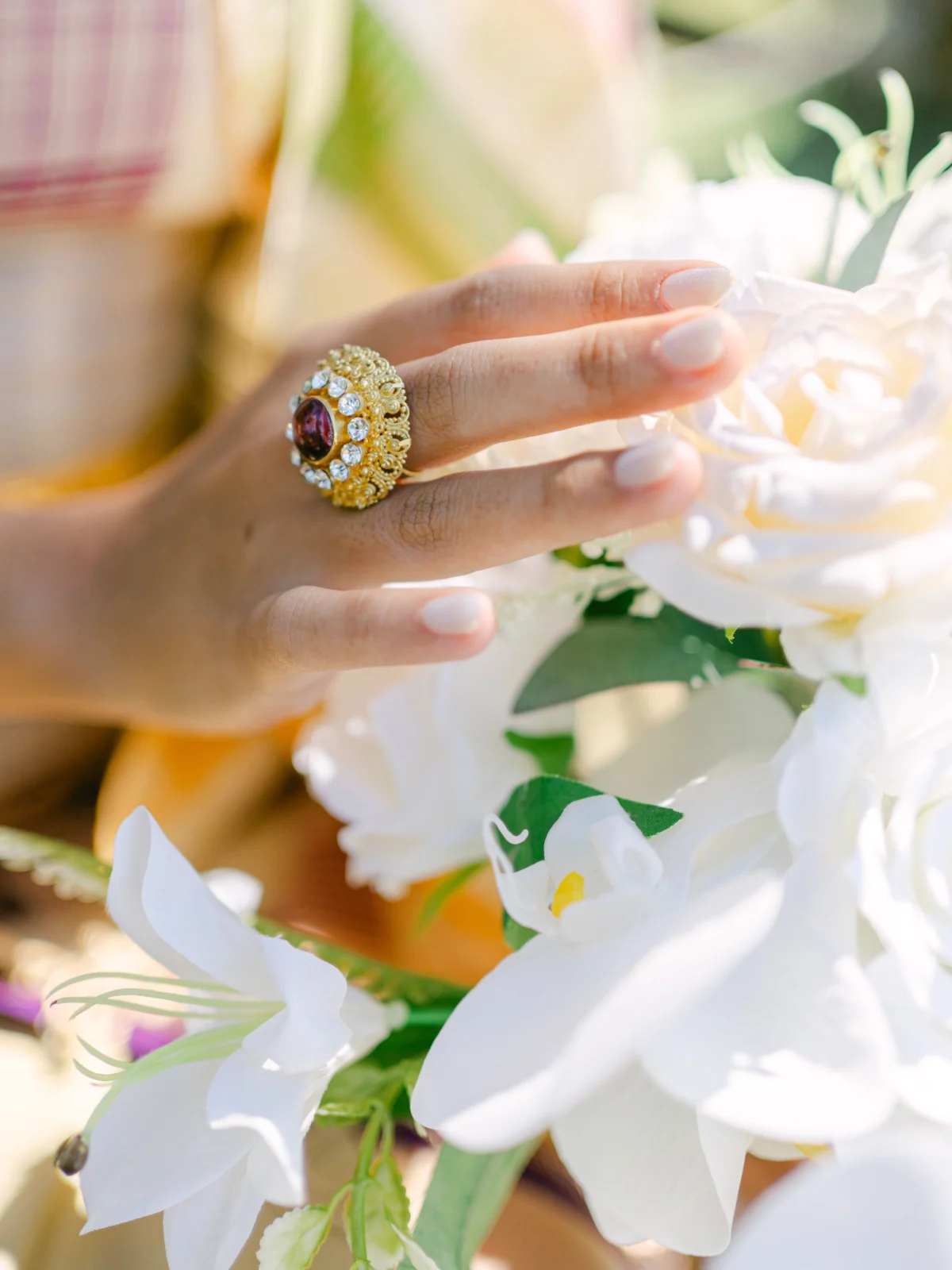
For evenings out, the 1950s wore a large ring, a cocktail ring, with stones set in a starburst or a ballerina ring shape, worn to be seen across a room. The ballerina ring reads like a tutu from above, with baguette diamonds fanning out in a skirt. Baguette diamonds are long, narrow step-cut stones, and the 1950s used them in radiating rows around a center stone.
One ring is enough, worn on the hand that holds your glass, so it catches the light each time you lift it. Keep bracelets off that wrist. A cocktail ring is a solo piece, and a second ring on the same hand crowds it.
Wearing a cocktail ring to a party
Do it
- Wear it as your only ring, so it holds the eye.
- Let it sit on the hand that holds your glass, where it catches the light.
Skip it
- Stack bracelets on the same wrist, since they crowd the ring.
- Wear a second statement ring on the same hand.
Raised settings and prong-set clusters mark a real 1950s ring. Check the prongs before the party, since a loose stone is easy to lose and hard to find on a dark floor.
Shop this idea
Products that fit this idea
- COCKTAIL RINGCubic zirconia cocktail ringShop on Amazon
- CLUSTER RINGYellow gold diamond cluster ringShop on Amazon
As an Amazon Associate we earn from qualifying purchases.
6. A floral spray brooch pinned at the shoulder.
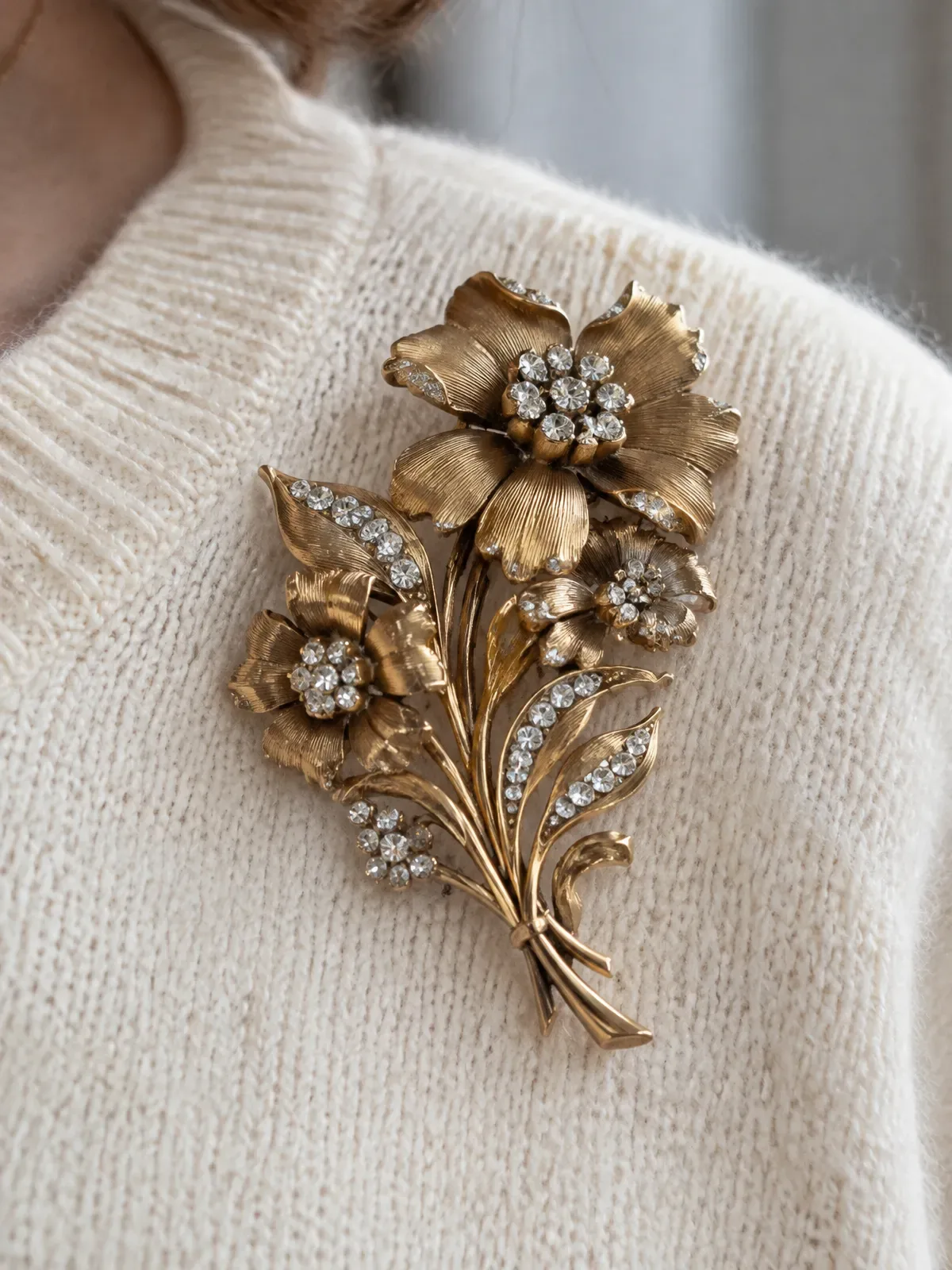
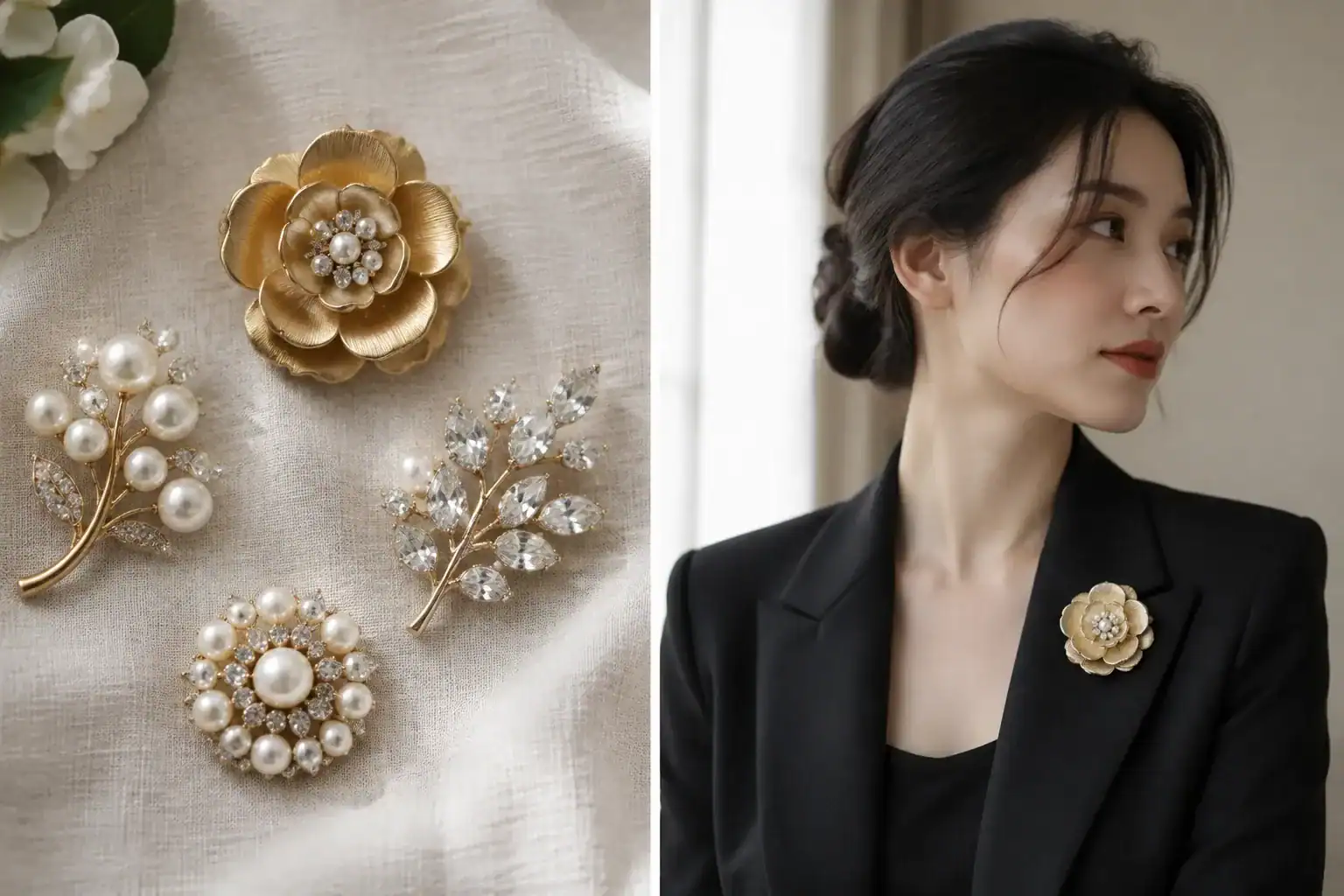
Flowers were in fashion as a jewelry motif in the 1950s, and brooches showed them as layered metalwork with pave rhinestones and petals that moved. Pave means small stones set close together, so the surface reads as one field of sparkle. A spray brooch pins at the shoulder of a blouse or a sweater, where it frames the face.
Pin it high on one side, never in the middle of the chest, and let it sit flat against the cloth. A brooch with a pin back can also hang as a pendant from a fine chain, which gives you two ways to wear one piece. Keep it away from chunky necklaces, since the two compete for the same space.
A floral brooch pairs well with the plain fabrics of the decade, wool, cotton and silk, and it warms up a dark dress without any extra color. It is a quiet piece, and that is why it works when the dress is already doing plenty.
7. An atomic starburst brooch or pendant.
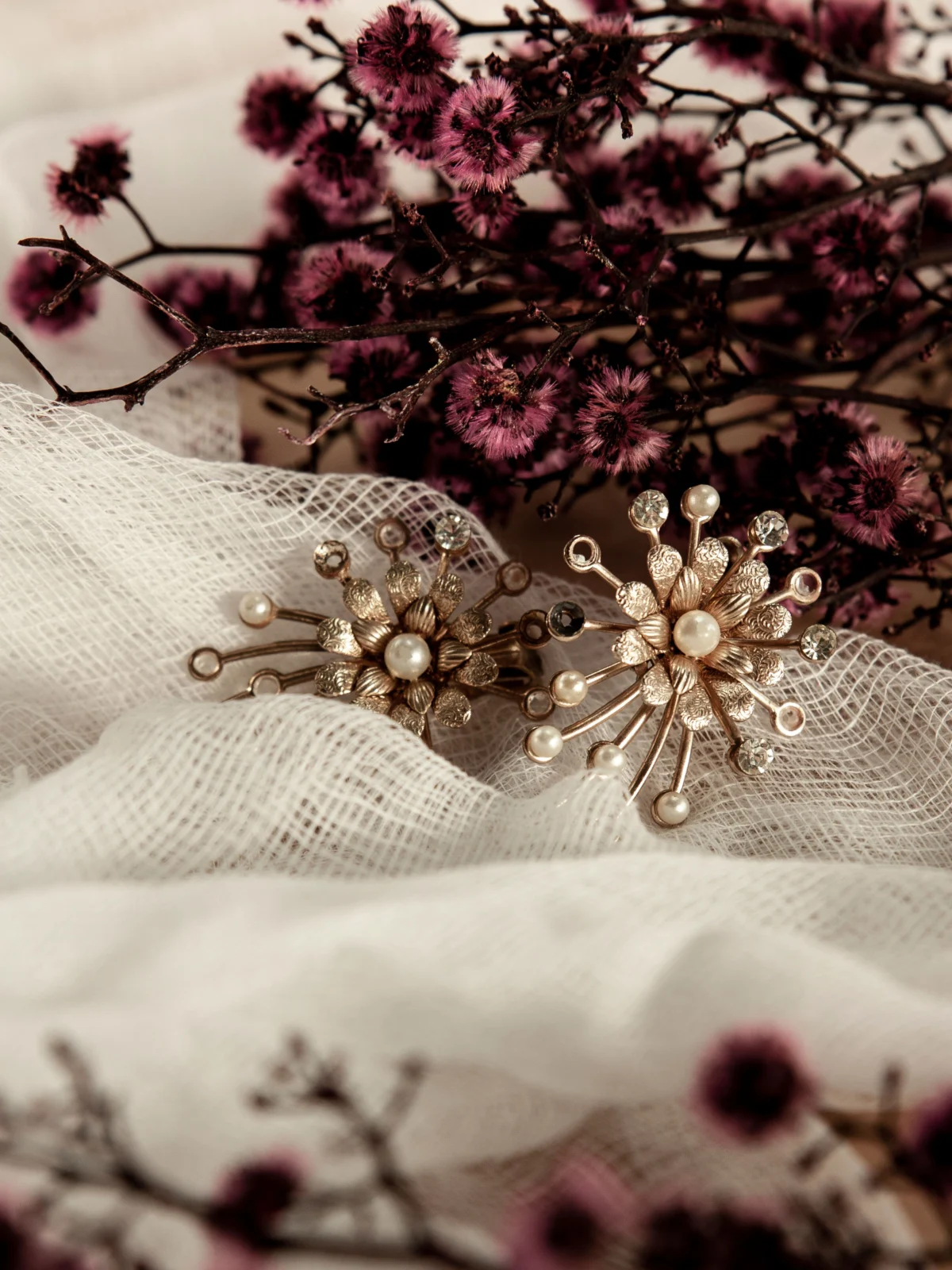
The atomic age gave jewelry a new shape, the starburst, with orb settings, radiating spikes and space-age symmetry. It showed up in brooches, pendants and rings, and it reads at once as 1950s and as modern. Let one starburst piece stand on its own, and pair it with plain, minimal clothes so the shape does the talking.
A starburst brooch pins well on a dark jacket or a plain dress, where the spikes catch the light. A starburst pendant sits best on a short chain with an open neckline. Keep the rest of the outfit simple, in the spirit of the vintage fashion trends to wear now, so the piece looks chosen rather than borrowed from a costume box.
Look for spikes that are even and stones that sit tight in their settings. A starburst with a bent spike or a missing stone is easy to spot once you know to look, so check it in good light before you buy.
8. Textured yellow gold, matte and warm.
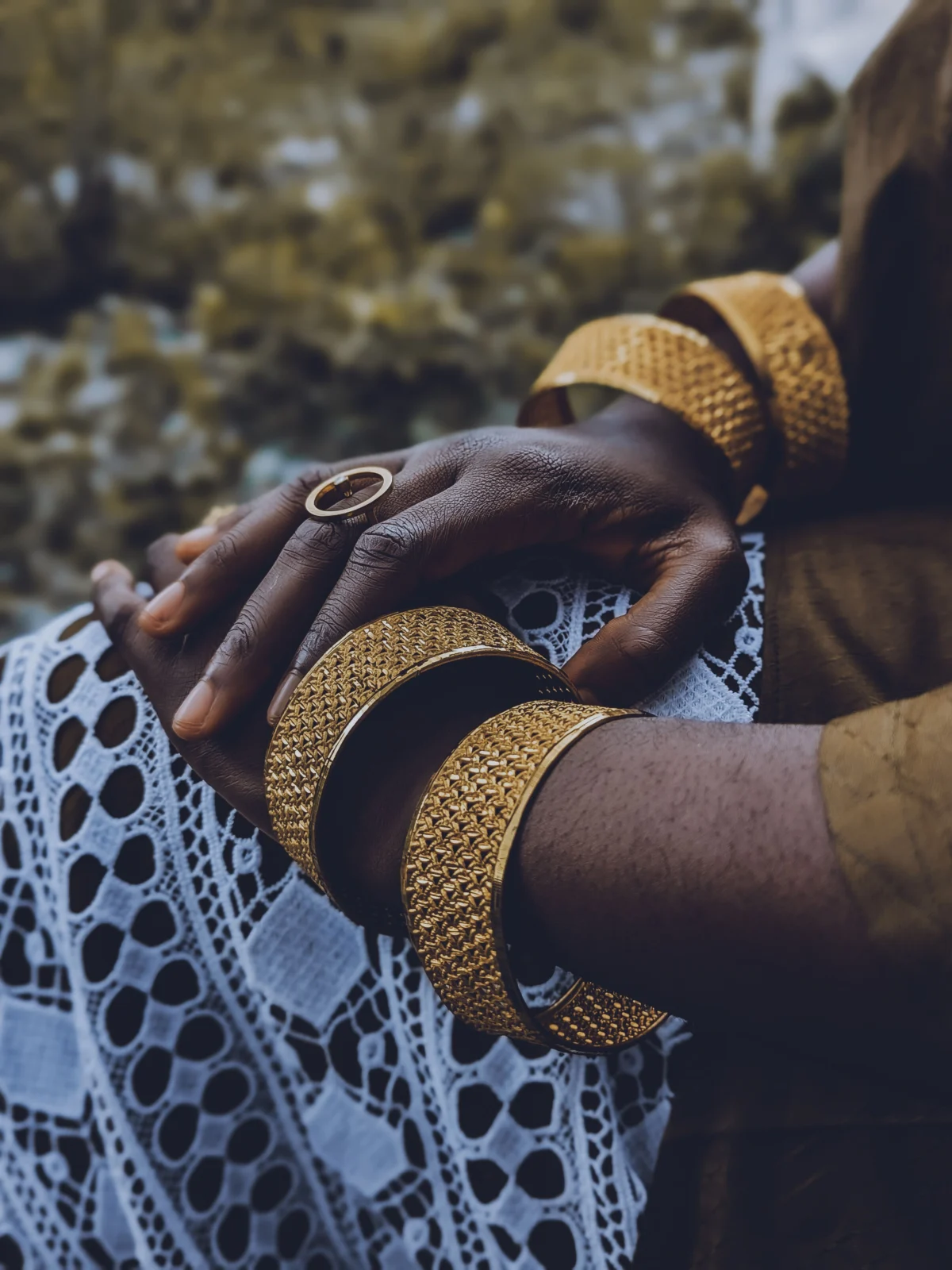
Yellow gold took over from pink gold in the 1950s, and jewelers worked it with matte finishes and hammered or brushed textures instead of a high polish. Textured yellow gold is gold with a surface that is not smooth, so it catches light in small patches rather than one hard shine. It suits warm skin and plain dark clothes, and it reads softer than polished gold under party lights.
A plain black dress lets textured gold carry the outfit. Animal figures, twisted wire and flowers were common gold shapes of the decade, and a single textured bangle or a pair of gold clip-ons is enough. Mix it with pearls, not with bright silver, since the warm and cool metals fight each other.
My rule for gold at a party: one warm metal, a plain dress, and nothing else competing with it. If the gold has to shout to be seen, the outfit is doing too much.
Wipe gold with a soft dry cloth after wear, and store each piece on its own so the texture does not pick up scratches from other jewelry. A scratched matte finish shows more than a scratched polished one.
9. A charm bracelet with a story on every link.
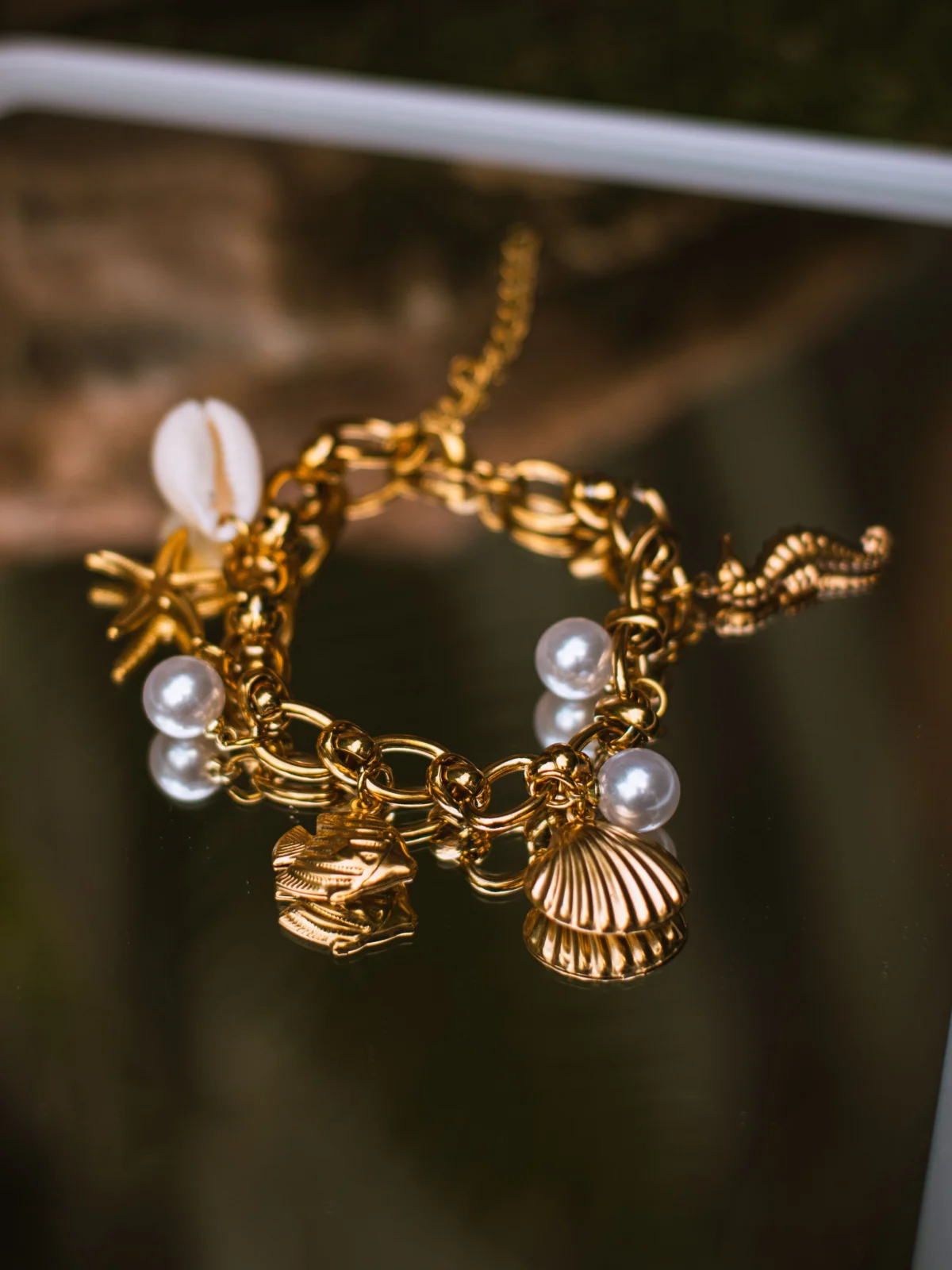
Charm bracelets were already old in the 1950s, but the decade gave them heftier linked chains and engraved ID plates. Travel charms and club charms were favorites, and each charm marked a place or a group the wearer belonged to. A charm bracelet tells a story link by link, which is why it still works at a party where people ask about it.
Style a vintage charm bracelet next to plain bangles and keep the rings simple. The charms need room to move and catch the light, so a tight sleeve hides them. Read how to style charm jewelry for stacking ideas that keep the charms on show without tangling.
Check the links and the clasp before you wear it out. A charm bracelet is only as safe as its weakest link, and a lost charm is gone for good.
Shop this idea
Products that fit this idea
- CHARM BRACELETHeart charm braceletShop on Amazon
- ID BRACELETEngraved ID braceletShop on Amazon
As an Amazon Associate we earn from qualifying purchases.
10. A lucite bangle in a bright colour.
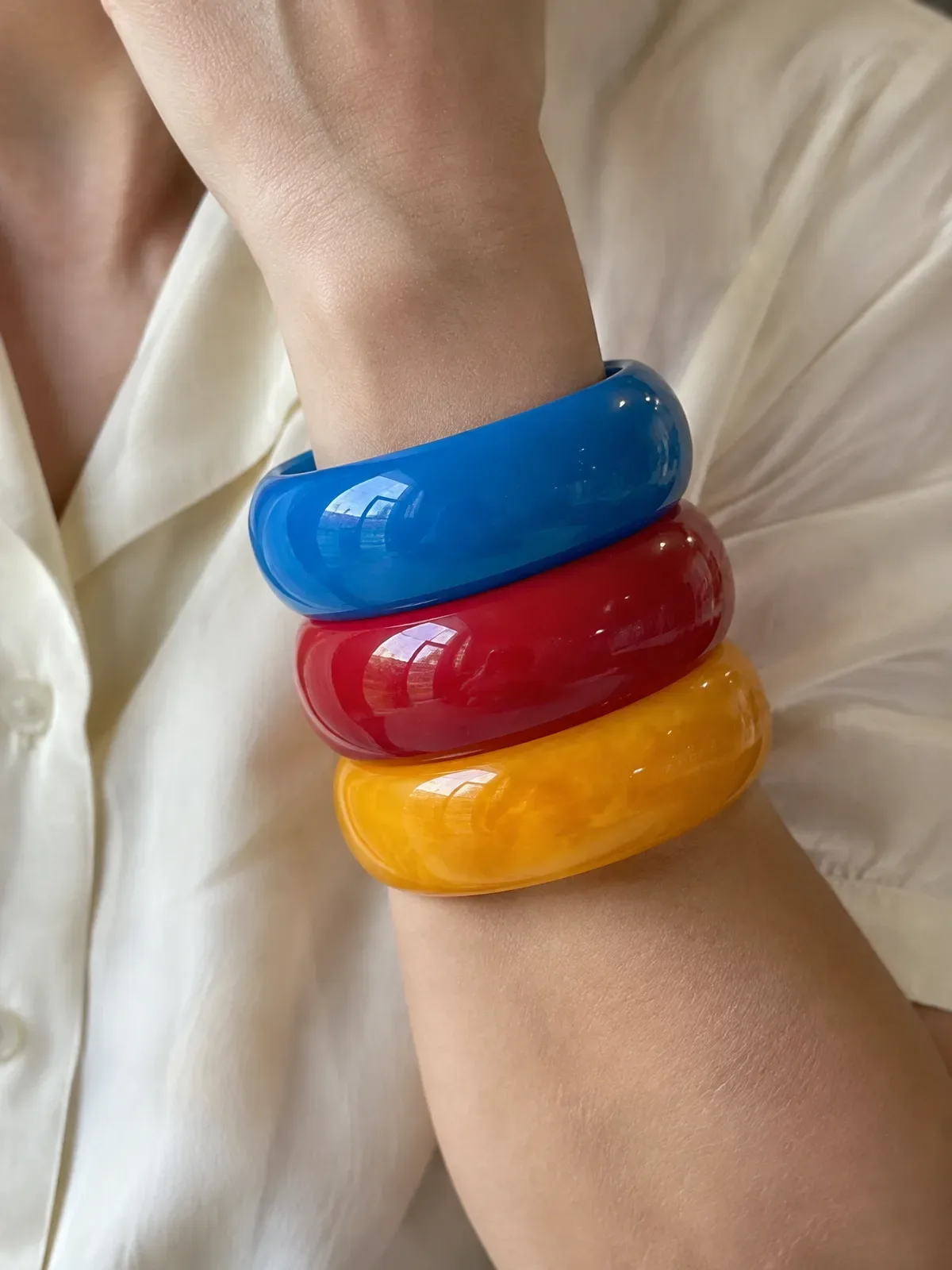
Lucite is a hard, clear plastic that jewelers in the 1950s molded into bangles, beads and brooches in bright blues, reds and yellows. Thermoset is the same family of hard plastic, and both names turn up on pieces from the decade. A real piece feels light and warm to the touch, and you can sometimes see a fine seam from the mold.
Neutrals let lucite bangles do the work. A cream blouse or a black dress sets off a blue or red bangle, while a busy print swallows it. Stack two or three in different colors, or wear one wide bangle on its own.
Keep lucite away from heat and solvents, and store it in a breathable pouch. Heat warps the plastic, and a warped bangle never sits straight again.
Shop this idea
Products that fit this idea
- LUCITE BANGLEResin acrylic bangle setShop on Amazon
- ACRYLIC BANGLEAcrylic bangle braceletsShop on Amazon
As an Amazon Associate we earn from qualifying purchases.
11. A sweater clip that holds a cardigan closed.
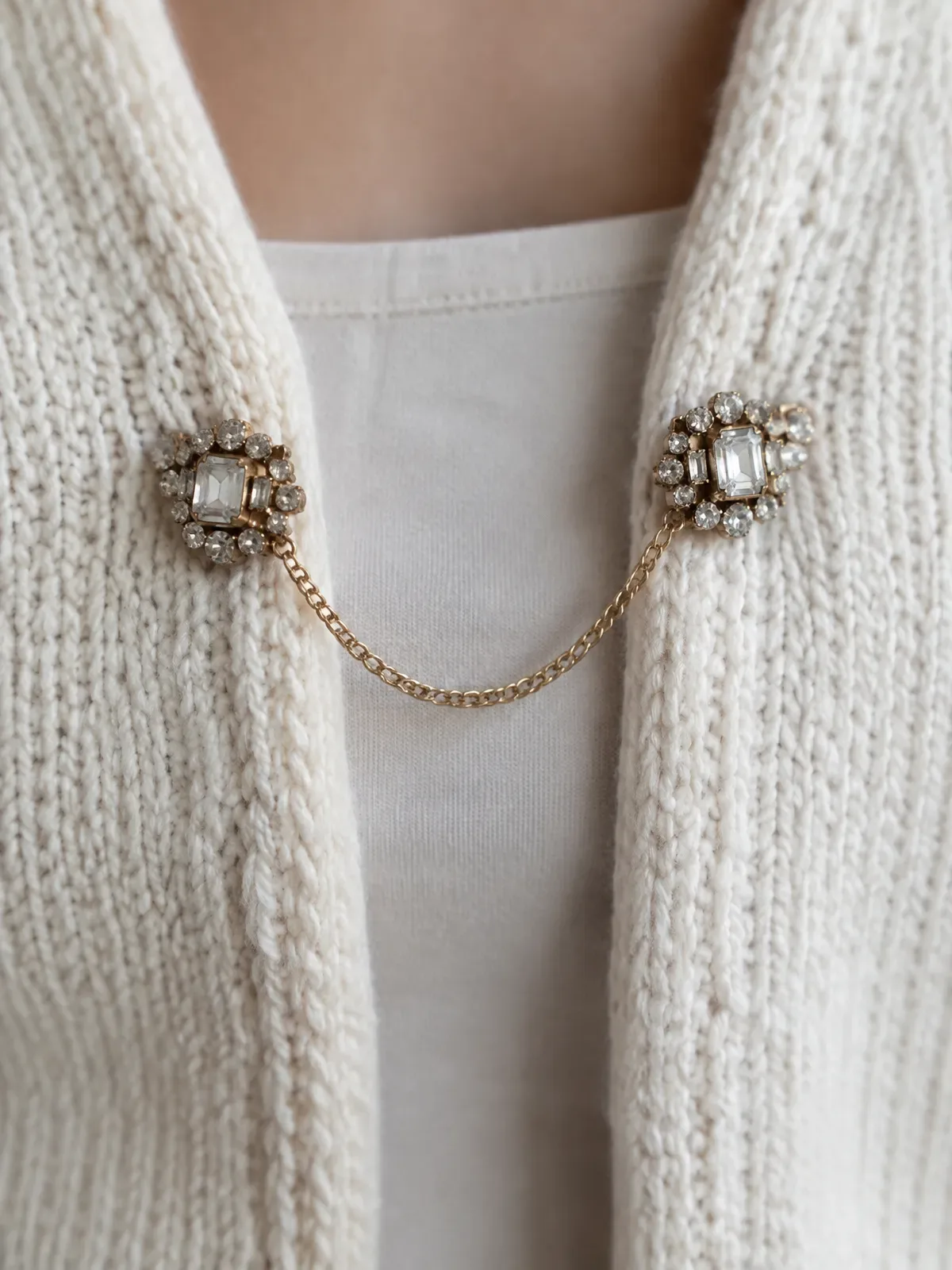
Two small clips joined by a chain make a sweater clip, and each clip fastens to one side of a cardigan or a button-up sweater. It holds the sweater closed without a button, and the clips often carried the popular motifs of the day, flowers, bows and rhinestones. It is the smallest piece in this list, and the easiest to wear.
Fasten it at the top of a cardigan for a neat neckline, or wear it on a collar for a quiet bit of sparkle. It works best on fine knits, where the clips grip without pulling the yarn. On a thick knit the clips can slip, so test the grip at home first.
A sweater clip suits a party because it does two jobs at once, it holds the cardigan and it decorates it. Keep the chain short enough that it does not swing when you move.
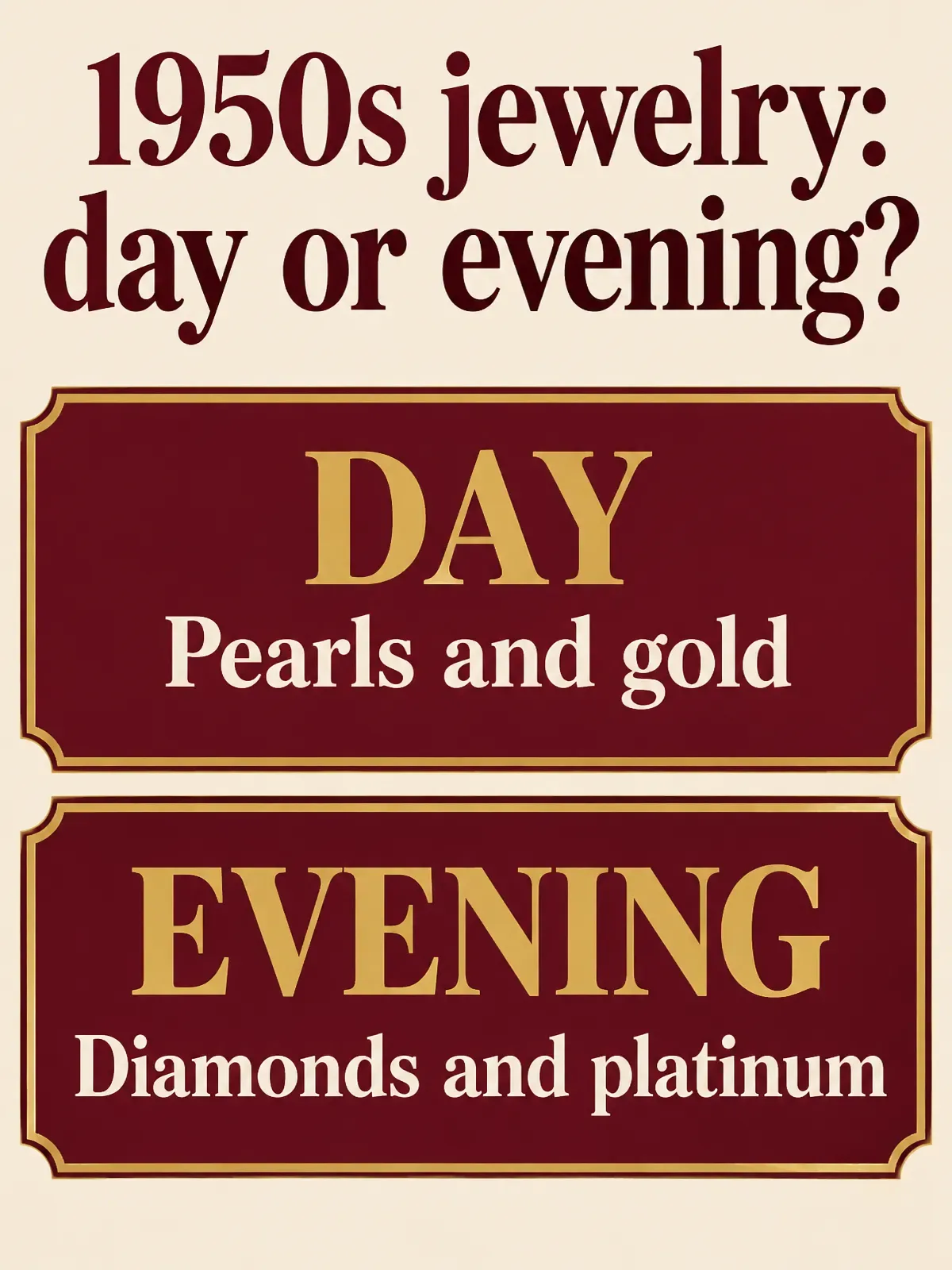
12. Diamonds and platinum, the after-dark side of 1950s jewelry style.
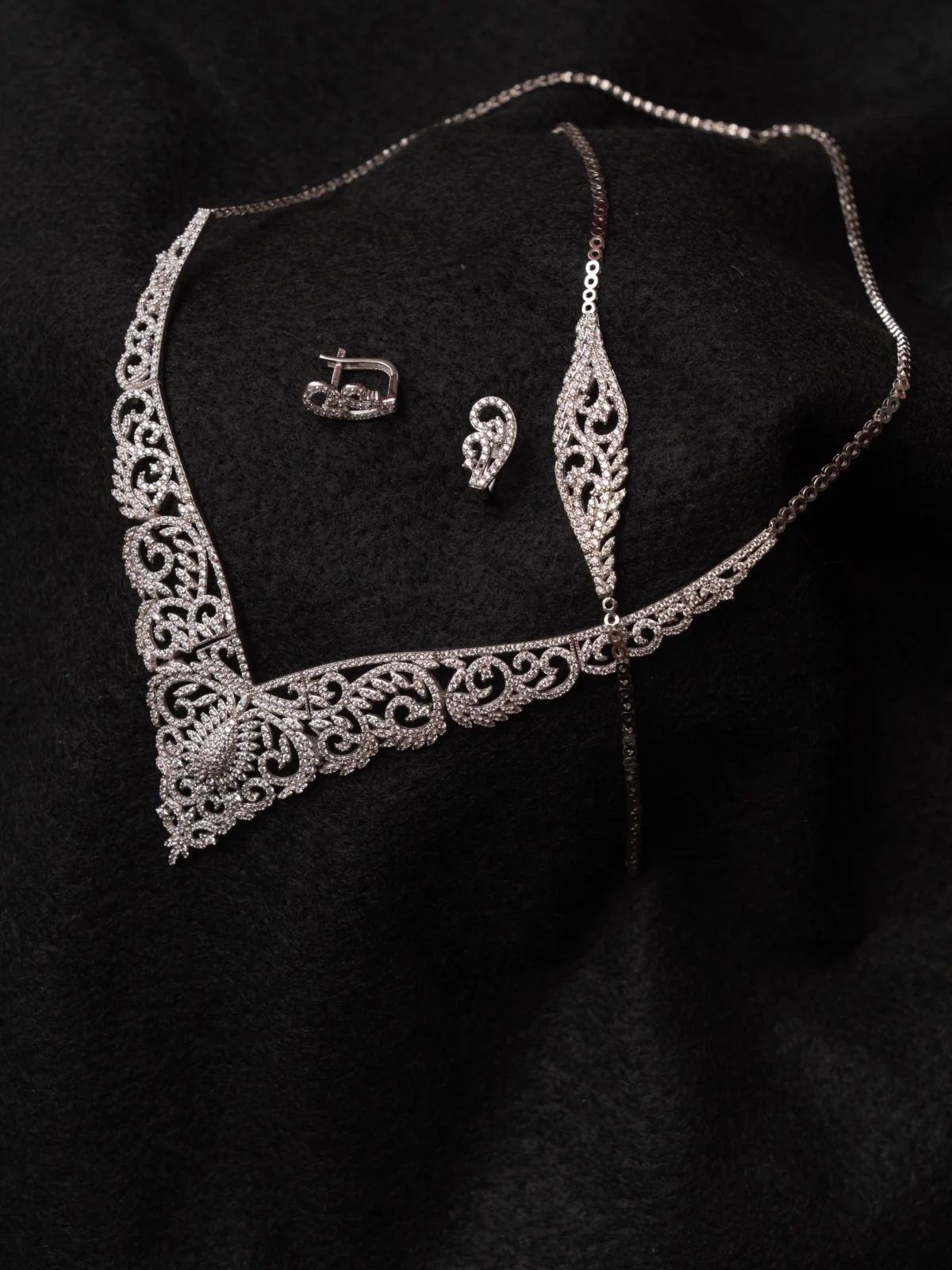
After dark the 1950s switched to diamonds and platinum. Platinum is a white metal that holds stones without yellowing, and the decade set it with diamonds in matching sets for evening. Baguette diamonds, marquise diamonds and pear-shaped stones mixed in one piece, and a small diamond watch often finished the look.
Wear diamonds with a sheath dress or a pencil skirt and a flared jacket, the evening shapes of the decade. A matching set, necklace and earrings together, is the formal choice, while one diamond piece with a plain dress reads just as dressed up. Keep the stones clean, since diamonds show every smudge under party lights.
Engagement rings of the decade were smaller than today, and couples often bought a matching wedding band with the ring. A diamond piece from the 1950s carries that history with it, which is part of why it still gets worn.