As an Amazon Associate we earn from qualifying purchases.
Your favorite silver ring went dark again, and you want to know how to clean tarnished silver rings at home without scratching the band or loosening the stone. The method that saves a plain band can ruin a ring with a stone, a glued setting, or dark detail worked into the metal on purpose. This guide sorts that out before you start: what tarnish is, how to check your ring, and the gentlest method that works, one step at a time.
If your ring has a loose stone, or a stone you cannot name, skip the methods below for now. Use a dry cloth on the metal only until a jeweler looks at it.
The ring in your hand decides the method, not the tarnish. A plain band takes the strongest cleaner. A ring with a stone takes the gentlest one that works.
Safe for most rings: lukewarm water with a few drops of mild dish soap, and a silver polishing cloth on the band. The one thing that ruins a ring: a harsh cleaner or a rough scrub on a stone, a glued setting, or dark detail put there on purpose. When in doubt, use the cloth on the metal only.
Why your silver ring goes dark in the first place.
A ring meets more skin, soap, and air in a day than a necklace kept in a box, because it is the piece you wear most. Rings are the everyday accessories you reach for first, and that daily wear is also why they go dark first. The dark layer is tarnish, and it forms on the surface of the metal.
Sterling silver is 92.5% silver and 7.5% other metals, usually copper. The copper alloy makes the ring strong enough to wear every day.
It also reacts with sulfur in the air, and the reaction leaves a dark layer of silver sulfide tarnish on the surface. Perfume, lotion, sweat, and household cleaners speed it up. People sometimes call this oxidation, and the dark layer is the same thing.
The same copper that hardens the silver can leave a green mark on your finger, and the metal underneath is still silver. If you are choosing between metals for a ring you wear daily, the choice between silver vs gold jewelry comes down to how each metal ages on your skin, not to which one is better.
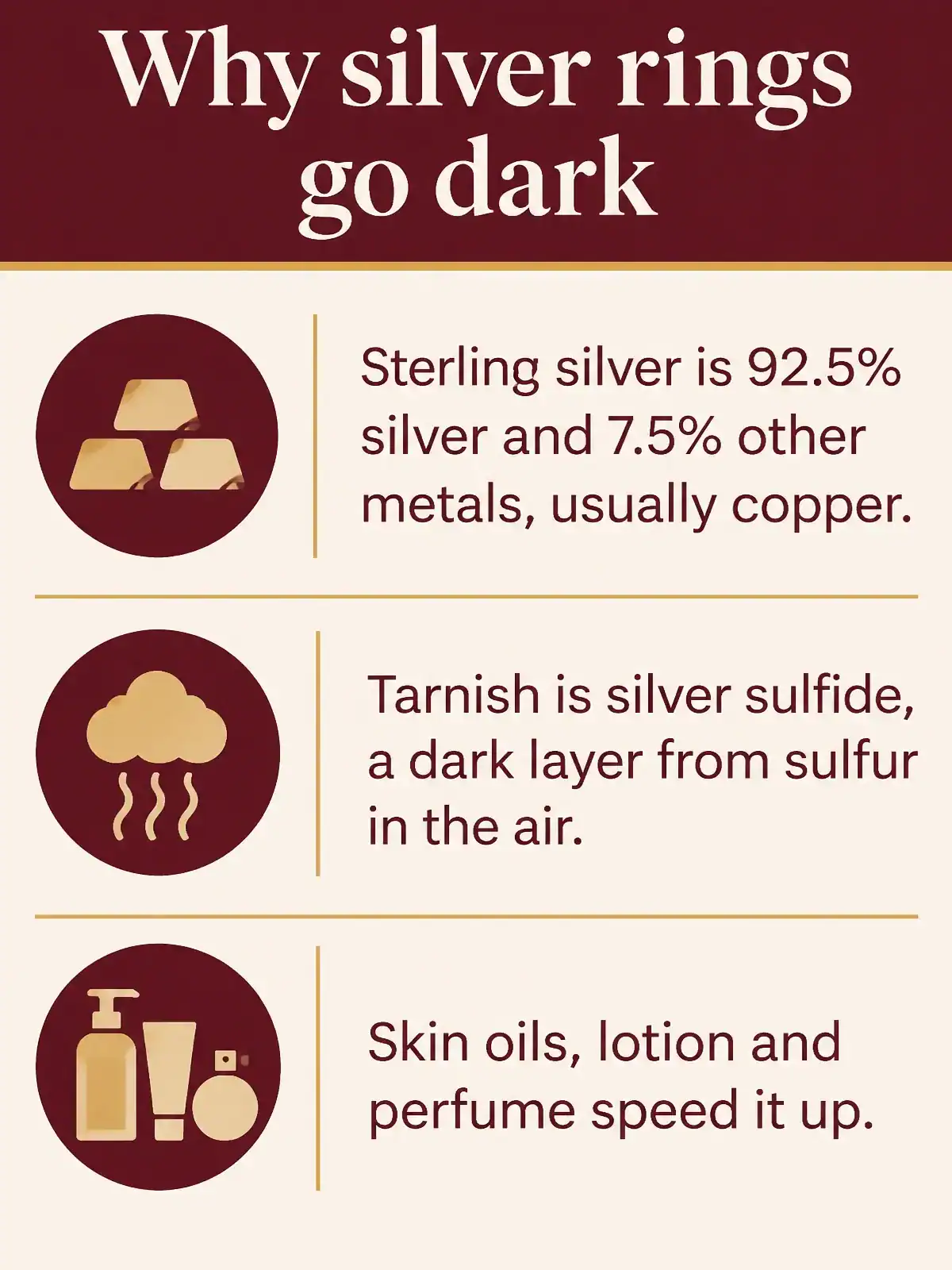
Tarnish sits on the surface. It does not mean the ring is damaged or made from poor metal, and a gentle method usually lifts it.
The mistake is reaching for the strongest cleaner first. Each method below removes a little more than the one before it, so start at the top and stop as soon as the ring looks right.
Tarnish means the ring is damaged or made from poor metal.
Tarnish is a dark layer of silver sulfide on the surface, formed when sulfur in the air reacts with the copper in sterling silver. It does not mean the ring is damaged, and a gentle method usually lifts it.
The foil bath scrubs the tarnish off and wears the silver down.
The foil bath moves tarnish from the silver to the foil in a chemical reaction, so no metal is rubbed away. It suits a plain sterling band with heavy tarnish, and nothing else.
A ring that is worn often tarnishes more slowly than one left in a box. Skin contact and handling keep the surface bright, while a ring left alone meets still air and sulfur with nothing to rub it away.
Check your ring before you clean it.
Two minutes of looking saves a ring. Hold it under a lamp and look at the inside of the band first.
Most sterling rings carry a 925 stamp there. That stamp marks the ring as sterling silver 925, not plate. A ring with no stamp may be silver plate, and plate needs a lighter hand because hard rubbing can wear through the thin silver layer.
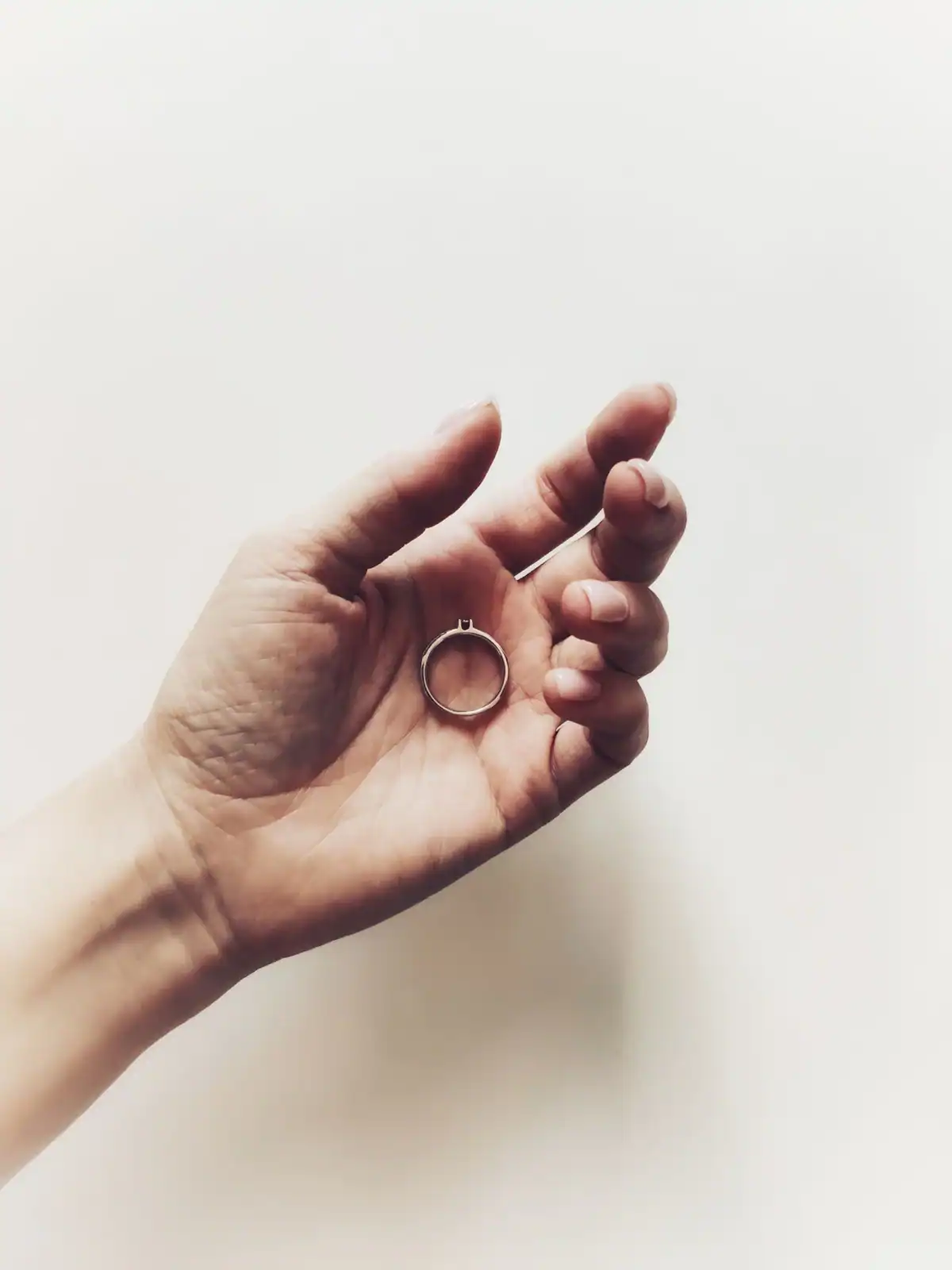
- Look for the 925 stamp inside the band.
- Wiggle each stone gently with a fingertip. If it moves, the prongs are loose.
- Look for glue around the stone or a foil back behind it.
- Look for dark detail in the grooves. If the dark lines are part of the pattern, leave them dark.
- Check for cracks, bent prongs, or a stone that sits crooked.
A loose stone, a glued setting, or a foil-backed stone changes the method. So does an oxidized finish, the dark detail a maker works into the grooves so the raised pattern shows clearly.
The foil bath strips all of it, and a dip cleaner does the same. A polishing cloth on the raised areas only keeps the pattern and cleans the shine.
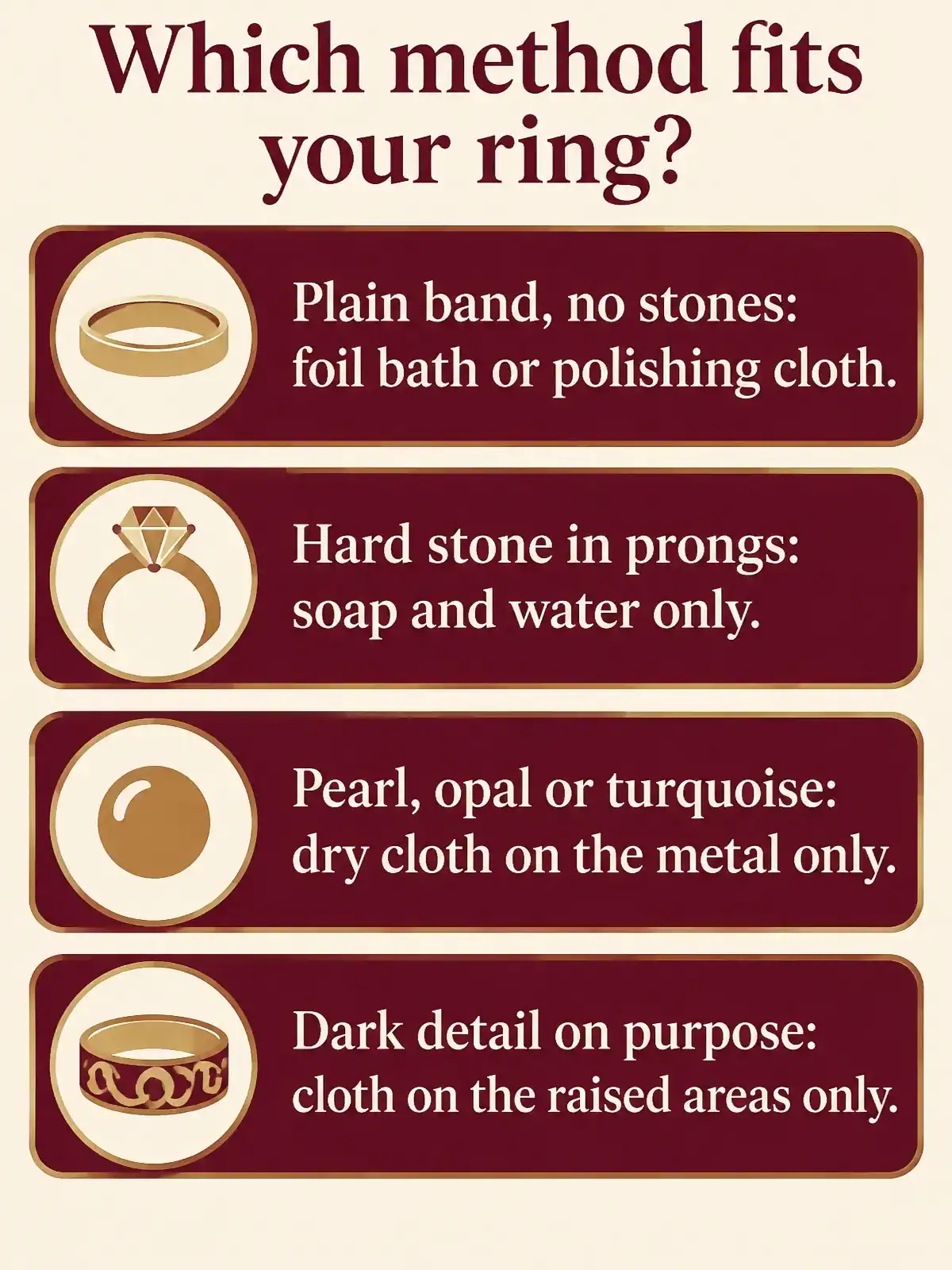
Use the picker below with the ring in front of you. It points to the method that fits what you found.
If anything about the ring is unknown, a soft cloth on the metal is the safe move until a jeweler looks at it.
What you will need.
You need little, and most of it is already in your kitchen. Gather it before you start so a wet ring never waits on a counter while you look for a cloth.
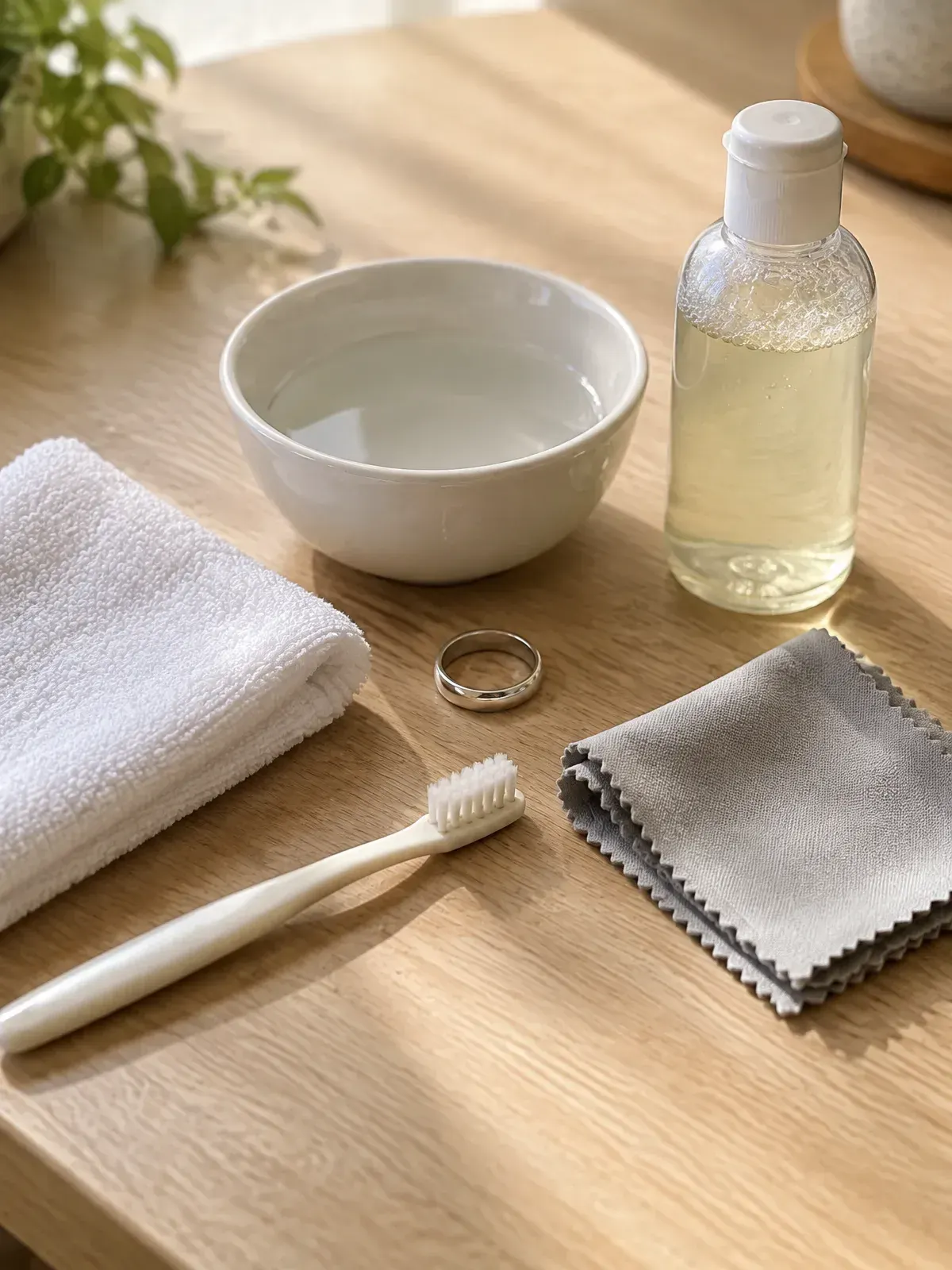
- A small glass or ceramic bowl.
- Mild dish soap.
- A soft, lint-free cloth.
- A soft-bristled toothbrush.
- A silver polishing cloth.
- Baking soda and aluminum foil, only for a plain band with heavy tarnish.
Use a glass or ceramic bowl, never a metal one, for the foil bath. Metal in the bowl gets in the way of the reaction that moves tarnish to the foil. Keep paper towels and tissues off the list: they are rougher than they look and leave fine marks.
How to clean tarnished silver rings at home with soap and water.
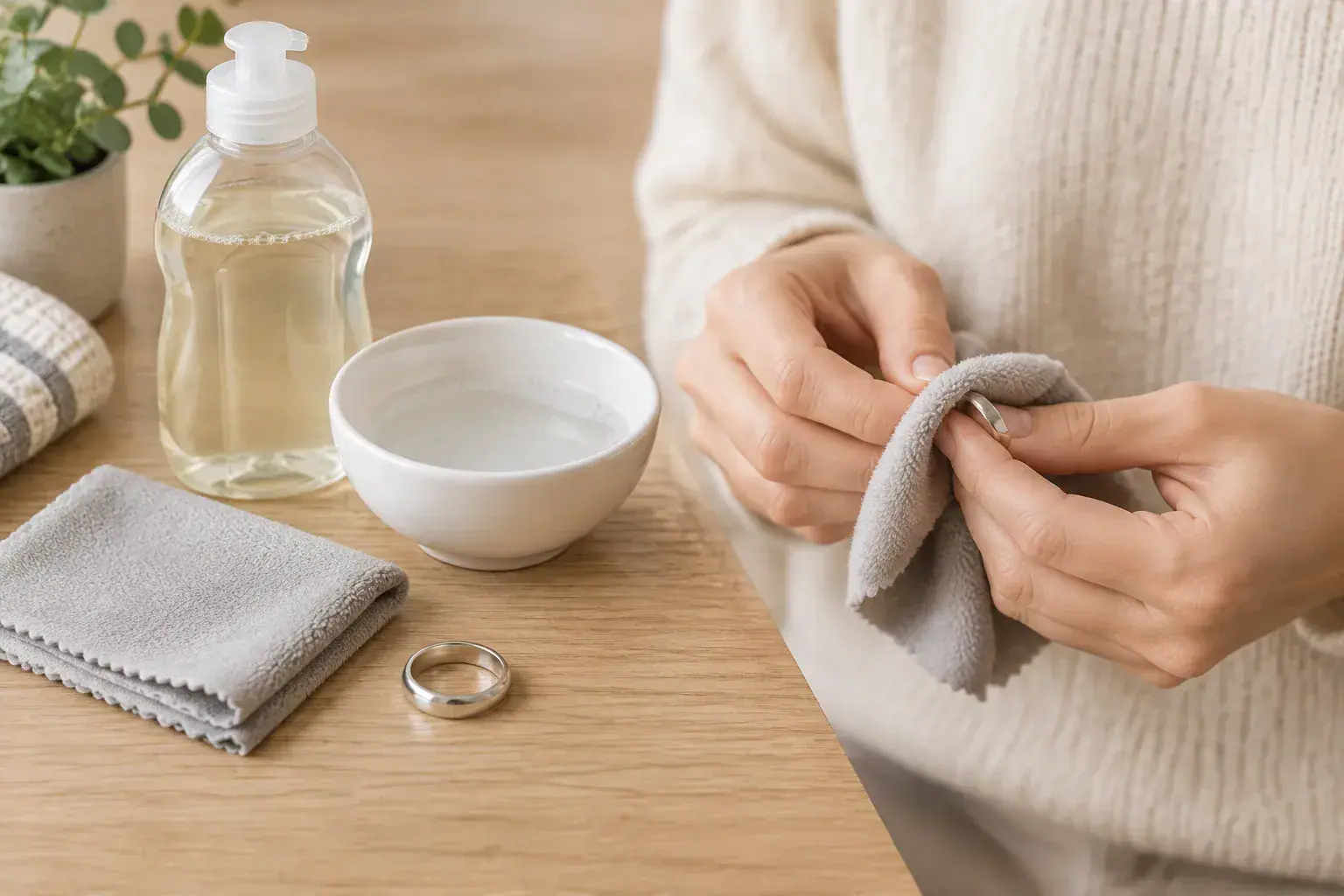
Start with soap and water. It is the gentlest method, and it is the right start for nearly every ring.
It lifts skin oils, lotion, and daily grime, and it is safe for most stones when the ring can be rinsed. If the ring only looks dull, this may be all it needs.
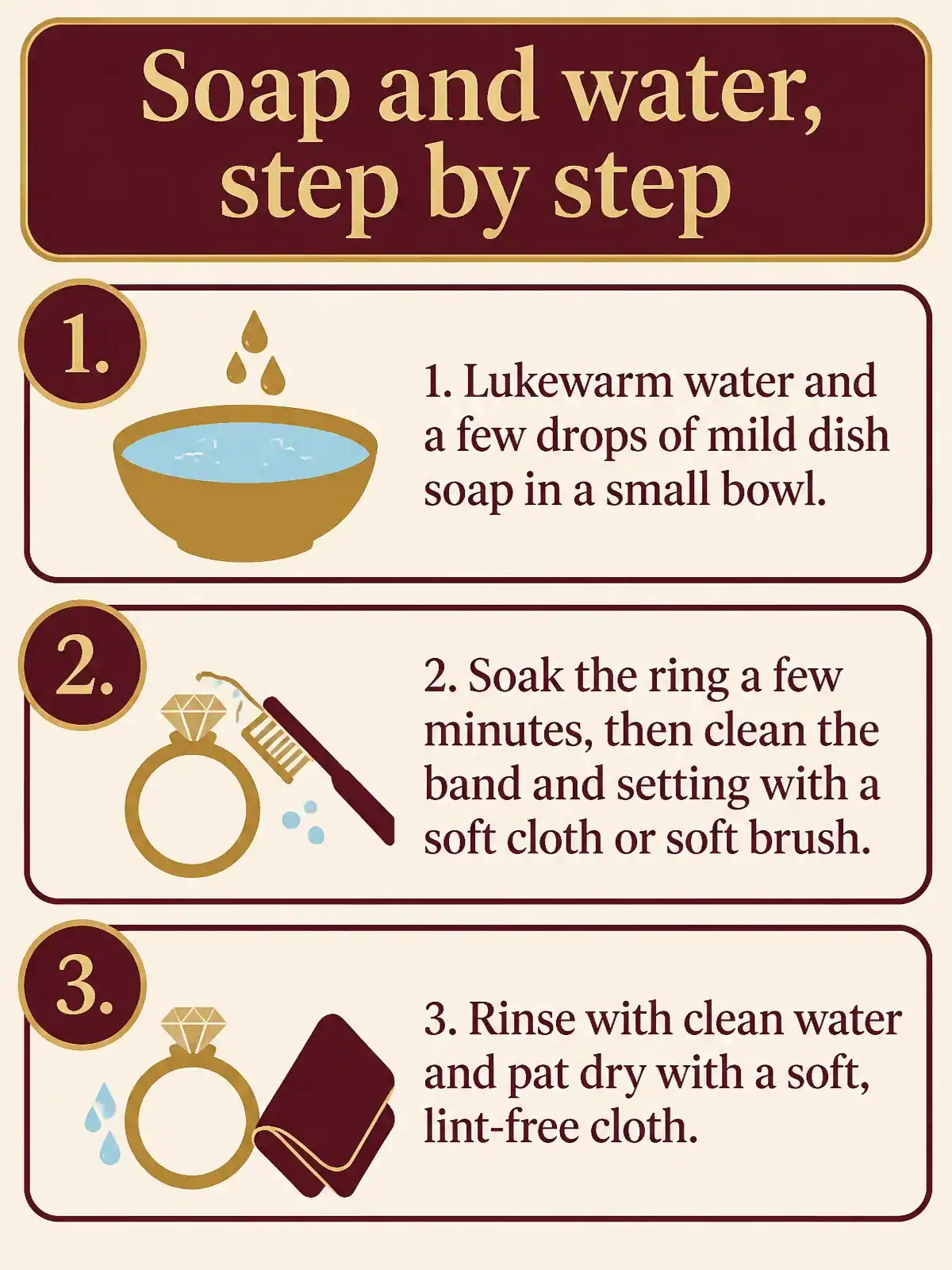
- Fill a small bowl with lukewarm water and add a few drops of mild dish soap.
- Set the ring in the water for a few minutes to loosen surface dirt.
- Clean around the band and setting with a soft cloth or a soft-bristled toothbrush.
- Rinse with clean water, if the ring and its stones can be rinsed.
- Pat dry with a soft, lint-free cloth, and dry the setting and grooves too.
Use lukewarm water, not hot or boiling water. Heat can loosen glue and harm delicate stones. If the ring has a glued stone, a foil-backed stone, or a stone that must stay dry, skip the soak and wipe the band with a barely damp soft cloth instead.
This wash is the first step of any silver care routine, and the same gentle start works for other pieces too. Our guide to clean silver jewelry at home covers necklaces, bracelets, and earrings the same way, with the same order: gentle first, stronger only when needed.
Lift light tarnish with a polishing cloth.
For light tarnish, reach for the polishing cloth first. The cloth carries a mild polish in its fibers, so a few rubs lift the dark layer from the band. It needs no water, and it will not dig into the dark grooves of a detailed ring.
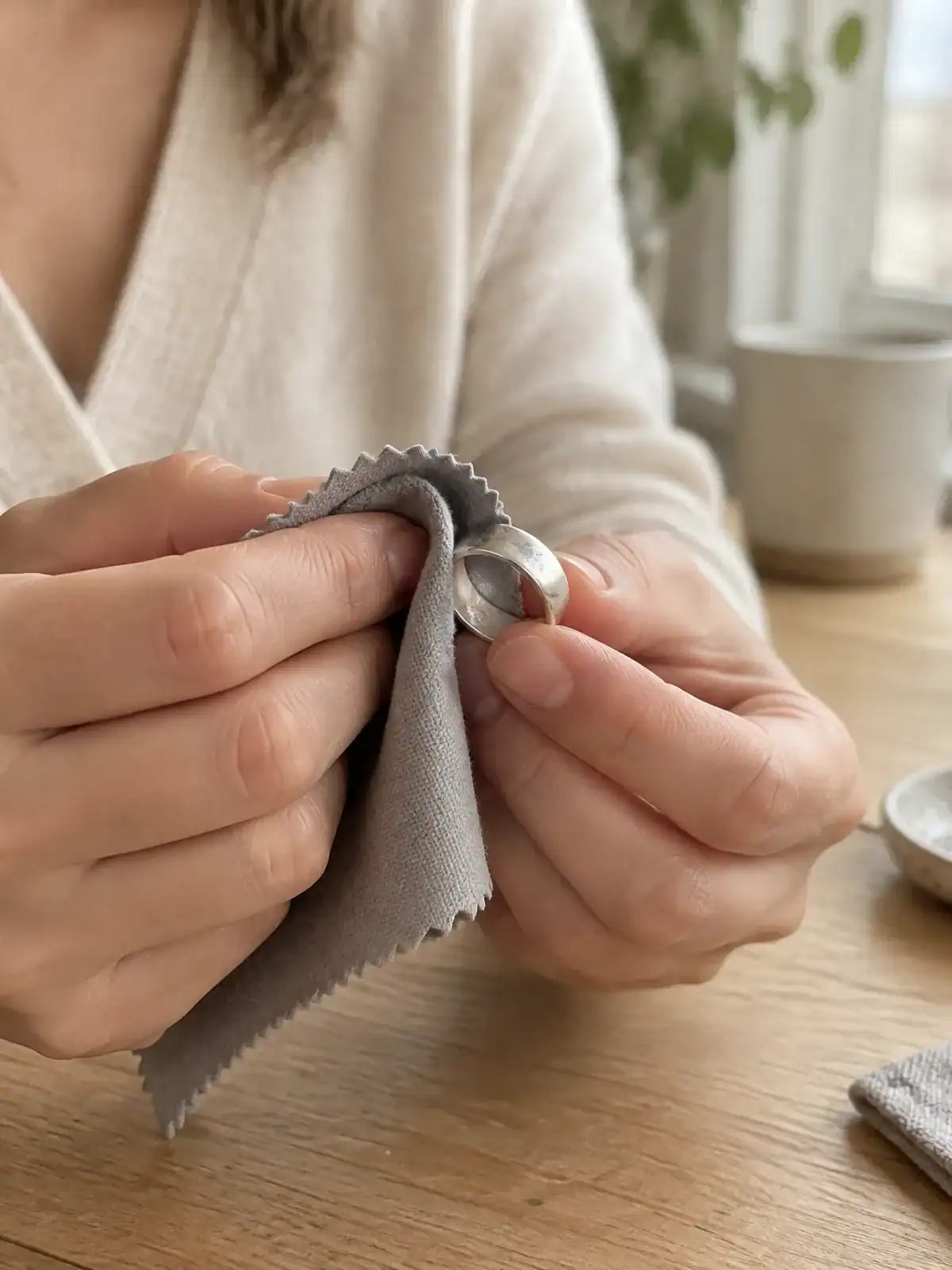
- Make sure the ring is dry.
- Rub the silver band gently with the polishing cloth.
- Work the cloth around the band and the setting, and keep it off the stones.
- Buff the band with a clean, soft cloth to bring back the shine.
Do not wash the polishing cloth. Washing takes the polish out of the fibers.
Keep one cloth for silver only, and replace it when it stops lifting tarnish. A cloth that has gone smooth and gray has done its work.
Shop related products
Supplies that fit this section
- POLISHING CLOTHExtra Large Silver Polishing ClothShop on Amazon
- CLOTH PACKSilver Polishing Cloths, 20 PackShop on Amazon
- SILVER POLISHSilver Cleaner and Polish CreamShop on Amazon
As an Amazon Associate we earn from qualifying purchases.
A cloth is also the right tool between cleanings. A quick rub after wearing keeps light tarnish from building into the heavy kind that needs a bath.
Use the foil and baking soda bath for heavy tarnish.
Heavy tarnish calls for the foil bath. It is the strongest home method, and it works without scrubbing.
Tarnish moves from the silver to the foil in a chemical reaction, so no metal is rubbed away. It suits a plain sterling band with heavy tarnish, and nothing else.
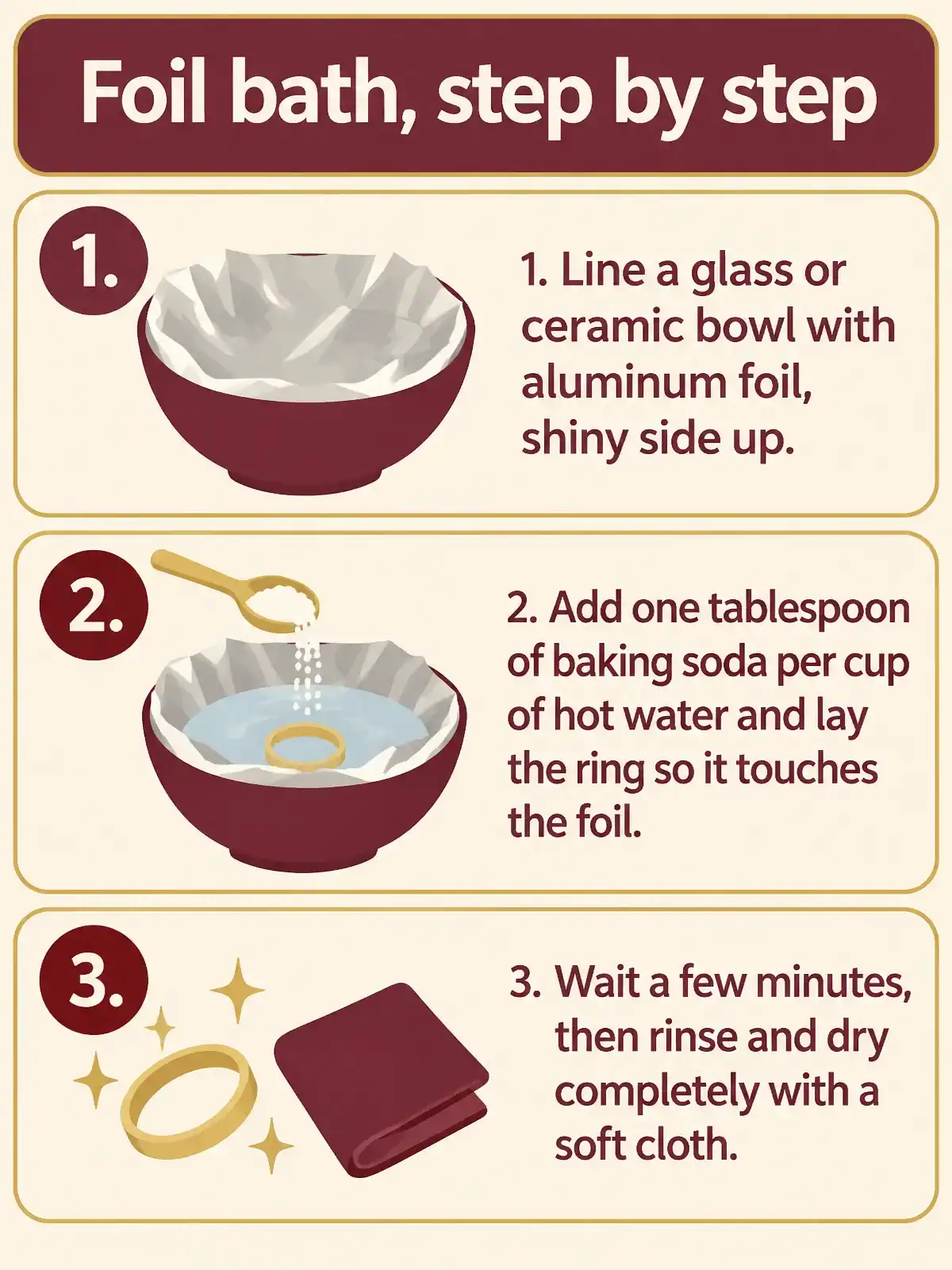
- Line a glass or ceramic bowl with aluminum foil, shiny side up.
- Lay the ring on the foil so the silver touches it. Each piece must touch the foil, or nothing happens.
- Sprinkle one tablespoon of baking soda per cup of hot water over the foil, then pour in the water until the ring is covered.
- Wait a few minutes. You may smell sulfur as the tarnish leaves.
- Lift the ring out with tongs, rinse it, and dry it completely with a soft cloth.
The bath removes all darkening, including the dark detail that was put there on purpose. It is not suitable for antiqued or oxidized silver, and it is too much for pearls, turquoise, opals, and glued stones. Skip it on silver plate too: the bath can strip the thin silver layer.
My rule is simple: a ring with a stone I love never goes near the foil bath. The cloth takes longer, and the ring keeps its stone.
For heavy tarnish, repeat with new water and new foil rather than leaving the ring in longer. A second short bath lifts what the first one left, and the ring spends less time in hot water.
Clean a ring with stones without ruining it.
A ring with a stone needs two answers at once: one for the silver, one for the stone. A method that suits plain silver can harm a soft stone, loosen glue, or let water behind a foil back. Start with the stone, then pick the method.
| Stone or finish | Safe method | Avoid |
|---|---|---|
| Diamond, ruby, sapphire in prongs | Warm water, mild soap, soft brush | Foil bath, silver dip |
| Pearl, opal, turquoise, coral, amber | Dry cloth on the metal only | Soaking, polish, foil bath |
| Glass stones and rhinestones | Polishing cloth, quick damp wipe | Soaking, water behind foil backs |
| Oxidized or antiqued detail | Cloth on the raised areas only | Foil bath, dips |
| Silver plate | Polishing cloth, light cream polish | Heavy rubbing, foil bath |
| Glued stones | Barely damp cloth, no soak | Soaking, hot water |
Soft stones are porous gemstones, so they take in water and chemicals and can crack or lose their shine. Hard stones in prongs take soap and water, but check the prongs first. If your skin reacts to metals, the copper in sterling silver can play a part, and our guide to jewelry for sensitive skin names the metals that are usually safe.
When the stone is unknown, treat it as soft. A dry cloth on the metal cleans the band, and the stone stays untouched until a jeweler names it.
What never to use on a silver ring.
Some cleaners found in most homes damage silver, stones, or finishes. They work fast, and the damage shows just as fast. Leave them in the cupboard.
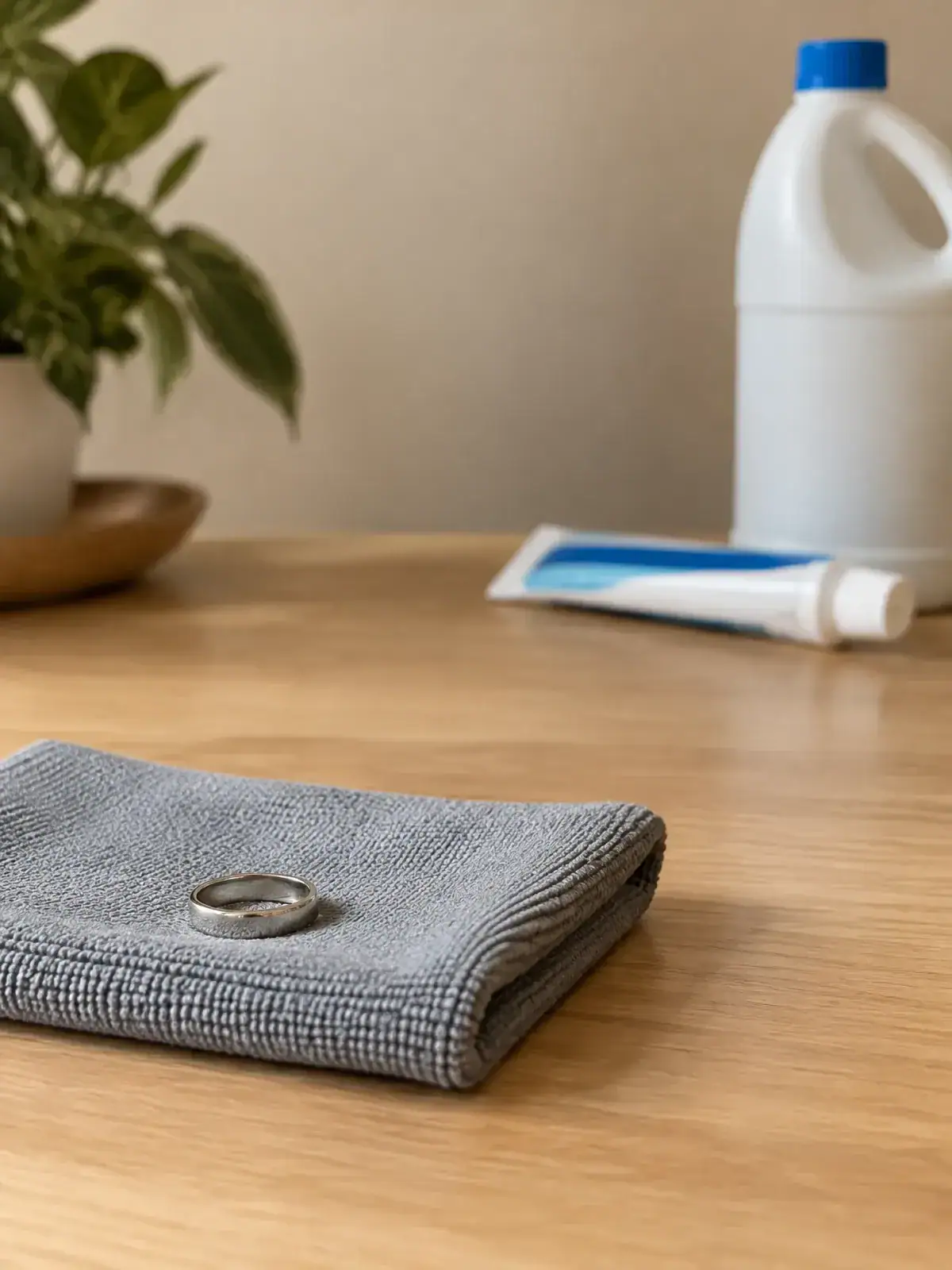
Bleach and chlorine can pit and discolor silver. Take your rings off before you clean the house or get in a pool.
Toothpaste is the most common mistake. Many toothpastes hold abrasive ingredients that scratch polished silver and dull the finish.
Dry baking soda does the same: rubbed on silver, it acts like sandpaper. Use baking soda only dissolved in the foil bath, and only on a plain band.
Before you reach for a cleaner
Do this
- Start with soap and water, the gentlest method, and move up only if the ring still looks dull.
- Rub the band with a silver polishing cloth, and keep the cloth off the stones.
- Dry the ring completely before you put it away.
Avoid this
- Use toothpaste: its abrasive ingredients scratch polished silver.
- Use bleach or chlorine: they can damage and discolor silver.
- Rub dry baking soda on the ring: it acts like sandpaper.
- Drop a ring with stones or dark detail into the foil bath.
Silver dips work in seconds, and that speed is the problem. A dip strips every bit of darkening, including design detail and patina, and it can harm porous stones.
An ultrasonic cleaner can loosen stones in their settings, so it stays off the list unless a jeweler says the ring can take it. The dishwasher is out too: heat and harsh detergent spot and dull silver.
Keep your ring bright after cleaning.
Cleaning is half the job. Storage and daily habits decide how fast the tarnish comes back. A ring that is worn often and stored dry stays bright longer than one left in a damp bathroom.
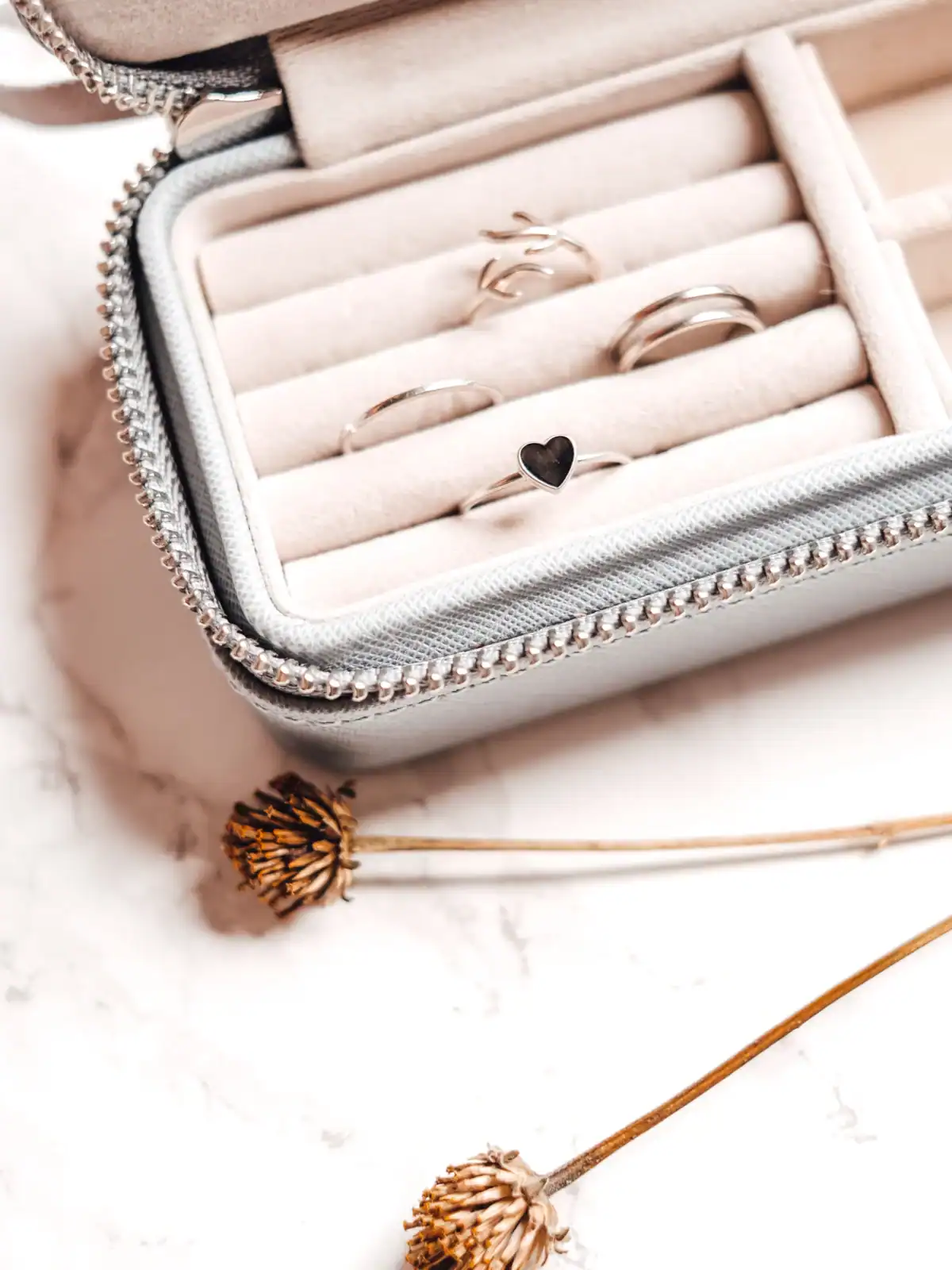
Put your ring on after lotion, perfume, and hairspray, and take it off before swimming or cleaning. Wipe it with a soft cloth after wearing, and make sure it is dry before it goes away. Store it in a dry pouch or a lined box, away from rubber bands, wool, and felt, which give off sulfur.
Keep each ring apart from the others so the bands do not scratch each other. A box with separate slots does this well, and a pouch works for travel. If you wear several bands together, our silver stacking rings looks show how to stack them without the metal wearing on itself.
Shop related products
Supplies that fit this section
- ANTI-TARNISH POUCHAnti Tarnish Jewelry Bags, 30 PackShop on Amazon
- ANTI-TARNISH STRIPAnti Tarnish Strips, 100 PackShop on Amazon
- TRAVEL CASETravel Jewelry Case with MirrorShop on Amazon
As an Amazon Associate we earn from qualifying purchases.
Polish only when the ring needs it. Light, regular wiping with a polishing cloth beats heavy polishing, which removes more silver over time. When a ring is valuable, antique, or you are unsure what it is, a polishing cloth is the safe stop, and a jeweler is the next step.
Questions readers ask about cleaning silver rings.
How often should I clean my sterling silver ring?
Clean it when you see dirt, dullness, or tarnish. A ring worn every day may need a gentle wash every few weeks, while a ring worn rarely only needs a wipe before it goes back in the box. There is no fixed schedule that fits every ring.
Can you wear sterling silver rings in the shower?
It is better to take them off. Soap, shampoo, and other products leave residue on the metal and the stones, and frequent moisture speeds up tarnish. Dry the ring if it does get wet.
Can I clean my silver ring with vinegar?
Vinegar and salt can dissolve tarnish, but the acid is hard on soft stones, pearls, and glued settings, and a long soak can dull the finish. Soap and water or a polishing cloth does the same job with less risk, so vinegar stays off the list for rings.
What if my ring has no 925 stamp?
A ring with no stamp may be silver plate, another metal, or an old piece whose mark wore off. Clean it as if it were plate: a polishing cloth only, no foil bath, no dip, and no hard rubbing. A jeweler can test the metal if you want to know for sure.