Facial massage feels good, but what it does for your skin is less certain than the marketing suggests. This guide shows what one randomized trial measured, what is still unproven and who should skip it.

Does facial massage actually work?
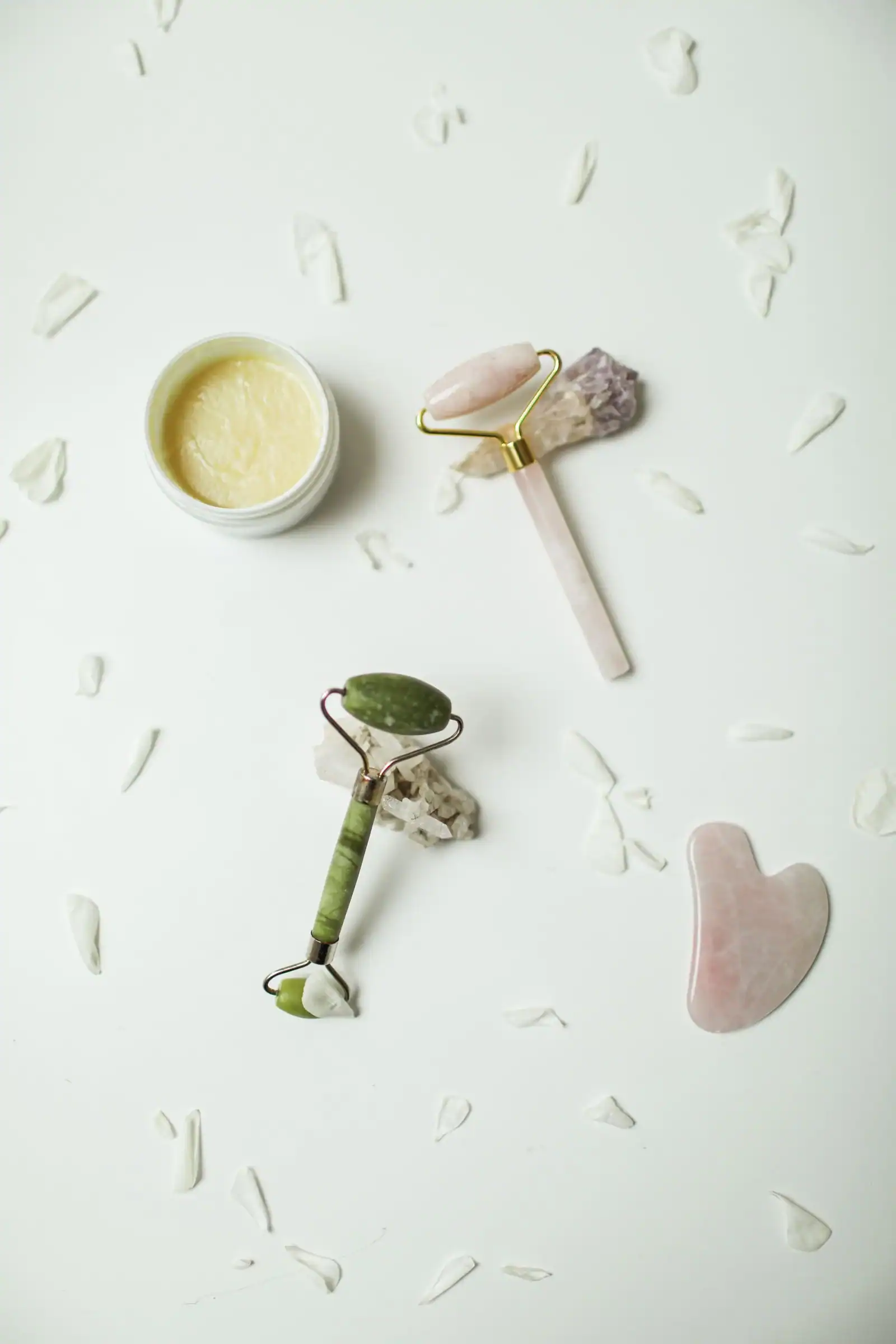
It may change how your face looks and feels for a while, but the evidence is small. One 8-week trial found small changes in facial contour with both a roller and a gua sha tool. Cleveland Clinic's gua sha guide says there is not enough high-quality research to declare gua sha's benefits.
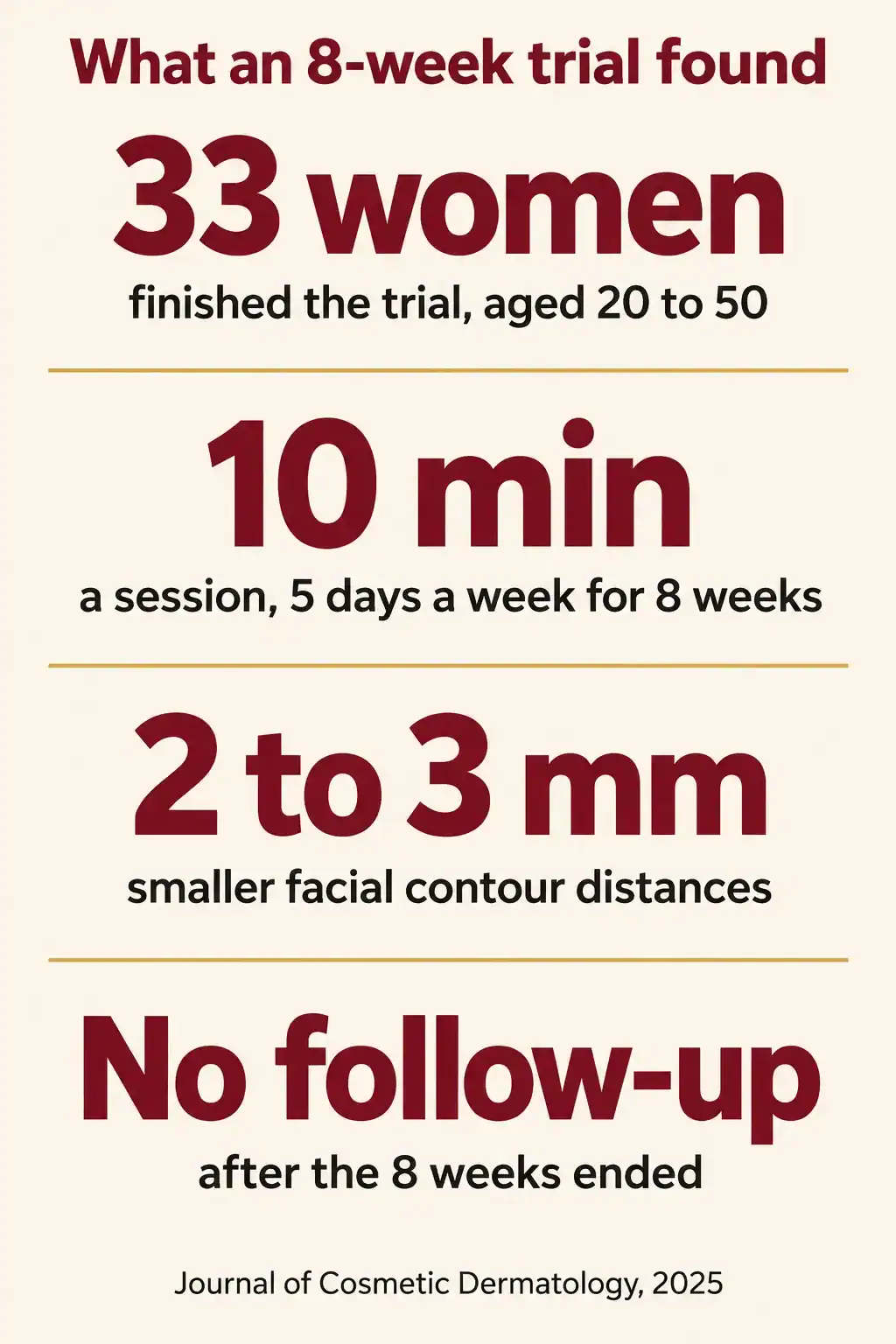
Read those numbers as a preview, not a promise. They come from one group of healthy women using one device for two months.
What the trial measured.
The trial, published in the Journal of Cosmetic Dermatology in 2025, is available in its open-access PubMed Central copy. It randomized 34 women aged 20 to 50 to use either the roller side or the gua sha side of the same device.
They massaged for 10 minutes, five days a week, for 8 weeks, and 33 women finished. On 3D scans, facial contour distances fell by roughly 2 to 3 millimeters in both groups, with no clear difference between the tools.
| Tool | Facial contour | Muscle tone at the jaw | Skin elasticity |
|---|---|---|---|
| Gua sha | Down 2.23 to 2.40 mm | Lower | No significant change |
| Roller | Down 2.75 to 3.26 mm | No significant change | Up about 8 percent |
The tools worked in different ways. Gua sha lowered tone in the masseter, a chewing muscle at the jaw, while the roller raised measured skin elasticity by about 8 percent.
The authors list limits: only 8 weeks of follow-up, a modest group of healthy women in one age range, a standardized technique and no standardized photographs. Nobody knows yet whether the changes last.
What is still unproven.
Plenty of popular claims have no research behind them. Cleveland Clinic says the idea that gua sha triggers an anti-inflammatory response has not been scientifically validated, and that research does not address facial puffiness, though gentle downward strokes may help lymphatic fluid move.
The trial also measured only contour, muscle tone and elasticity. It did not measure wrinkles, acne, puffiness or glow, so any promise about those is a guess. For what else is circulating in skincare, see our beauty trends.
How to do it gently.
Cleveland Clinic advises very light pressure. A little redness may appear, but it should never hurt. Clean the tool before you use it, and replace it if it chips or breaks.

- Wash your hands and clean the tool.
- Apply a lotion or serum so the tool glides.
- Work outward from the center of your face, with your nose as the midpoint, in one smooth direction instead of back and forth.
- Keep the pressure very light, and stop if anything hurts.
- Skip any swollen area, since pressing there can burst capillaries and cause bruises.

No guideline sets a session length. The trial's 10 minutes was a study protocol, so start shorter. If you are prepping skin for an event, see our party-season skincare buys.
How I would treat it
I would treat facial massage as a relaxing ritual, not a treatment. Keep the pressure light, use it on a calm day, and skip it any time your skin feels irritated.
Who should skip it?
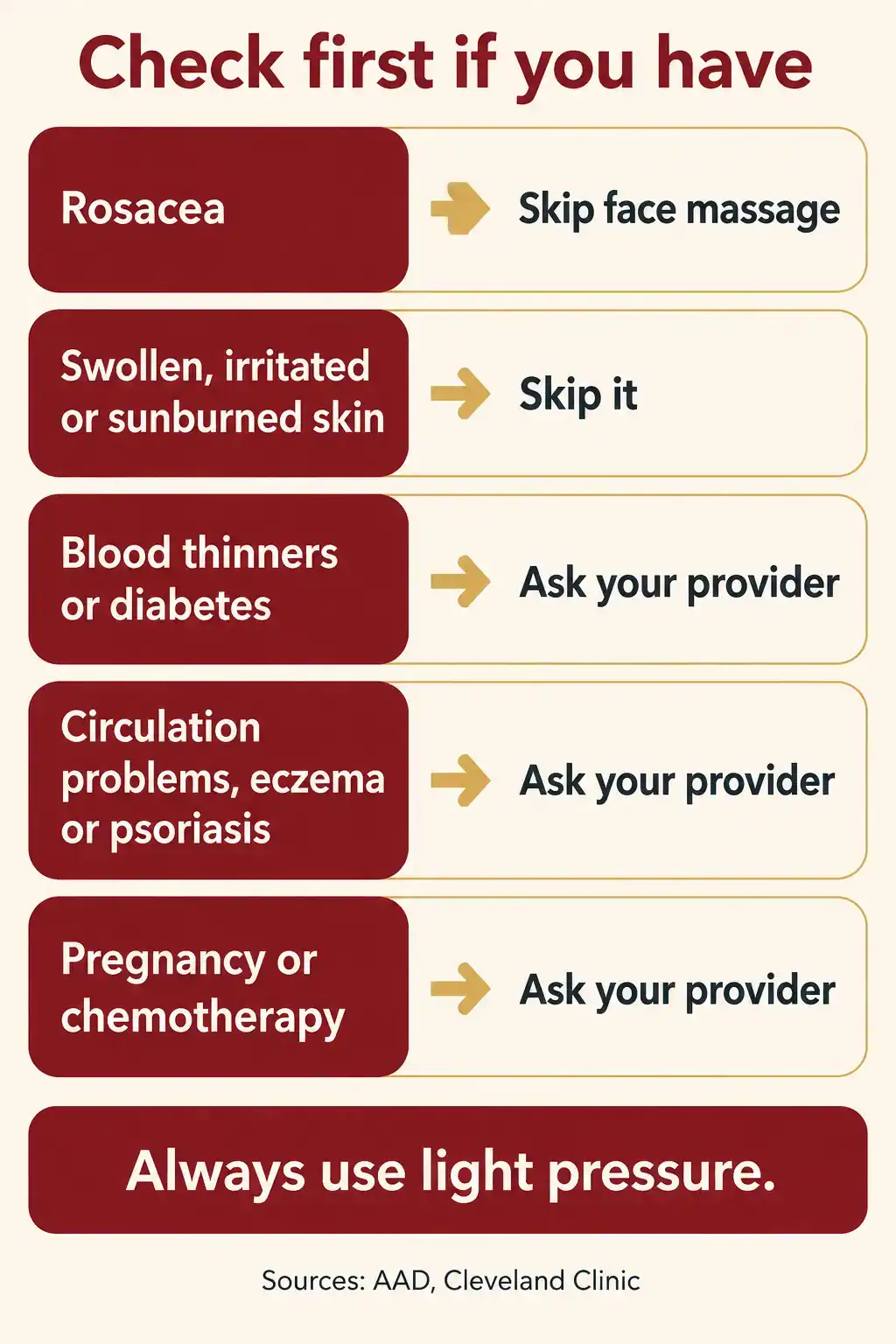
The American Academy of Dermatology tells people with rosacea to avoid rubbing, scrubbing or massaging their skin. Cleveland Clinic adds that you should never use gua sha on irritated or inflamed skin, such as a rash, a wound or a sunburn.
Check with a professional first
Cleveland Clinic says to check with a provider before trying gua sha if you have circulation problems, diabetes, eczema or psoriasis, take blood thinners, are in chemotherapy or are pregnant. Aggressive scraping can cause soreness, bruising, discoloration or small reddish-purple spots.
Facial massage, answered.
Does facial massage reduce wrinkles?
There is no strong evidence that it does. The 8-week trial measured facial contour, muscle tone and skin elasticity, not wrinkles. A dermatologist can discuss treatments for wrinkles.
How often should you do facial massage?
No guideline exists. The trial used 10-minute sessions five days a week for 8 weeks, but that was a study protocol, not a recommendation.
Can facial massage cause bruising?
Yes. Cleveland Clinic says aggressive scraping can cause soreness, bruising, discoloration or small reddish-purple spots, so keep the pressure very light.
Is facial massage safe with rosacea?
The American Academy of Dermatology advises people with rosacea to avoid rubbing, scrubbing or massaging their skin. Ask your dermatologist before you try it.